Table of contents
To remove DRM from video for personal offline viewing of content you’re authorized to access, three routes cover most cases in 2026. For the major streaming services (Netflix, Prime Video, Disney+, Max, Apple TV+), save a local MP4 or MKV copy with StreamFab Video Downloader. When the official app blocks a direct save, RecordFab records the playing screen instead. For iTunes M4V movies bought or rented from Apple TV, DRmare M4V Converter turns them into MP4. Every route applies only where platform terms and applicable law permit.
The three tools below are lined up in the order most readers actually reach for. What we care about here is fit: which tool matches which kind of DRM problem, not a rankings shootout. The rest of the guide walks through the info about DRM plainly.
DRM Restrictions You Should Know Before Removing DRM
Before you pick a method, four restrictions built into official DRM downloads shape the decision. They’re also where a lot of “why did my download suddenly break?” questions come from. Numbers below reflect the common industry pattern as of July 2026 and vary by service — check the platform’s Help Center for the current limits.
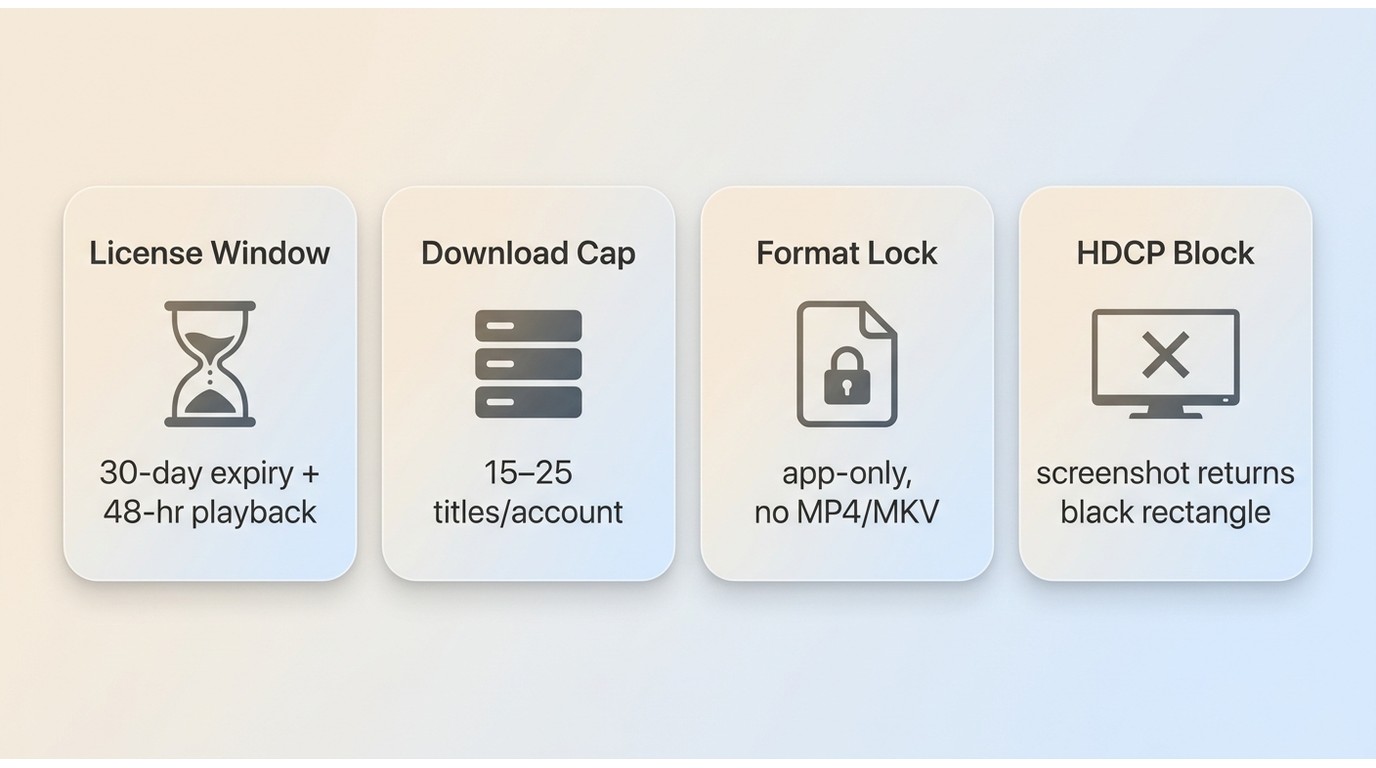
- License window: Most streaming apps enforce roughly a 30-day expiry countdown from the moment a title is downloaded before you first press play and then a 24- to 48-hour playback window once you’ve started watching. The file itself doesn’t vanish, but the app refuses to open it after the window closes.
- Per-account download cap: A silent 15- to 25-title ceiling per account is common industry practice. Hit it and you’ll see a vague “can’t download” error with little explanation, which is exactly what puzzles a lot of Prime Video and Netflix users on community forums.
- Format lock: Official-app downloads are proprietary containers keyed to the app, not standalone MP4 or MKV files. You cannot move them into another player, upload them to Plex, or sync them to a device the app doesn’t bless.
- HDCP and output protection: The platform can block casting, external displays that don’t handshake correctly, and screenshots on protected surfaces. This is why hitting the screenshot key on a playing DRM stream often returns a black rectangle.
These caps aren’t arbitrary; they are how the license layer works. They also explain why we reach the “I need to backup DRM content” question at all: a local MP4 or MKV copy created from content you’re authorized to access sidesteps the confusion because the file itself has no license window, no per-account title cap, and no HDCP handshake attached.
Method 1: Save DRM Streaming Videos with StreamFab
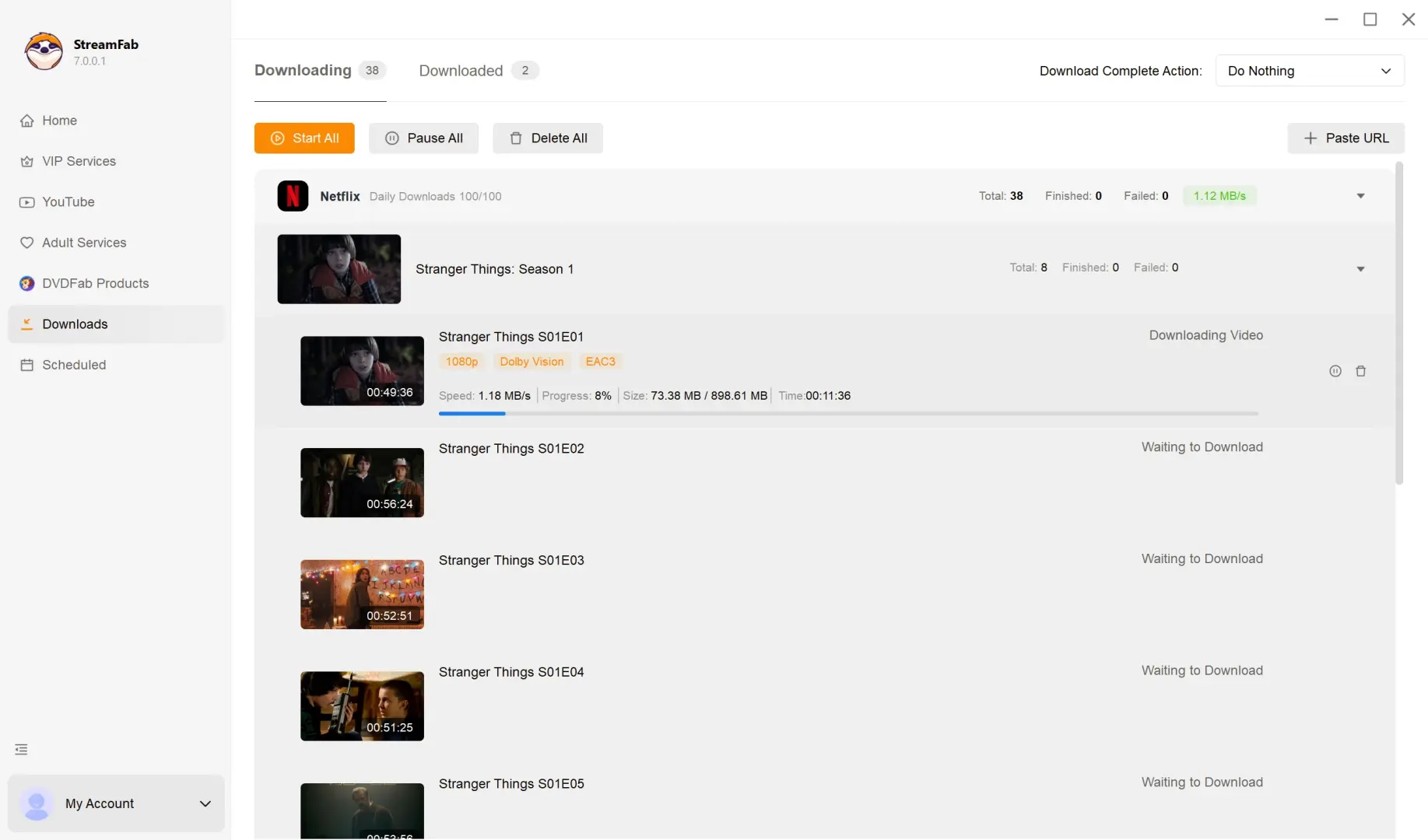
For content you’re authorized to access, where permitted by platform terms and applicable law, StreamFab Video Downloader is a desktop alternative when the official app’s downloads are unavailable or too restrictive: it saves a local MP4 or MKV copy for personal offline viewing. Positioned as DRM removal software for video from major streaming services, it is aimed squarely at readers who want to download DRM-protected videos into a plain file rather than fight with the official app’s license window.

Includes 66 StreamFab products, offering the most comprehensive download solutions for streaming videos.
| Pros |
|
|---|---|
| Cons |
|
| More info |
StreamFab Review: Editor Walkthrough Across Windows and macOS |

- For a Netflix-specific walkthrough with the exact subtitle and audio-track picks, I also maintain a companion tutorial: A Simple Guide to Back Up Netflix DRM Content Legally.
Step-by-Step: Save DRM Streaming Videos to MP4 or MKV
The four-step flow is the same on Windows and macOS. Sign in with your own subscription each time.
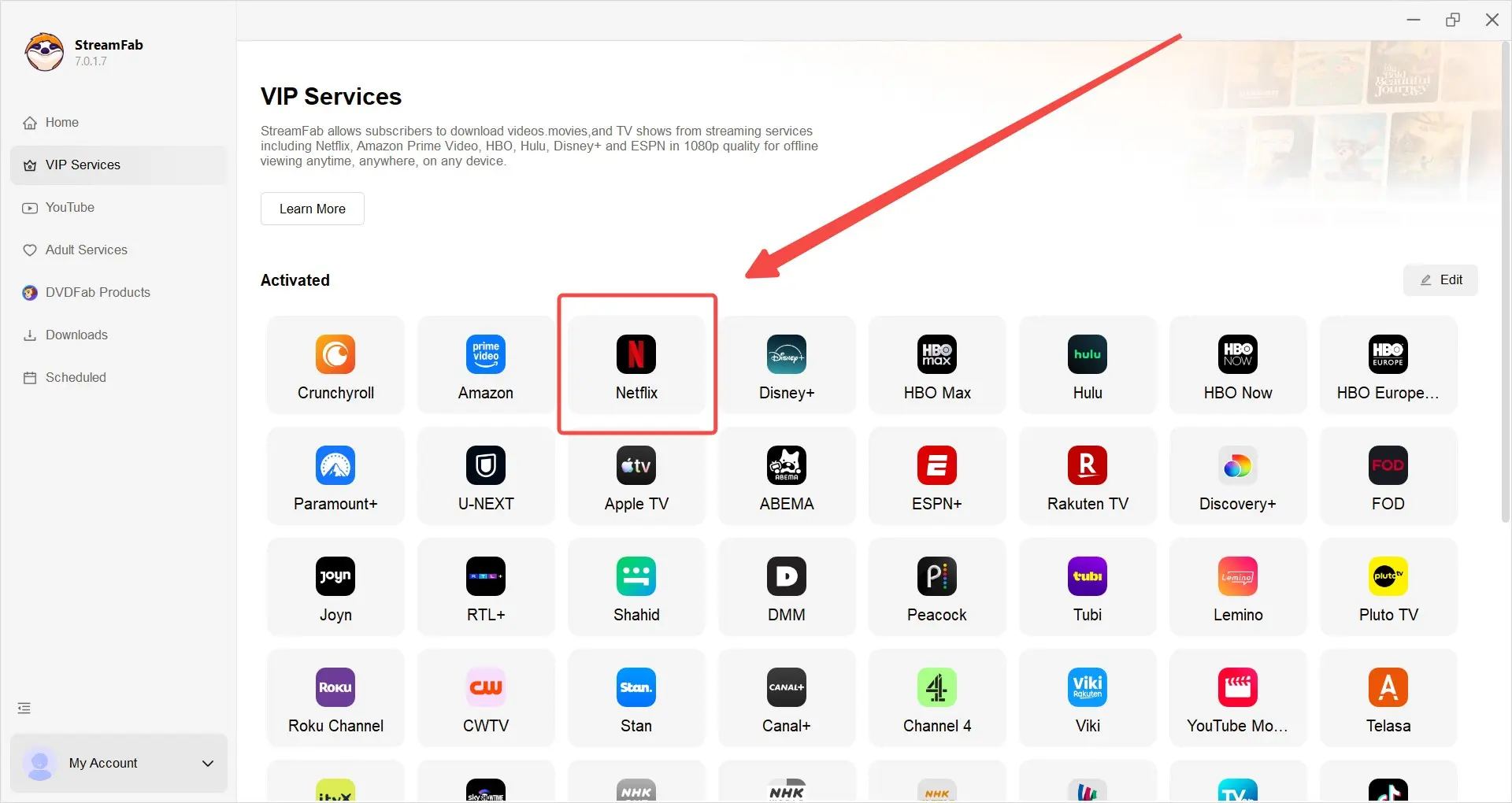
Sign in with your own subscription on the target platform inside StreamFab’s embedded browser. Navigate to the title you’re authorized to save.
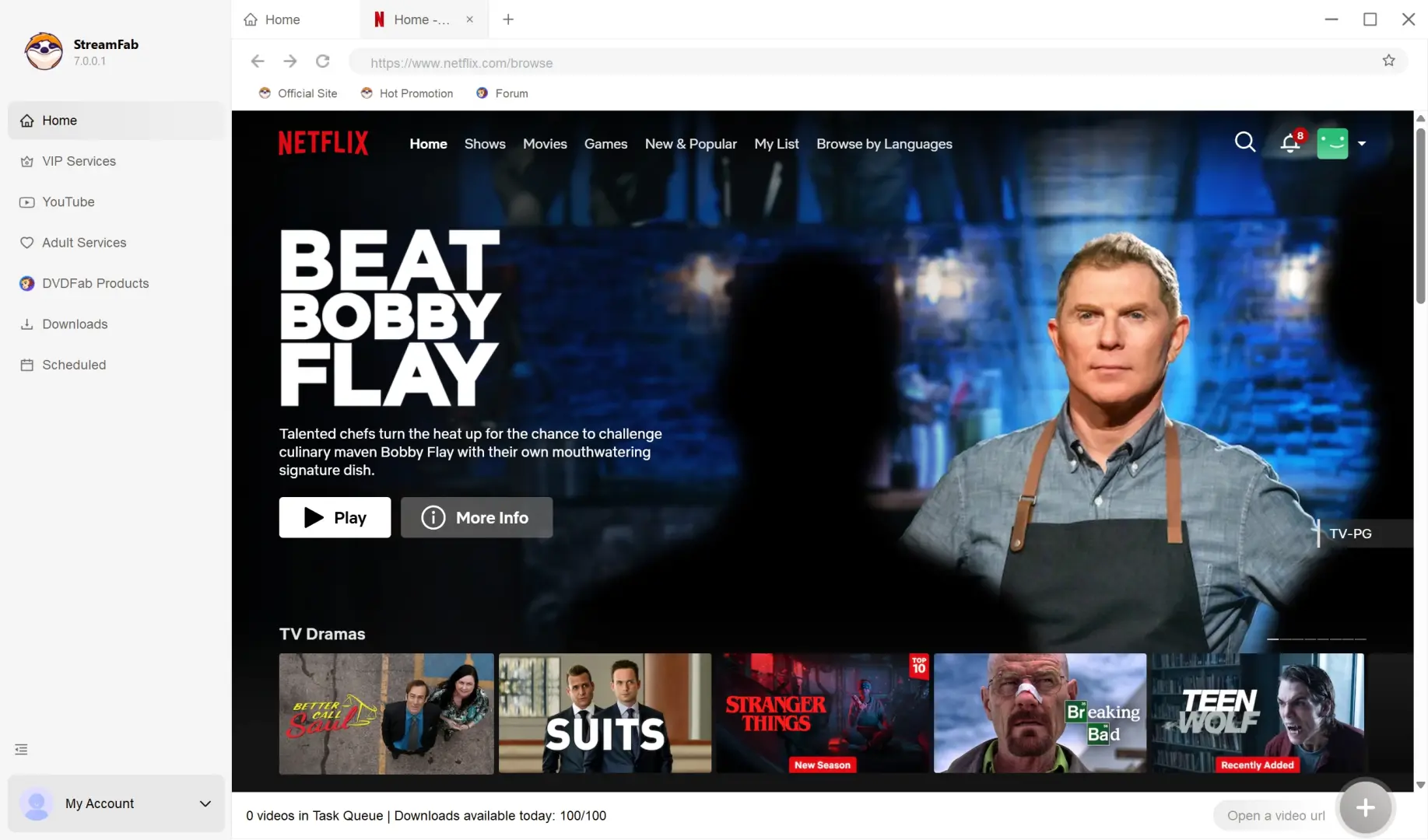
Press play to trigger analysis. StreamFab reads the available quality, audio tracks, and subtitle tracks the platform is willing to serve to your account, then offers them in a settings panel. Pick MP4 or MKV, the audio track you want, and any subtitle language.
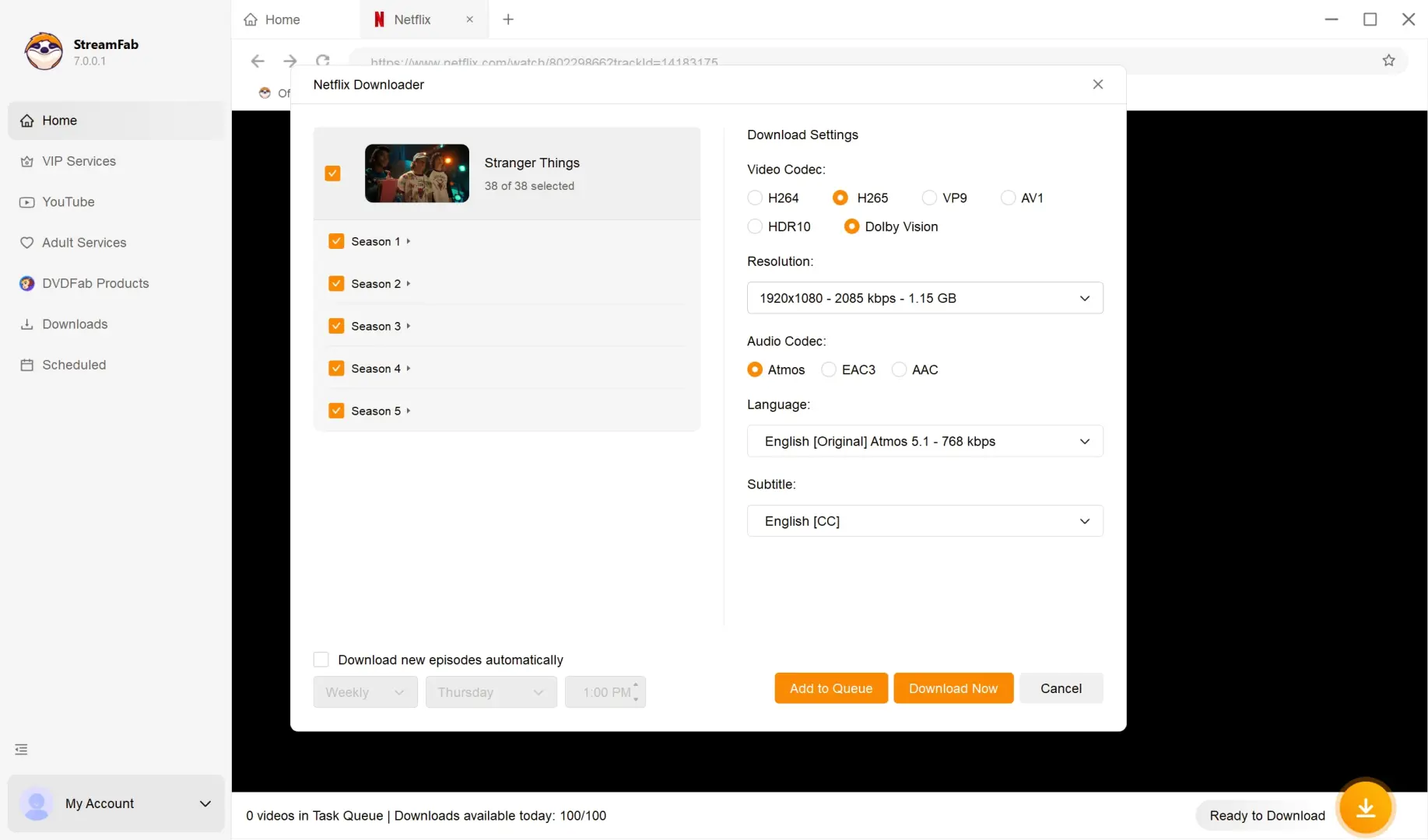
Click Download Now. The tool writes a standard MP4 or MKV file into your library folder, ready to play in any player and free of the license window, per-account cap, and format lock that come with an in-app download.

Method 2: Record DRM Videos with RecordFab
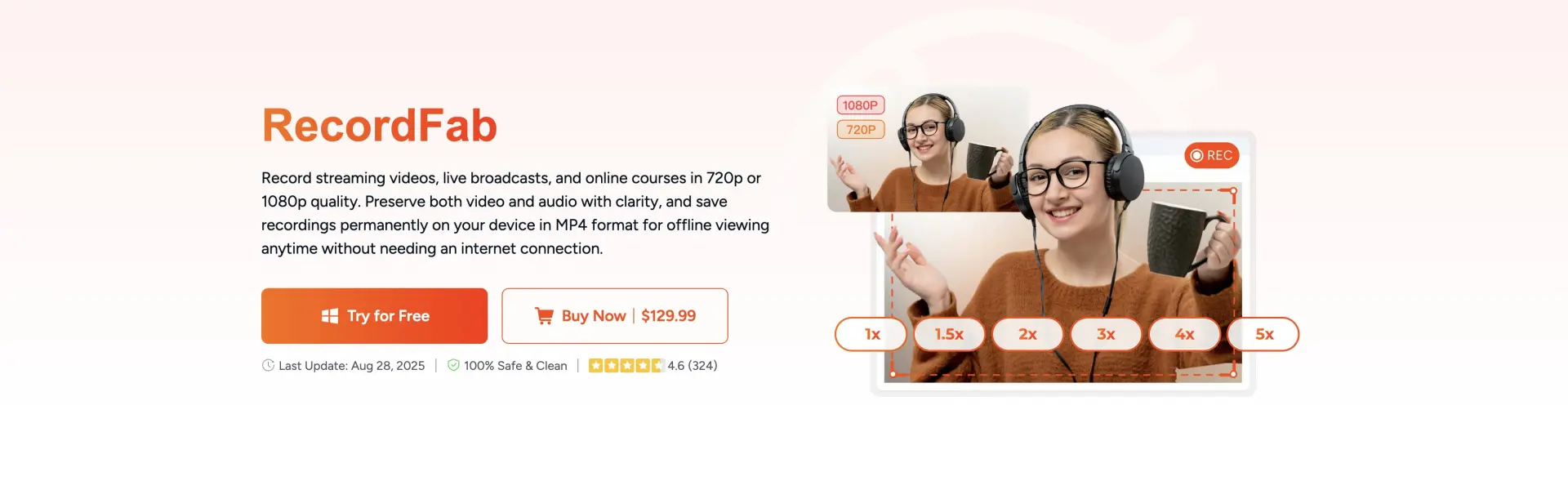
When the official app blocks a direct download outright, or a fresh DRM update temporarily breaks direct-download tools, being able to screen record DRM video content becomes the practical fallback. RecordFab is a screen recorder built specifically for DRM-protected video playback: it records what plays inside its embedded browser at up to 5x speed and outputs MP4 or MKV.
| Pros |
|
|---|---|
| Cons |
|
When Recording Beats Downloading for DRM Video
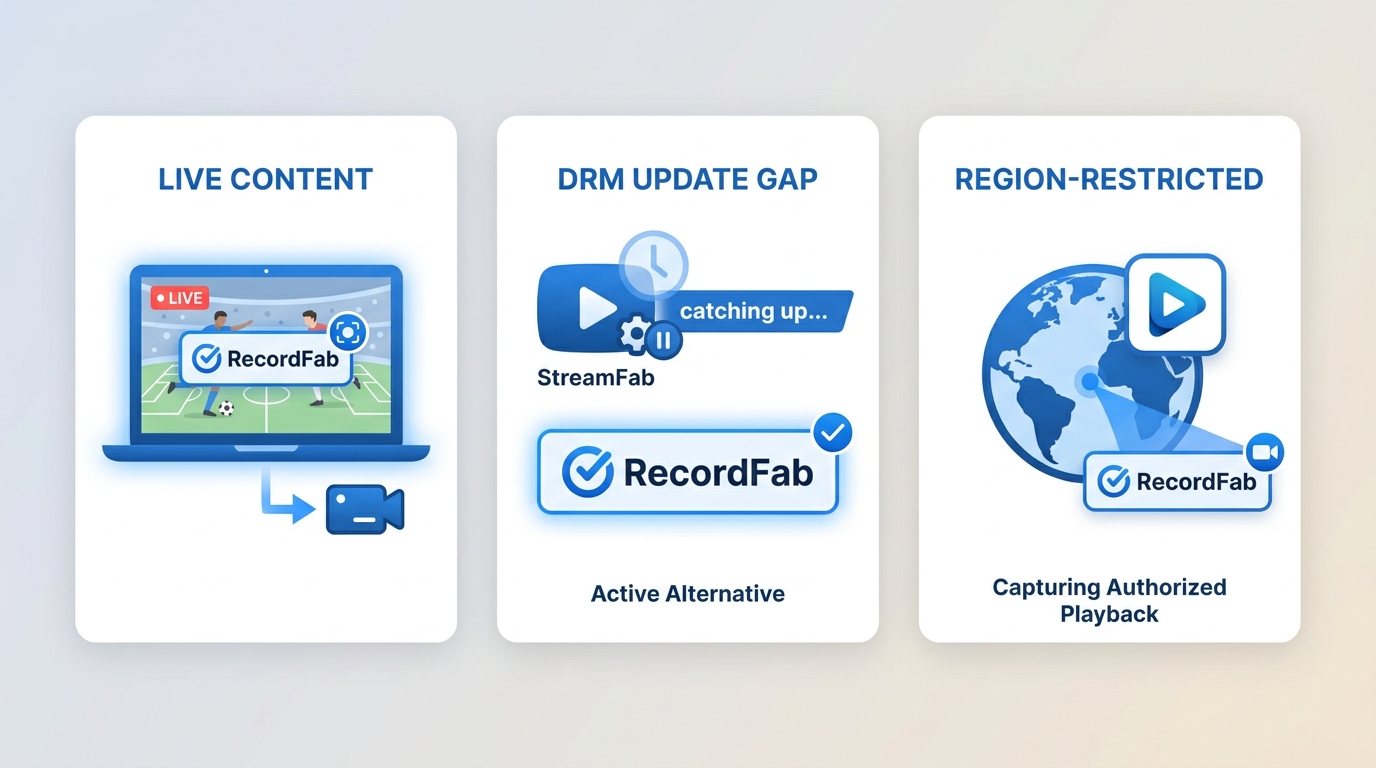
- Live playback that isn’t saveable as a file. Live sports, live concerts, and premieres that expose no download option at all in the official app.
- Titles a downloader can’t reach right now. When a platform pushes a fresh DRM update, direct-download tools often need a day or two to catch up; RecordFab keeps a session recordable in the meantime.
- Region- or account-restricted content you have a legitimate way to view. If the app plays it on your account, RecordFab can capture that playback for personal offline reference.
Step-by-Step: Record a DRM-Protected Video with RecordFab
Install and launch RecordFab. A free trial with 3 free recordings is available for every new account.
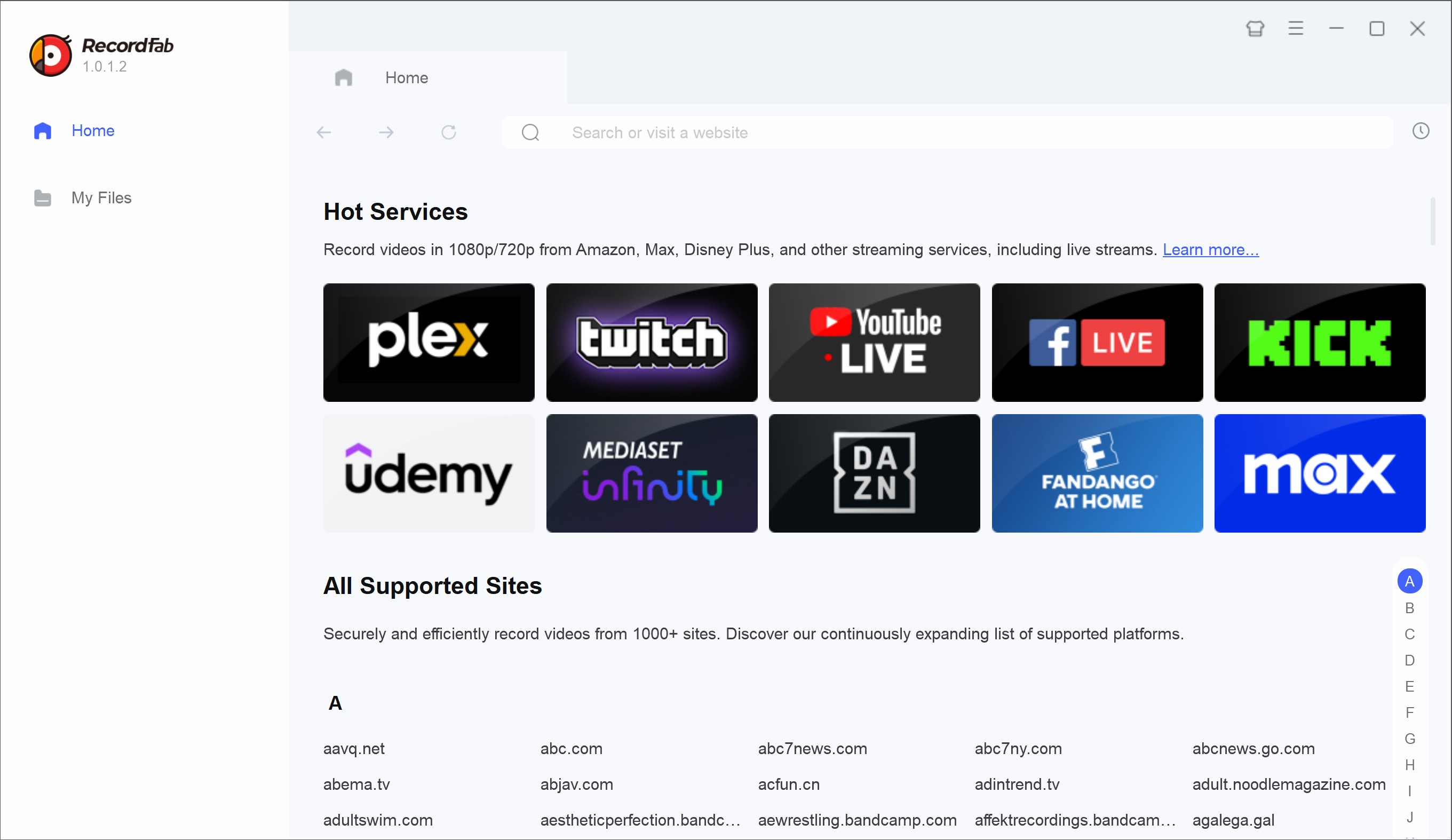
Pick the target site from the supported list, sign in with your own subscription, and open the title you want to record.
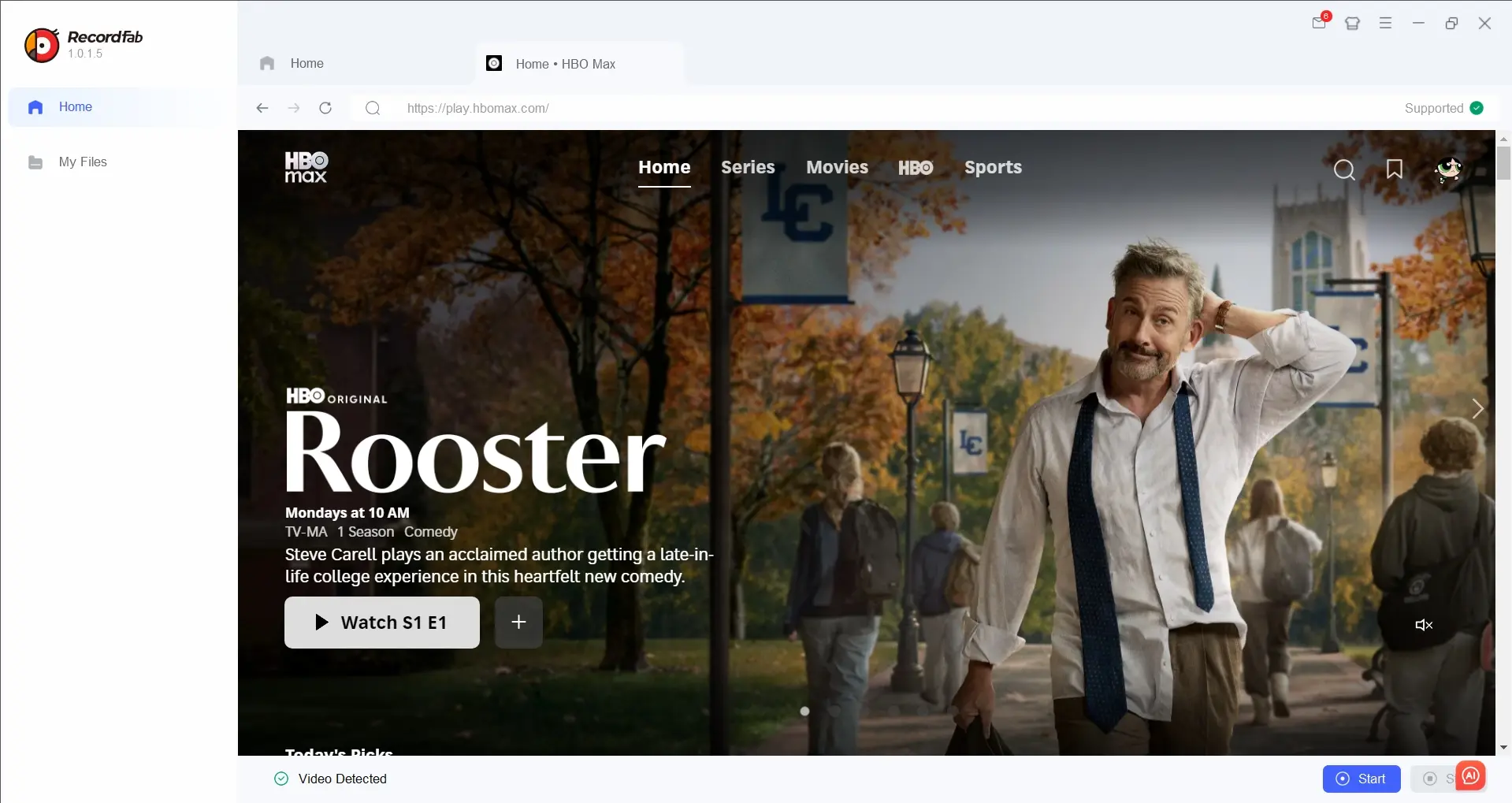
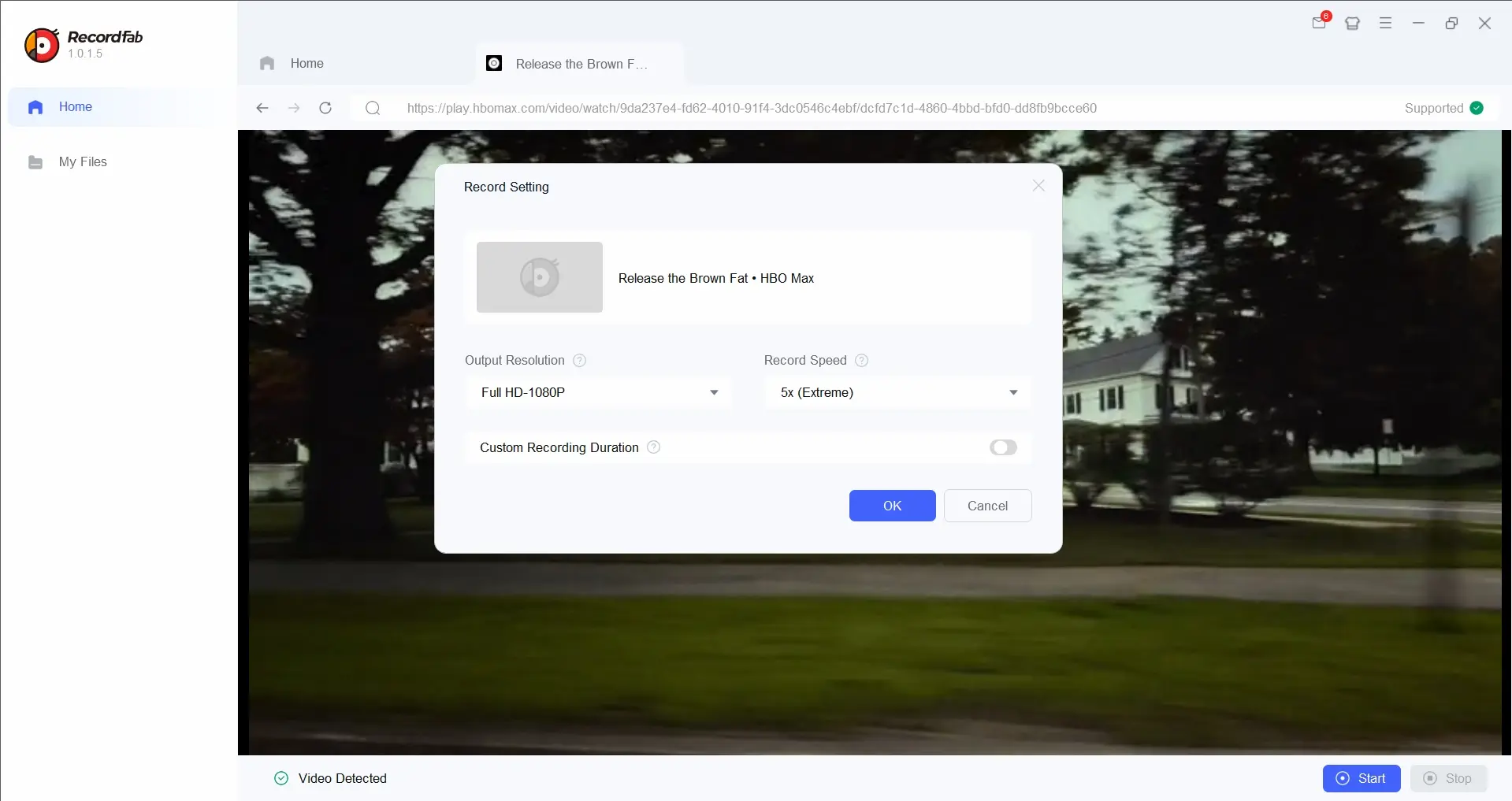
Start playback and hit Record. Set the recording resolution and speed—you don’t need to drag the timeline manually; RecordFab handles the start.
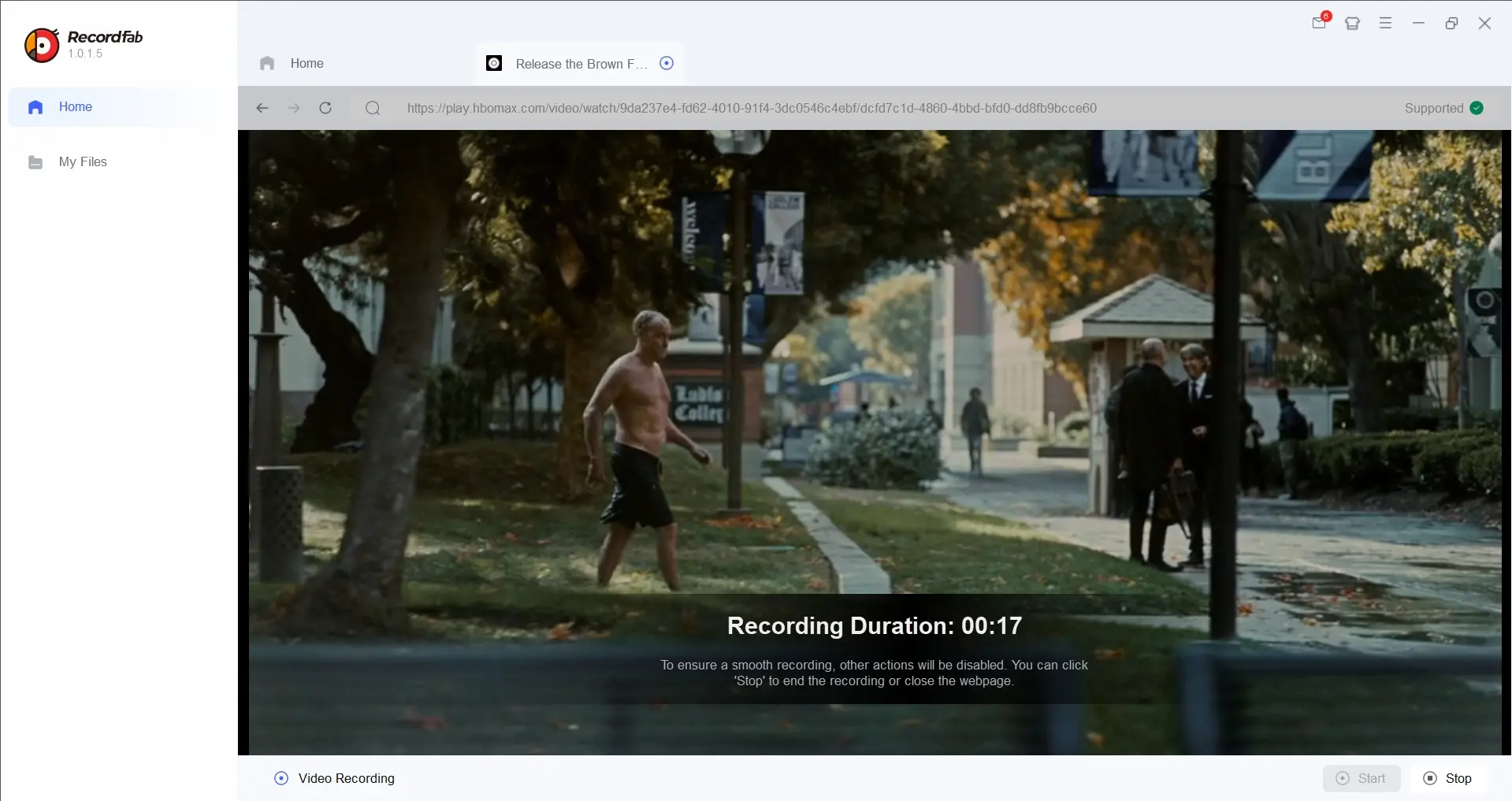
Finish and export. When the recording completes, the output file is a standard MP4 or MKV, playable in any local player.
Method 3: Convert iTunes M4V DRM Movies with DRmare
DRmare M4V Converter is a focused iTunes movie DRM removal path: it handles Apple FairPlay DRM on M4V files bought or rented from iTunes / Apple TV and only that. According to DRmare’s official specifications, it does not process Widevine or PlayReady streaming content, so treat it as the iTunes-specific option in this article’s toolbox (as of July 2026, subject to iTunes and macOS updates—the tool has historically needed a short lag to catch up after each Apple release). You download the movie inside the iTunes or Apple TV app first, then run DRmare to convert DRM video from M4V into a standard MP4 for personal offline viewing.
- Editor’s take: reach for DRmare only when the title is genuinely an iTunes M4V purchase or rental. If it’s a Netflix, Prime Video, or Disney+ stream, DRmare won’t help—that's a Method 1 job. Pinning DRmare to iTunes M4V is the cleanest way to keep this method honest.
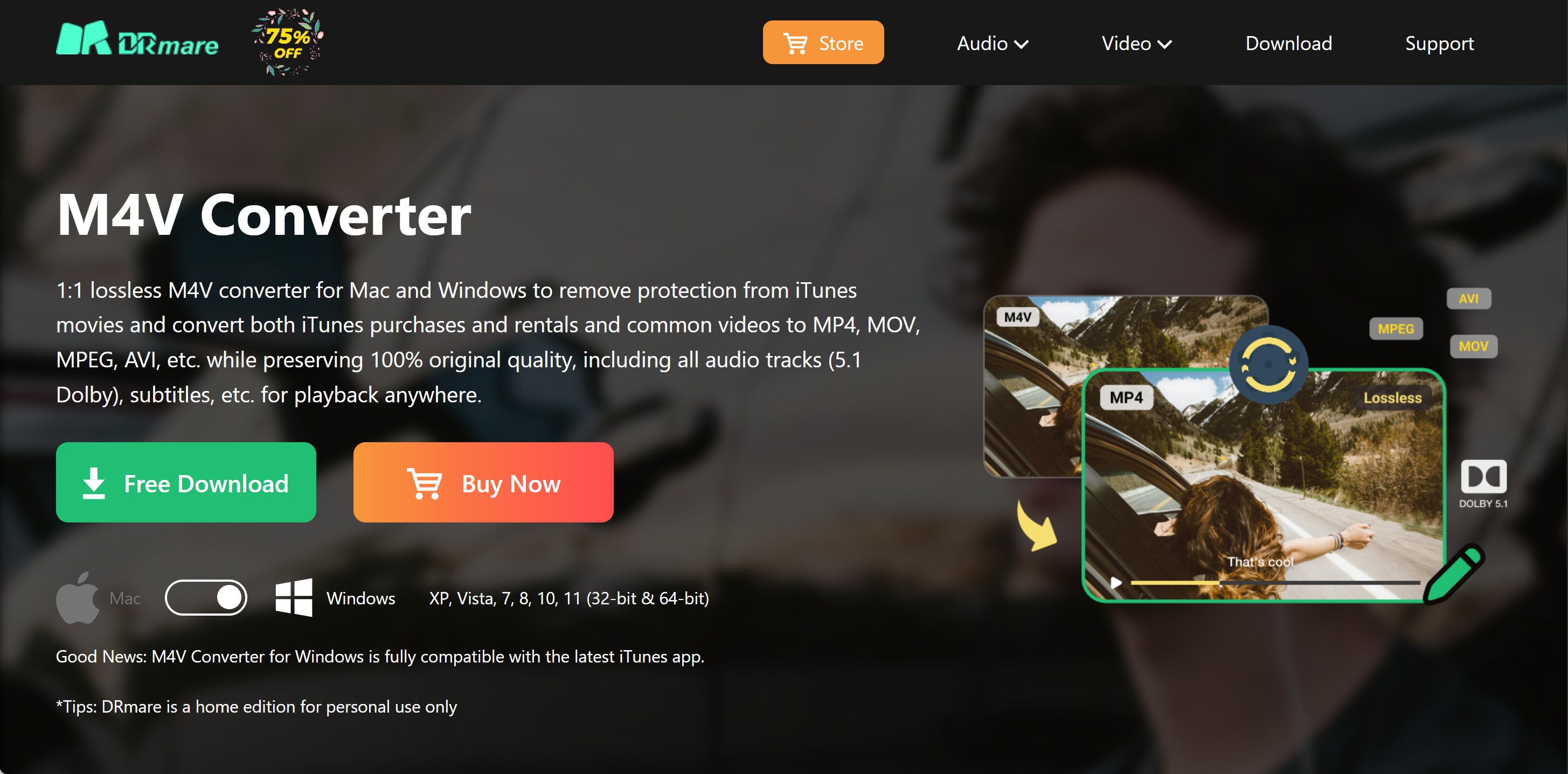
| Pros |
|
|---|---|
| Cons |
|
Step-by-Step: Turn iTunes M4V Rentals or Purchases into MP4
Install DRmare and prepare the M4V file. Download the movie inside iTunes or the Apple TV app first—DRmare works on the local M4V, not a stream.
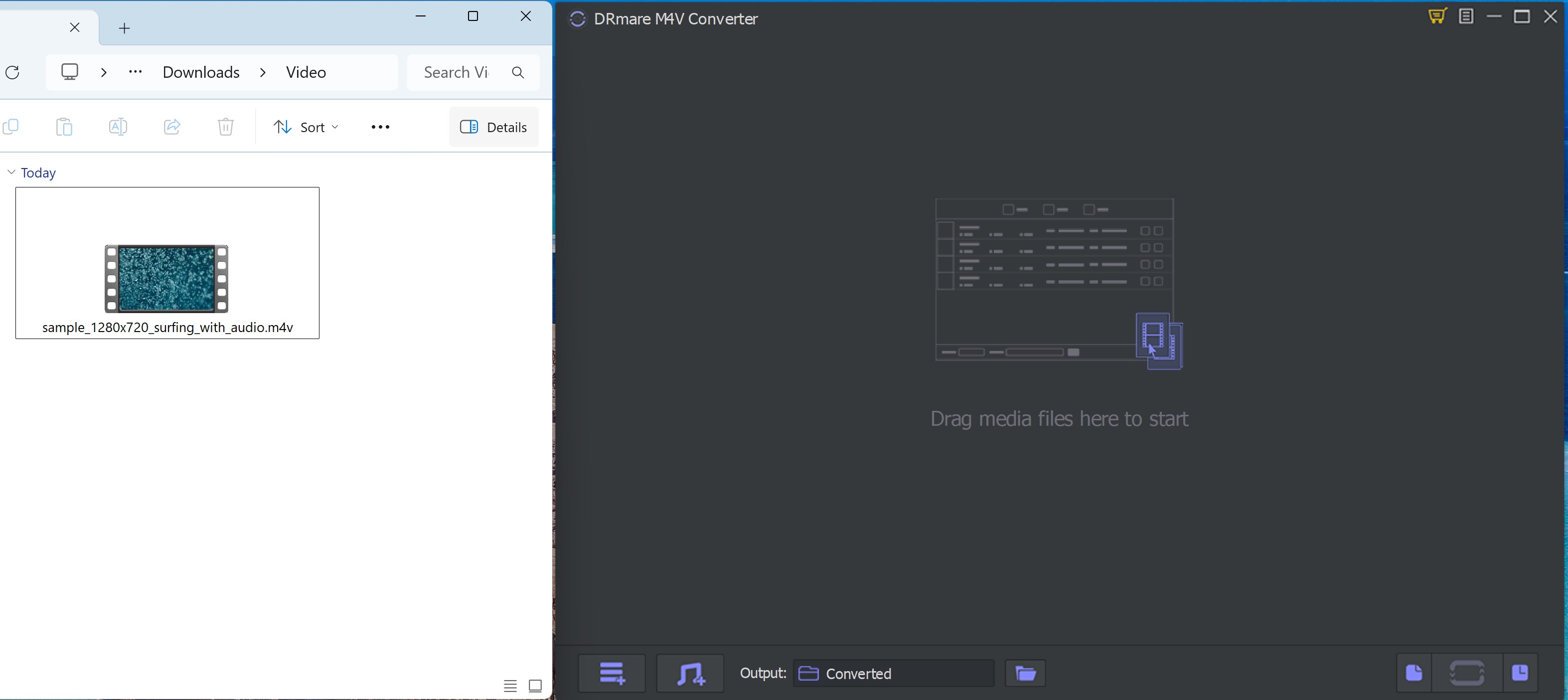
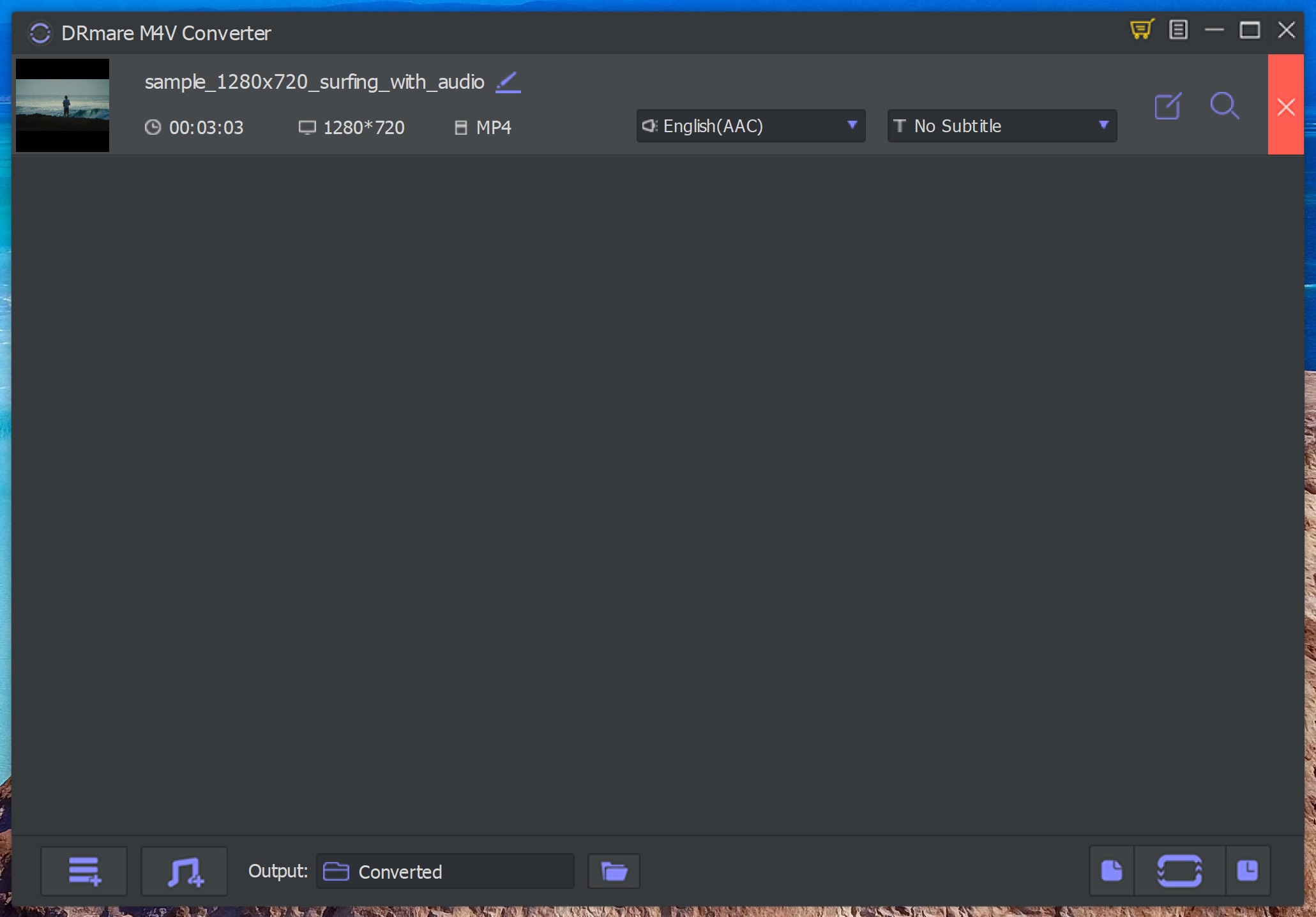
Drag the M4V file into DRmare. Adjust output format (MP4 or MOV) and any per-file settings on the loaded item.
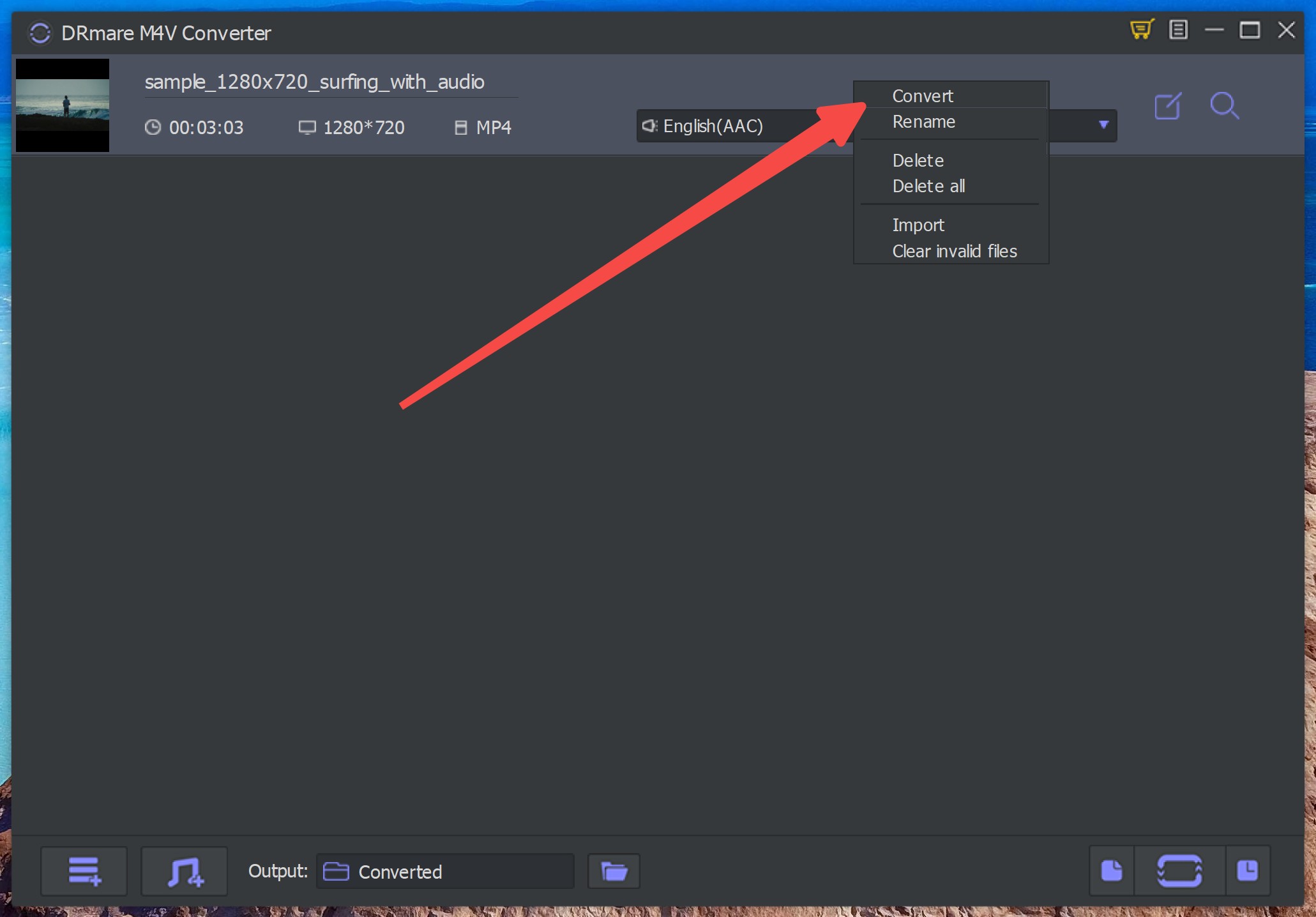
Right-click the file and choose Convert. DRmare processes the M4V and writes a standard MP4 for personal offline viewing.
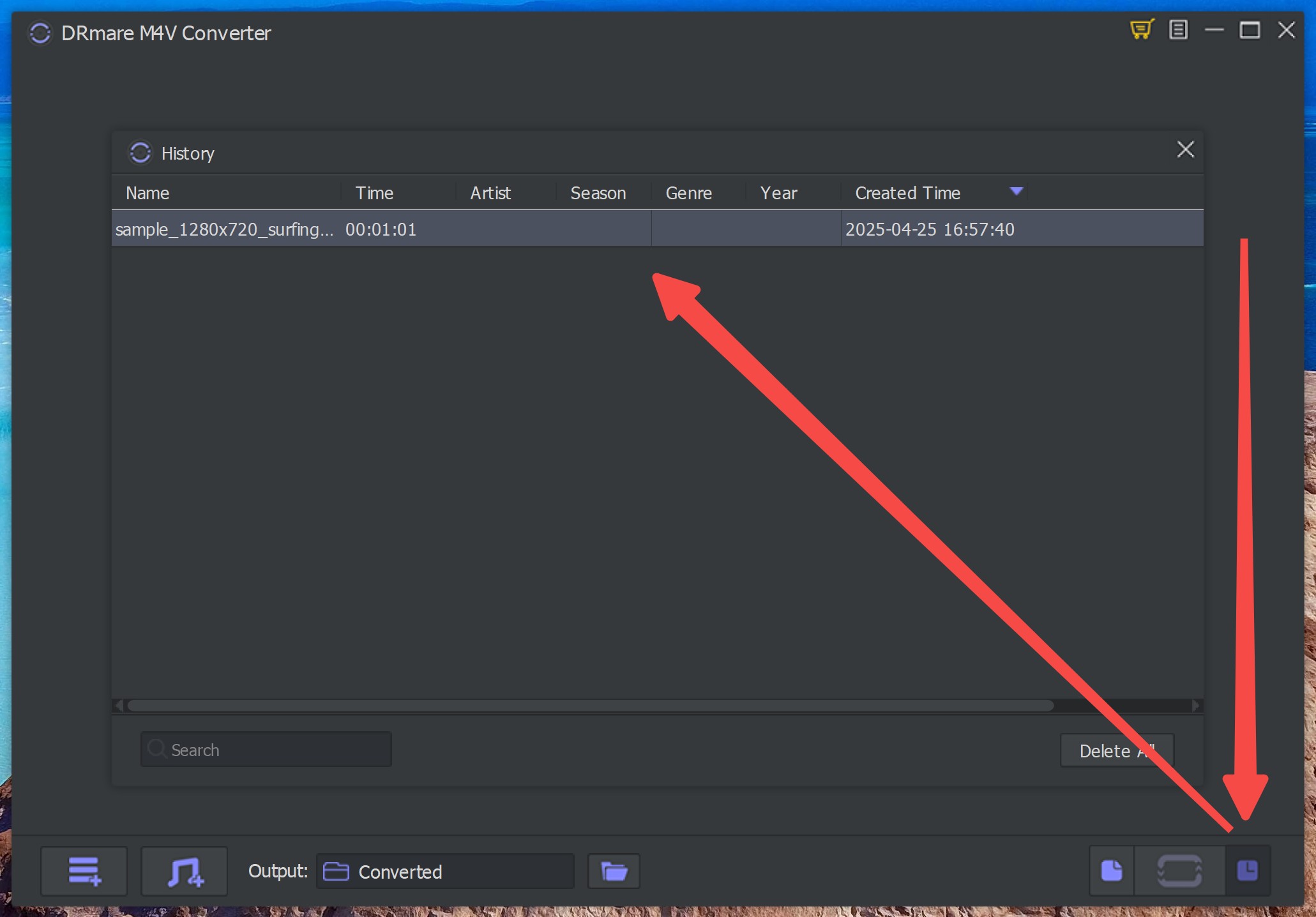
Open the History panel from the clock icon in the top-right to locate the finished file and confirm the output.
Which DRM Removal Method Fits Your Case
Here’s the side-by-side. Each cell carries a concrete answer, not a placeholder; check the platform’s Help Center or the tool’s official product page for numbers that change over time.
| Tool | Best for | Not ideal for | Source it handles | Output format | Approximate speed vs. official app | OS support |
|---|---|---|---|---|---|---|
| StreamFab | A clean MP4 or MKV library from the major streaming services (as of July 2026). | iTunes M4V purchases (use DRmare) or live-only captures (use RecordFab). | Netflix, Prime Video, Disney+, Max, Apple TV+, and more—see the official Supported Sites page for the current list. | MP4 or MKV | Comparable to a direct in-app download; batch and overnight scheduling supported. | Windows and macOS, with a native Apple Silicon build (no Rosetta). |
| RecordFab | Content the official app won’t let you download at all—live playback, region-locked titles you can legitimately view, or stream tools can’t currently reach. | Long back-catalog batching, where waiting time matters. | Anything the embedded browser can play on your subscription. | MP4 or MKV | Up to 5x real-time playback speed, still slower than a direct save. | Windows. |
| DRmare M4V Converter | iTunes M4V movies and shows bought or rented from Apple TV. | Netflix, Prime Video, Disney+, and any Widevine or PlayReady streaming content. | Local iTunes / Apple TV M4V files (Apple FairPlay). | MP4 or MOV | Batch conversion, typically several times faster than real-time playback. | Windows and macOS. |
Table values as of July 2026 — verify current specs on each tool’s official product page.
If we had to pick one starting point for a reader who mostly uses streaming services, we’d begin with StreamFab: it produces a plain MP4 or MKV, its coverage overlaps with where most readers actually watch, and its native Apple Silicon build sidesteps the audio drift and stability complaints we still see for older tools running under Rosetta 2. For an iTunes-only library, DRmare is the honest answer instead. For content the app blocks from download altogether, RecordFab is the workaround, not the daily driver.
What Is Video DRM and Why It Blocks Playback
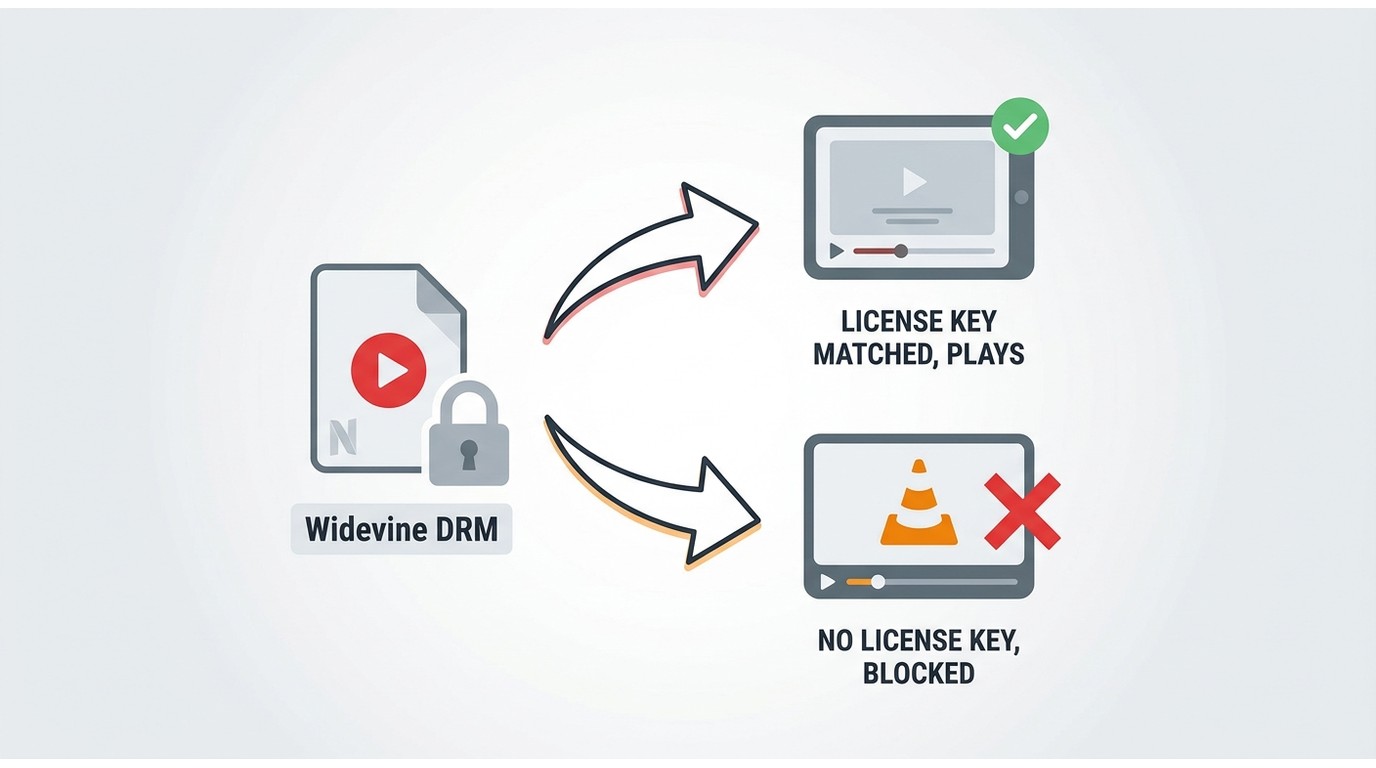
Video DRM is an access-control license layer the platform wraps around a stream or a downloaded file. A DRM-protected video from Netflix or Prime Video won’t open in VLC not because of a codec issue but because the file is deliberately locked to the official app, which holds the license key needed to play it. When your account, device, or subscription no longer satisfies the license conditions, the same file becomes unplayable inside the same app that put it there. That is the practical face of DRM removal software questions online: a legal, licensed video that has stopped playing where the reader thought it would.
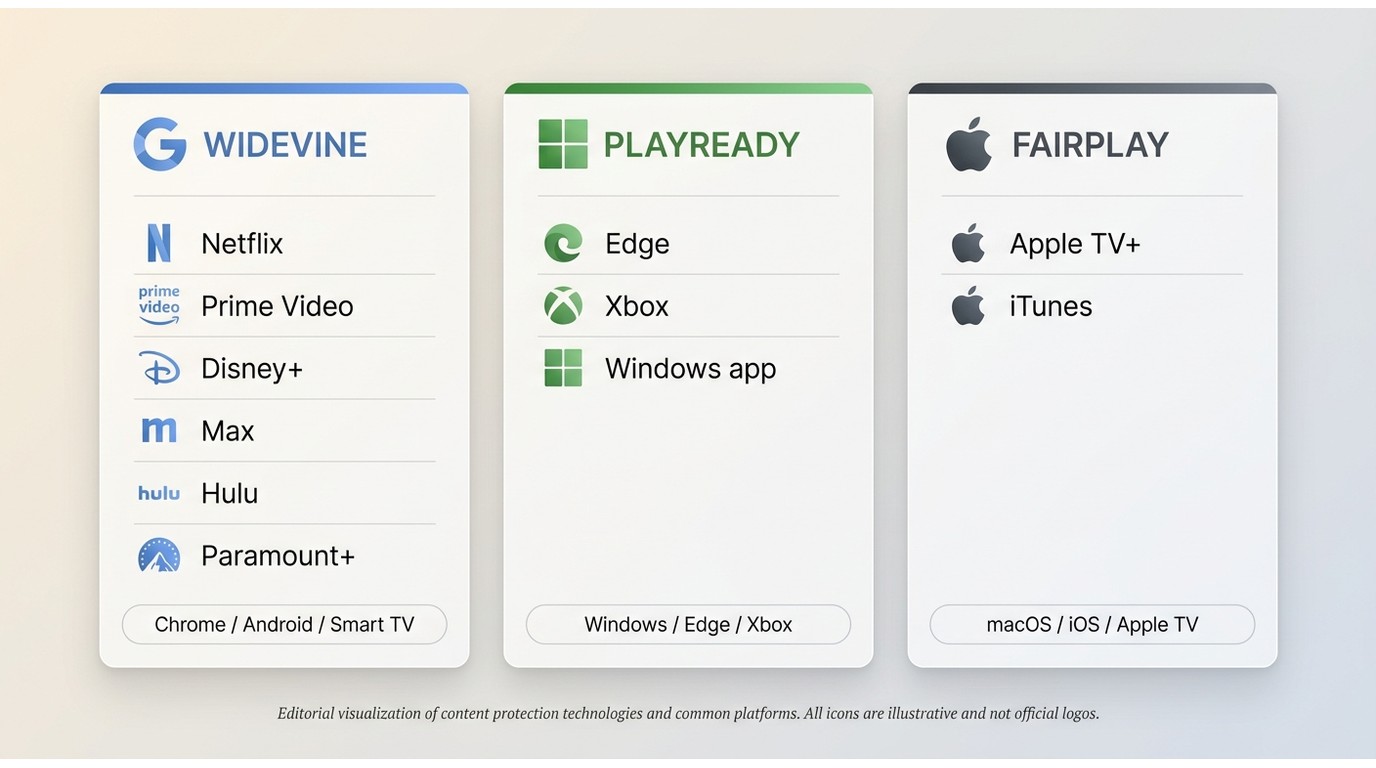
Three DRM systems handle almost all mainstream video: Widevine (Google), PlayReady (Microsoft), and FairPlay (Apple). Which one a title uses depends on the platform, the browser or app, and the device—which is also why some downloads that work on one device refuse to open on another. As of July 2026, none of these systems have been retired, but the versions and platform coverage shift. The official Help Center of each service is the current source of truth.
Widevine, PlayReady, and FairPlay: The Three Big DRM Systems
Which system protects a given Widevine DRM video, PlayReady stream, or FairPlay title depends on the platform and the device—a small map is enough.
- Widevine (Google) — the DRM behind most streaming services when played on Chrome, Android, and many smart TVs (Netflix, Prime Video, Disney+, Max, Hulu, Paramount+, and more, as of July 2026).
- PlayReady (Microsoft) — common on Edge, Xbox, and Windows apps, and often the DRM path chosen for premium tiers on Windows machines.
- FairPlay (Apple) — Apple’s DRM, used across iTunes purchases and rentals, Apple TV+, and the Apple TV app on macOS and iOS.
Each system has an internal security tier that affects what quality the official app is allowed to play on your machine. You don’t need to go deeper than that: the practical upshot is that your maximum saveable quality is capped by whatever quality the official desktop app is licensed to play for your account and title, and that cap shifts by plan and service. Confirm the current tier list on the platform’s official Help Center.
Is It Legal to Remove DRM from Video in the US?
The honest answer is “it depends on why you’re doing it,” and any confident “legal” or “illegal” label is oversimplifying. Two separate legal regimes actually apply, and readers routinely conflate them.
The first is federal copyright law. The Digital Millennium Copyright Act (DMCA) §1201 is an anti-circumvention rule that broadly restricts working around technological protection measures on copyrighted works. However, every three years the US Copyright Office runs a triennial rulemaking that grants narrow exemptions—as of July 2026, the current cycle carves out specific uses such as documented accessibility needs, education, and certain personal archival scenarios.
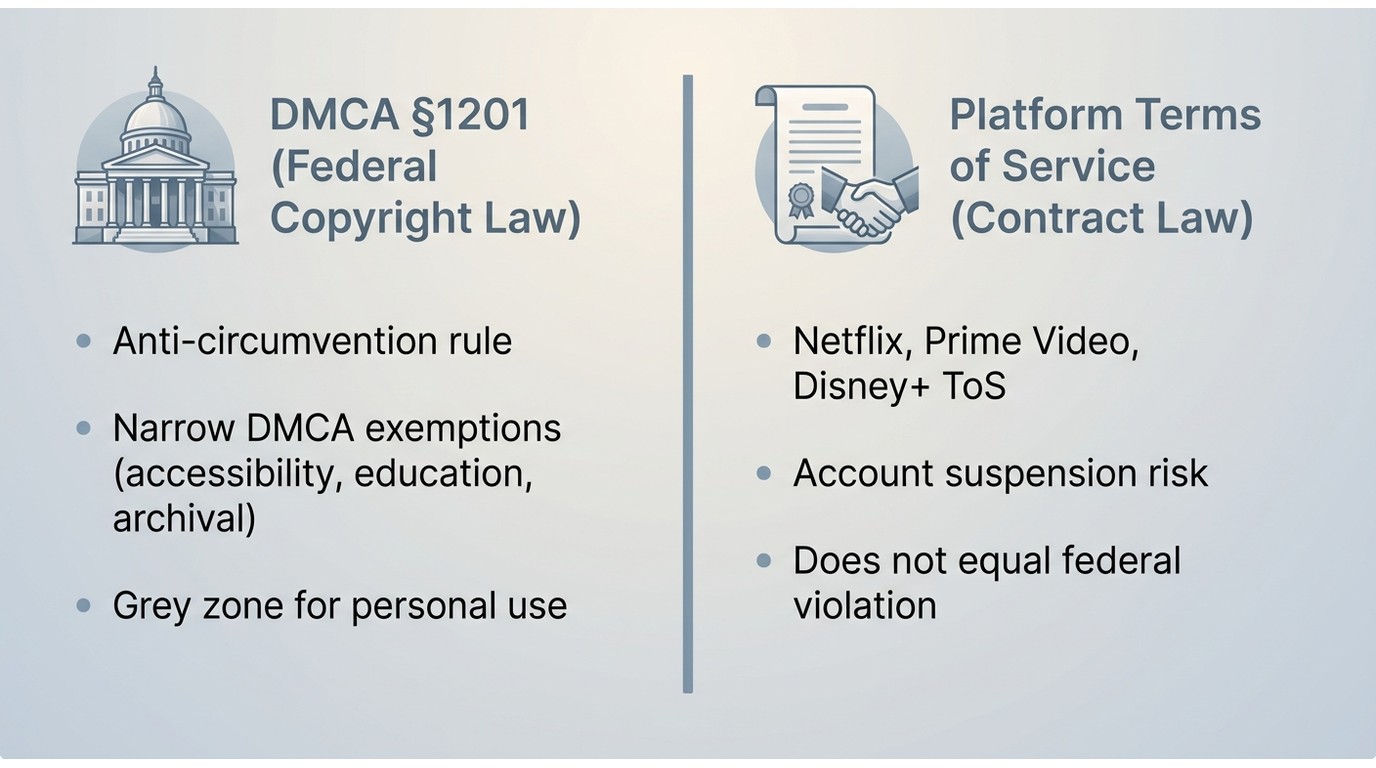
The second is the platform's Terms of Service, which is contract law between you and the streaming service. A ToS can prohibit something that federal copyright law doesn’t, and vice versa. Ignoring the ToS may cost you the account; it isn’t automatically a federal violation. Reading both is genuinely worth ten minutes before you rip anything, and platform terms change often.
The reader-responsibility line is straightforward: only act on content you’re authorized to access under an active subscription or purchase, keep the resulting file for personal offline viewing, and never use these tools for redistribution or resale. The DVDFab / StreamFab position on this scope is summarized in the StreamFab Copyright and Usage Guidelines, which is the starting point our editors point readers to. As of July 2026, the exemption list and platform terms both continue to evolve; for specifics that turn on your situation, consult qualified legal counsel.
Fix Common DRM Errors When Removing DRM from Video
The three errors below cover most of the questions our editors see from readers in 2026. Every fix here keeps the work inside the platform’s own playback path — nothing here tries to defeat the license server or lie to it.
Black Screen When Recording or Screenshotting DRM Video
A black rectangle where the video should be is almost always intentional. Both HDCP (High-bandwidth Digital Content Protection, running on the display connection) and Widevine’s output-protection rules can flag your capture surface as untrusted and blank the frame. This is the platform’s design, not a bug in your screen recorder.
Two practical checks: first, confirm your whole display chain is HDCP-compliant—a non-compliant HDMI cable, an unbranded USB-C adapter, or a mirrored external display can trip the check. Second, use RecordFab’s embedded-browser recording surface instead of the OS-level capture (Snipping Tool, QuickTime Screen Recording, or OBS on the desktop)—the embedded browser handles playback inside a context that RecordFab is built for.
"DRM Protected Streams Are Not Supported" Error
Three causes account for almost every occurrence of this message in 2026. Work through them in order:
- CDM version mismatch. The CDM module inside a browser or a downloader can fall out of sync when the platform rolls a fresh license format. Update the desktop app or the browser (Widevine CDM is bundled) and retry.
- Aggressive VPN IP flagged as a DRM issue. Platforms sometimes present a geo or shared-IP block as a generic DRM error. If you’re on a VPN, switch to a dedicated IP node or turn the VPN off for the session.
- Browser extension in place of a desktop app. Lightweight browser extensions often can’t negotiate the license handshake the same way the desktop client can. Use the official desktop client or a purpose-built desktop tool like StreamFab.
Offline Downloads Suddenly Show a DRM License Error
An in-app “offline” download is a cached file plus a license the app periodically revalidates online—it isn’t a truly independent copy. Three things trigger the license error mid-flight:
- The license handshake couldn’t reach the server in time (long flight, no Wi-Fi, captive portal). Open the app while online for a few seconds, let the license refresh, and try again.
- The license simply expired — you crossed the ~30-day pre-play or the ~24- to 48-hour post-play window (common industry pattern as of July 2026; verify with the service’s Help Center).
- Device clock or timezone is off. If you jumped time zones or your device time is out of sync, the license reads as expired even when the calendar day hasn’t moved. Set date and time to “network” and reopen.
This is precisely the failure mode a local MP4 or MKV copy of content you’re authorized to access doesn’t inherit—a plain file has no periodic handshake to fail.
FAQ: Removing DRM from Video in 2026
DRM is an access-control license layer used by streaming services (Netflix, Prime Video, Disney+, Apple TV+, and iTunes) and desktop storefronts to bind a video file to the official app that holds its license key. Three systems handle almost all mainstream video: Widevine (Google), PlayReady (Microsoft), and FairPlay (Apple). Because only the official app can read the license, the same file will not open in a third-party player. As of July 2026, that behavior has not changed.
Two paths behave very differently. In the official app, downloads are tied to an active subscription and to a per-title license window — commonly about a 30-day expiry before first play and roughly a 24- to 48-hour playback window afterward, as of July 2026 (varies by service). Once the subscription lapses, the app refuses to open the file. A locally saved MP4 or MKV copy created by a desktop tool such as StreamFab, on the other hand, is a standard media file and does not need a subscription to open, for content you’re authorized to access, where permitted by platform terms and applicable law.
Yes, but only within a lawful, personal-use scope, and the route depends on the source. For streaming services (Netflix, Prime Video, Disney+, Max, Apple TV+, and more), save a local MP4 or MKV copy with StreamFab (Method 1)—the practical path when you want to remove DRM from MP4 workflow constraints and hold a plain file. For iTunes M4V purchases and rentals from Apple TV, use DRmare M4V Converter (Method 3) for MP4 output. For live playback or titles the app blocks from download, RecordFab captures the playing session as MP4 or MKV (Method 2). As of July 2026, platform paths change, so re-check before ripping large libraries.
As of July 2026, the common industry pattern is roughly a 30-day expiry from the moment a title is downloaded before you first press play, and then a 24- to 48-hour playback window once you’ve started watching. Per-account download caps of about 15 to 25 titles are also standard. Numbers vary by service and change often, so confirm on the platform’s official Help Center. A local MP4 or MKV copy is exactly what sidesteps this window — the file itself has no license clock.
Yes — StreamFab ships a native Apple Silicon build, so it isn’t running under Rosetta 2 emulation. That matters because some earlier third-party tools relying on Rosetta have reported audio drift or crashes on M-chip Macs; a native build is the practical reason StreamFab stays stable there. Community feedback in 2026 has been positive on this specifically, though as with any desktop app, macOS point releases can briefly need a catch-up update from the vendor.
The maximum quality StreamFab can save is bounded by the quality the platform’s official desktop app is licensed to play for your account and title. In practice, that’s usually up to 1080p and up to 4K on services and subscription tiers that authorize 4K on desktop as of July 2026. Caps vary by plan and title — check the platform’s official Help Center for the current tier list.
Conclusion on Removing DRM from Video
The three methods here split cleanly along source. For streaming services, StreamFab saves a local MP4 or MKV copy — the practical starting point for DRM removal for video when the official app’s download rules don’t match how you actually watch. For content the app won’t let you download at all, RecordFab is the recording fallback. For iTunes M4V purchases and rentals, DRmare stays in its lane. All three apply only where you’re authorized to access the content and where platform terms and applicable law permit—that responsibility line doesn’t move.
If your everyday use is streaming, StreamFab is the one to try first. It offers a 30-day trial with 3 full downloads, which is enough to test it against your own library before deciding.