- • Netflix DRM Removal: 3 Offline Options and Their Limits
- • Netflix Official Downloads: Supported Devices and Desktop Limits
- • StreamFab Netflix Downloader: A Desktop Local-Copy Workflow
- • StreamFab, PlayOn, and Netflix: Which Workflow Fits?
- • Troubleshooting Netflix DRM and Desktop Compatibility
- • Personal Netflix Copies Still Have Use Boundaries
- • Netflix DRM FAQs
- • Conclusion: Choose the Workflow Your Device Supports
- Netflix uses Widevine, PlayReady, and FairPlay. Streaming quality depends on the browser, operating system, plan, hardware, display connection, and title; browser streaming ceilings are separate from local-file output specifications.
- Netflix supports native downloads on Android phones and tablets, iPhone and iPad, Fire tablets, and eligible Chromebooks. Windows and Mac support Netflix streaming but not native offline downloads.
- A subscription does not authorize every copying method. Any local-copy workflow should be limited to authorized access and content, personal use without redistribution, and use permitted by applicable law and Netflix's terms.
A Netflix download remains tied to its supported app, while a desktop browser is not an offline library. Netflix DRM shapes both limits, so offline viewing starts with understanding official downloads, desktop local-file options, playback compatibility, and authorized-use boundaries. Renaming an app-managed download cannot turn it into an MP4.
Netflix DRM Removal: 3 Offline Options and Their Limits
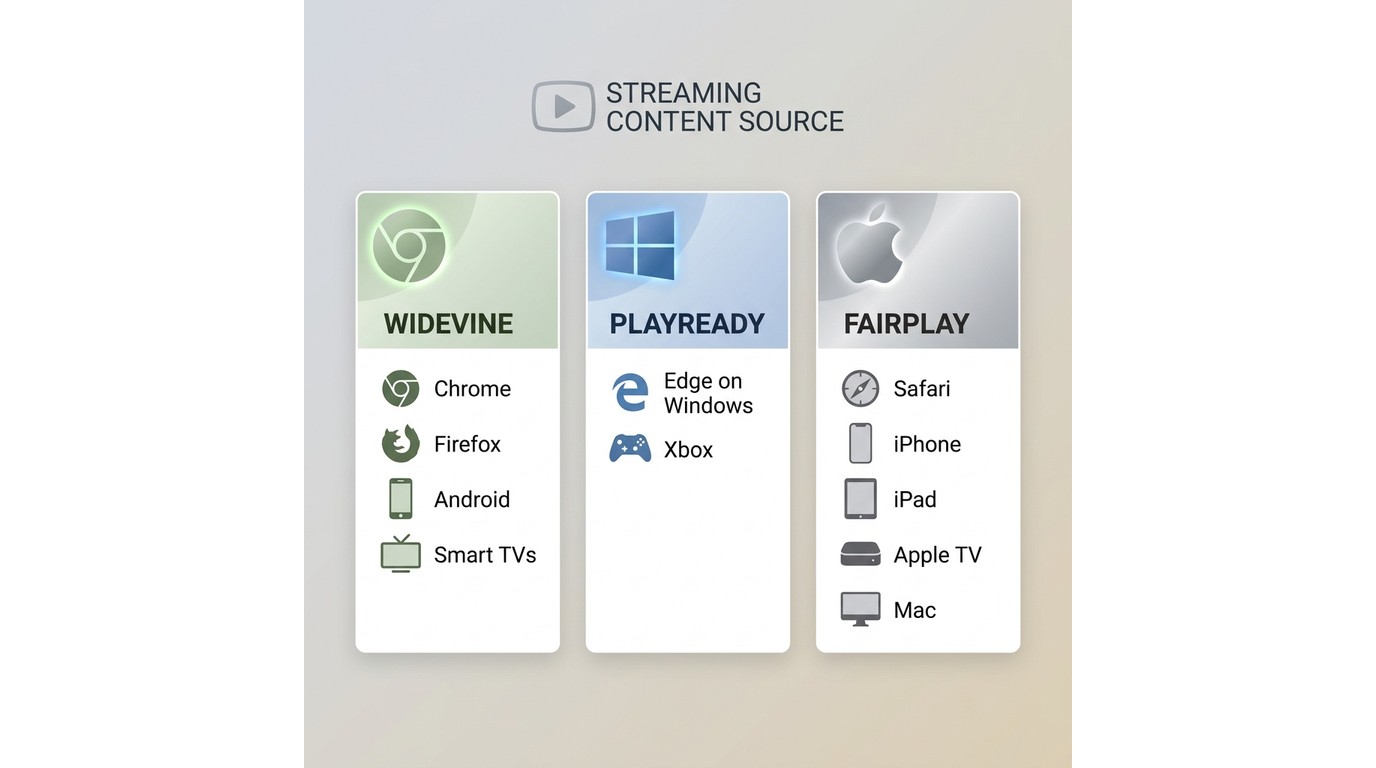
Netflix DRM is a chain of license, key, and output-protection systems that let a paying subscriber watch a title on an approved device while blocking copies of the stream itself. Here, “Netflix DRM removal” means understanding those restrictions and choosing an authorized offline workflow, not claiming that a product disables Netflix protection. Netflix app downloads are encrypted, app-managed files, so renaming one with an MP4 extension does not convert it into an ordinary MP4 or MKV file. If you're wondering about Netflix DRM, you might really be looking for the answer to which browser gets me 1080p, why a screenshot comes out black, and can I keep a local file for offline viewing when the official app won't? This section handles the mechanics; the later sections handle the available options.
Widevine, PlayReady, and FairPlay on Netflix
Netflix uses different DRM systems depending on the device, operating system, browser, and playback configuration. Google's Widevine is commonly used by Chrome, Firefox, Chromium-based browsers, Android devices, and many TVs. Microsoft's PlayReady is used in supported Windows, Xbox, TV, and set-top-box environments. Apple's FairPlay supports Netflix playback through Safari and compatible Apple devices.
Although their implementations differ, these systems validate the playback environment, request license information from Netflix, and can route video through a protected output path that limits how other software accesses the displayed frames.
The License Handshake and Protected Playback
A CDM is the browser or app component that communicates with Netflix's license server. In plain terms, the playback software validates the device and account session, requests permission to play the title, processes the licensed media within the security level supported by that environment, and can mark the displayed frames as protected output.
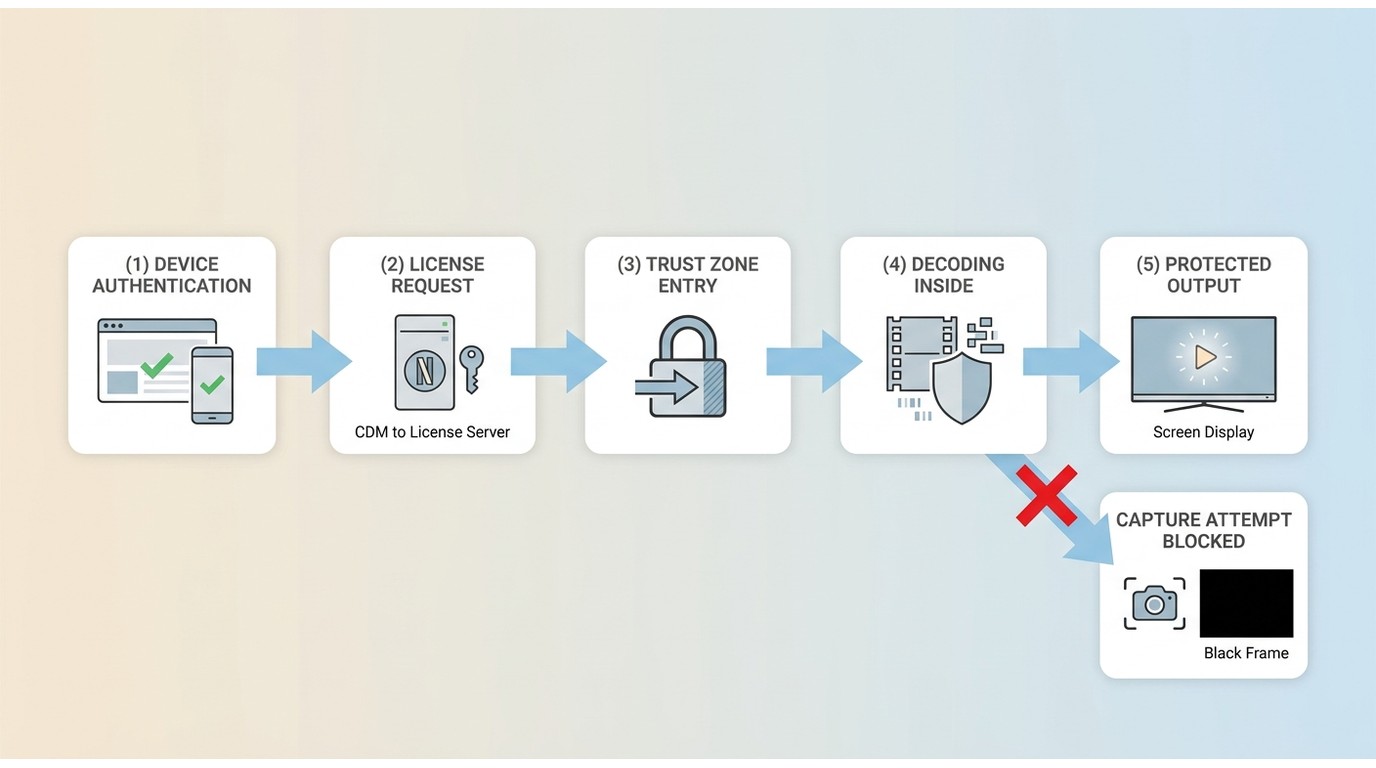
When protected-output handling is active, a screenshot or recording tool may receive a blank frame instead of the displayed video. A black screen can also involve browser protected-content settings, software updates, or device compatibility, so it should not be attributed to one DRM or display protocol in every case.
Widevine Levels and Netflix Playback Quality
Widevine has three security levels that describe how its media-processing path is protected. The level is one factor in playback quality, but Netflix also considers the browser, operating system, plan, hardware, display connection, and title.
| Widevine Level | Processing Model | Common Context | Playback Meaning |
|---|---|---|---|
| L1 | Hardware-backed media processing | Supported phones, tablets, TVs, and streaming devices | Can meet higher-security playback requirements |
| L2 | Mixed hardware and software processing | Less common device configurations | Capabilities depend on the certified device path |
| L3 | Software-based media processing | Some browsers and lower-security device paths | Available quality depends on Netflix's platform requirements |
These levels apply specifically to Widevine. PlayReady and FairPlay are separate DRM systems with their own security models, so an Edge or Safari playback path should not be labeled Widevine L1. Browser streaming ceilings also should not be treated as local-file output specifications.
Chrome and Edge Have Different Netflix Streaming Requirements
As of October 2026, Netflix lists Chrome and Edge streaming up to 2160p on eligible Windows systems and plans, while Firefox and Opera reach up to 1080p. On Mac, Safari reaches up to 2160p, Chrome, Firefox, and Opera up to 1080p, and Edge up to 720p. Widevine, PlayReady, and FairPlay are separate systems; these are streaming ceilings, not StreamFab download specifications.
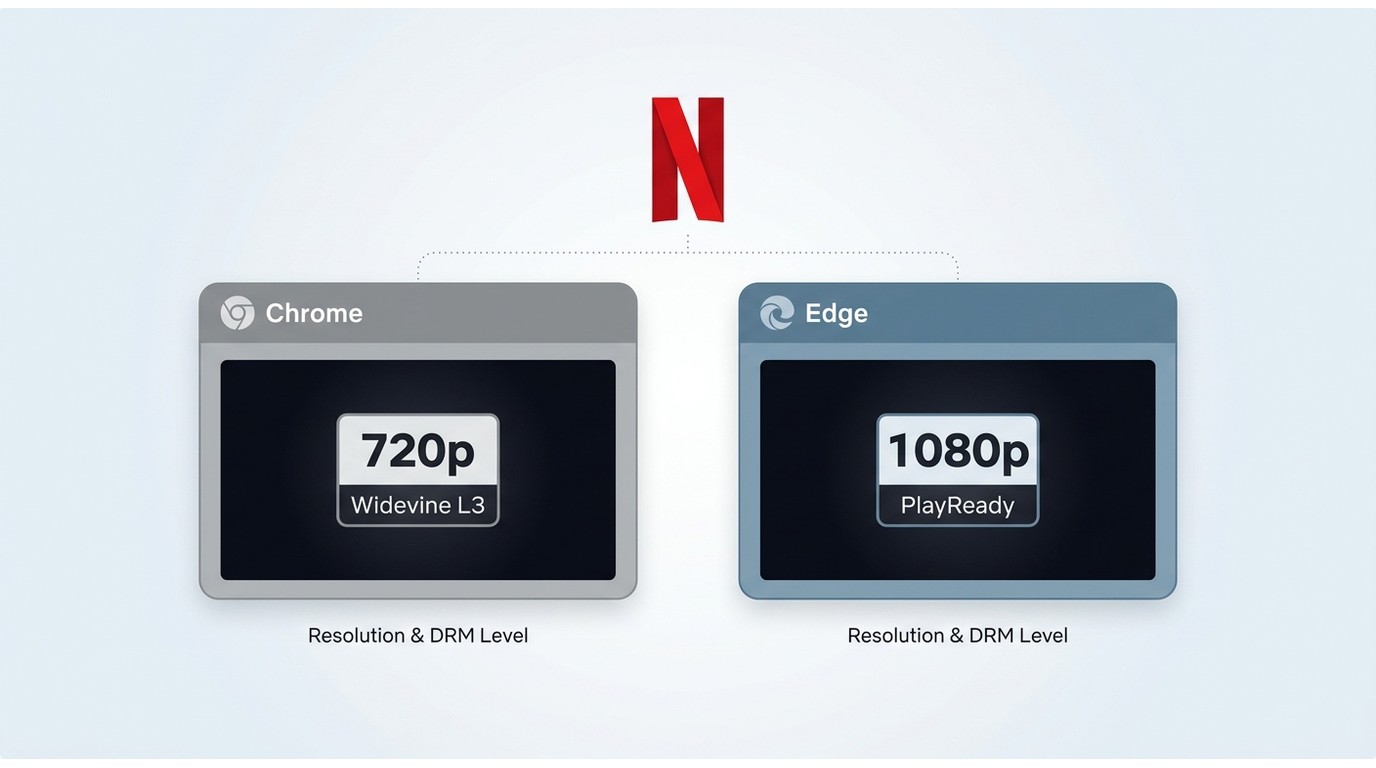
If Netflix streams below the listed ceiling, switching browsers alone may not solve the issue. Check the Netflix plan, browser version, operating system, supported hardware, display connection, and playback settings because each part of that chain can affect the resolution Netflix serves.
Netflix Official Downloads: Supported Devices and Desktop Limits
Now that we know why the DRM path affects resolution, the next practical question is which Netflix devices support native offline downloads and which support streaming only. The answer depends on the device and app.
Official Downloads Work on Selected Mobile Devices
Netflix's native offline downloads work on Android phones and tablets, iPhone and iPad, Fire tablets, and eligible Chromebooks, subject to the membership and title. The download button appears inside supported Netflix apps, and downloads remain subject to title restrictions, plan limits, and the expiration information shown in the app. This is Netflix's first-party offline path for subscribers who want an app-managed download workflow.
Windows Supports Netflix Streaming, Not Official Downloads
Netflix's Windows app supports streaming, but it does not provide native offline downloads. There is no official download button, offline queue, or app-managed offline playback on Windows. For travelers, the guide to Watch Netflix Offline on a PC or laptop explains the current choice between a supported download device and a separate desktop local-file workflow for authorized content, where permitted by Netflix's terms and applicable law.
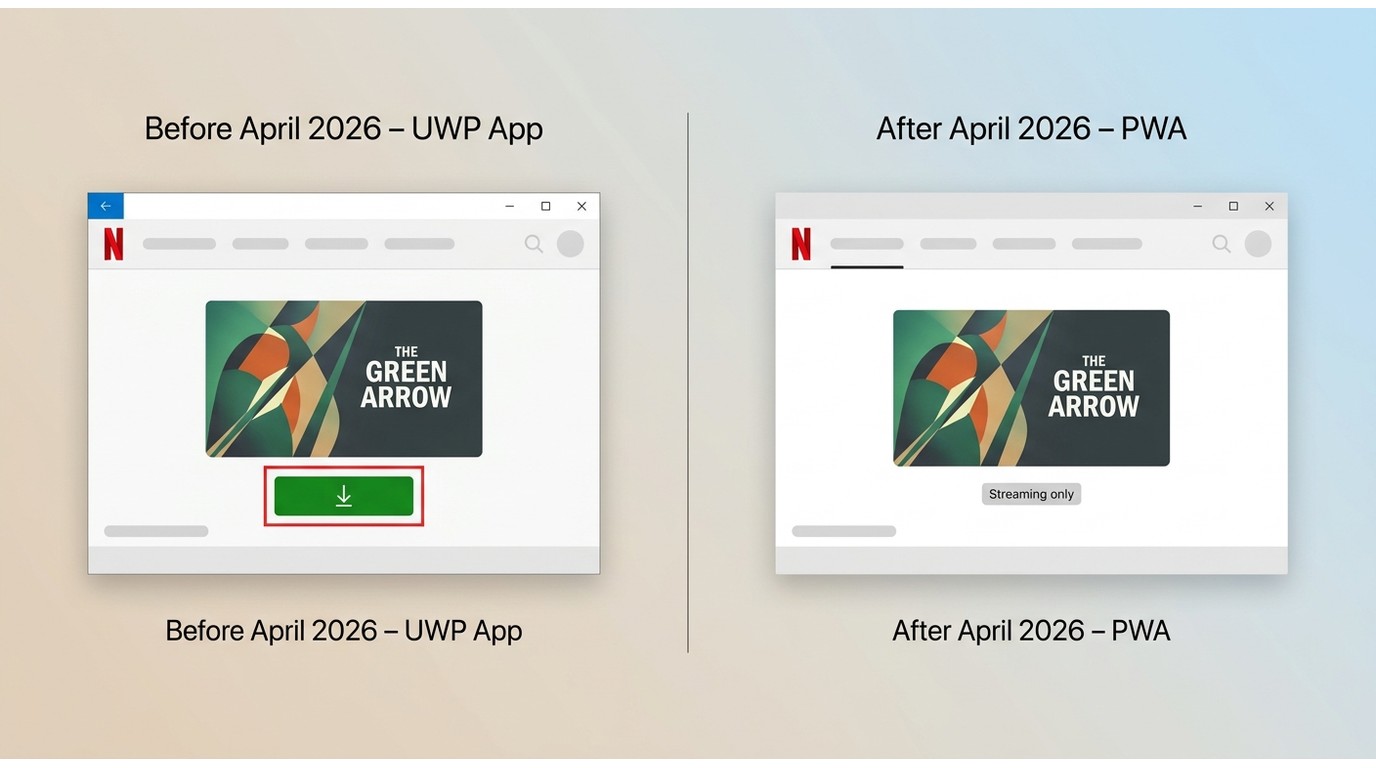
If you need a local MP4 or MKV file on Windows, that workflow is separate from Netflix's encrypted, app-managed downloads. The later StreamFab section explains the desktop local-file option.
Plan Caps, Expiration, and Download Devices
Netflix's official downloads have several limits that are easy to confuse. Ad-supported plans allow up to 15 downloads per device per calendar month, while ad-free plans allow up to 100 active downloads per device. Titles and memberships can carry additional restrictions, and the Netflix app displays each download's expiration and available renewal options. A download-device limit is separate from the number of devices that can stream at the same time; this overview of Netflix download limits for devices, titles, and expiration explains those distinctions in more detail.
| Limit | Current rule |
|---|---|
| Ad-supported plans | Up to 15 downloads per device per calendar month |
| Ad-free plans | Up to 100 active downloads per device |
| Expiration and renewal | Title-specific; shown in the Netflix app |
| Download devices | Membership-based limit; separate from simultaneous streams |
StreamFab Netflix Downloader: A Desktop Local-Copy Workflow
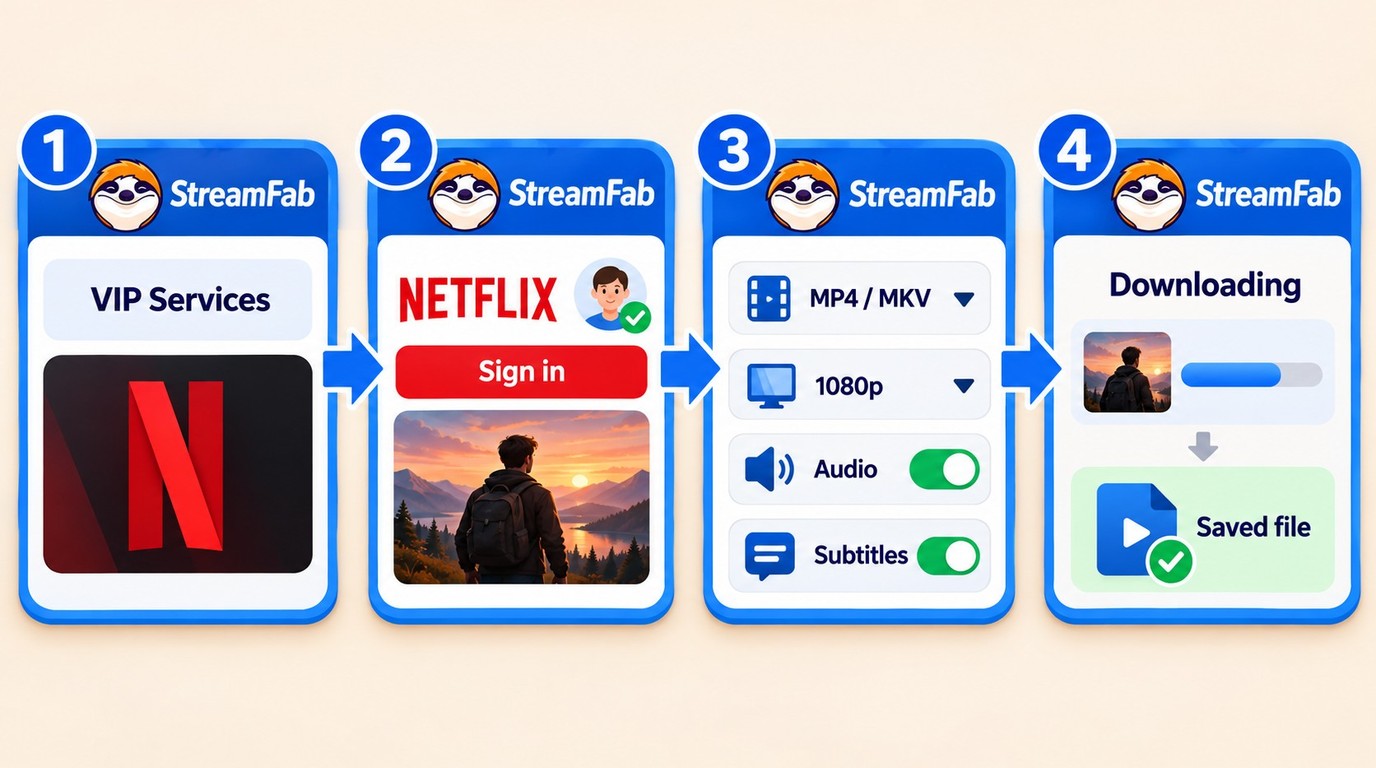
Desktop limits create a different decision: whether you need an app-managed download or a local file that matches your player. StreamFab Netflix Downloader is a desktop local-file workflow for Windows and Mac that saves authorized Netflix content as MP4 or MKV, with Netflix output up to 1080p and source-available HDR and multichannel audio. It does not import or convert Netflix app downloads. Use it with an active Netflix subscription for personal offline viewing, where permitted by Netflix's terms and applicable law; playback depends on the saved codec, audio format, HDR profile, and destination player.

- Save Netflix videos locally in MP4 or MKV on Windows or Mac
- Choose HDR10 or Dolby Vision only when available in the source and supported by the destination player
- Choose EAC3 5.1 or Dolby Atmos only when available in the source and supported by the destination player
- Netflix output up to 1080p
- Batch and scheduled saves for a personal offline queue
- Built-in browser for the Netflix authorization step
- Check the official product page for current trial availability
- Designed for authorized personal use of content you are entitled to view
A Desktop Option for Authorized Offline Viewing
If you mainly watch on a phone or tablet, Netflix's official download feature is the simpler route because the title stays inside the Netflix app. StreamFab Netflix Downloader fits a different need: Windows and Mac users who want an MP4 or MKV local file from content they are authorized to access, where permitted by Netflix's terms and applicable law.
- Desktop file workflow: Save authorized Netflix titles as MP4 or MKV on Windows or Mac for personal offline viewing.
- Playback-focused output: Choose source-available HDR10 or Dolby Vision and EAC3 5.1 or Dolby Atmos based on the destination player.
- Netflix output scope: Up to 1080p; choose settings based on a representative authorized title and your playback setup.
- Device scope: The workflow runs on Windows and Mac; it is not ideal for phone- or tablet-only viewing, where Netflix's official mobile downloads are the simpler option.
My rule is simple: choose the file for the player you plan to use. MP4 or MKV alone does not guarantee HDR or multichannel audio; the saved codec, audio track, HDR profile, and destination device must line up. The next three sections explain those choices.
1080p and HDR: Choosing the Right Video Output
StreamFab Netflix Downloader supports Netflix output up to 1080p. When the source provides HDR10 or Dolby Vision, the corresponding HDR profile can be retained in the local file, but playback still requires a compatible codec, player, display, and connection path. Choose the output profile for the screen that will play the file rather than treating the HDR label as a guarantee of identical results on every device. If 4K is your goal, the requirements to download 4K UHD Netflix movies involve a separate combination of plan, hardware, browser, and display support.
Original Audio: EAC3, Atmos, and Playback Support
StreamFab Netflix Downloader can retain EAC3 5.1 or Dolby Atmos when that track is available in the source and selected in the output settings. Actual playback depends on whether the destination player and audio system support the saved codec and channel layout. Check the original saved file before judging the result: if it contains EAC3 but a later HandBrake export shows AAC, the post-processing step changed the audio. Select E-AC3 passthrough during conversion when you want to retain an available EAC3 track.
MP4 and MKV: Match the File to Your Player
The output containers are MP4 and MKV. Before choosing a file, confirm whether your player supports the actual video codec, audio track, subtitles, and HDR profile. StreamFab Netflix Downloader supports H.264, H.265, VP9, and AV1 video, with subtitles saved as separate SRT files or embedded in the output. MKV is useful when you want multiple audio tracks or embedded subtitle streams in one file, while the Netflix to MP4 guide explains the practical considerations for choosing MP4. The desktop workflow supports Windows 10, Windows 11, and macOS 12 or later; the guide to watching Netflix offline on Mac, MacBook, M1, and M2 systems covers Apple silicon considerations. There is no iOS or Android build for this product, so phone and tablet viewers can use Netflix's official mobile download feature. Supported systems and formats may change, so check StreamFab's official product page for current availability.
Step-by-Step: Save a Local Copy for Personal Offline Viewing
For content you're authorized to access with an active Netflix subscription, and where saving a local copy is permitted by Netflix's Terms of Use and applicable law, here is the workflow. Before starting, install StreamFab Netflix Downloader on your PC or Mac. You can also read the parallel walkthrough on the main download Netflix videos to a laptop guide for background. The four-step flow below saves a single title to a local MP4 or MKV. Free-trial users can save up to three full titles before deciding whether to purchase.
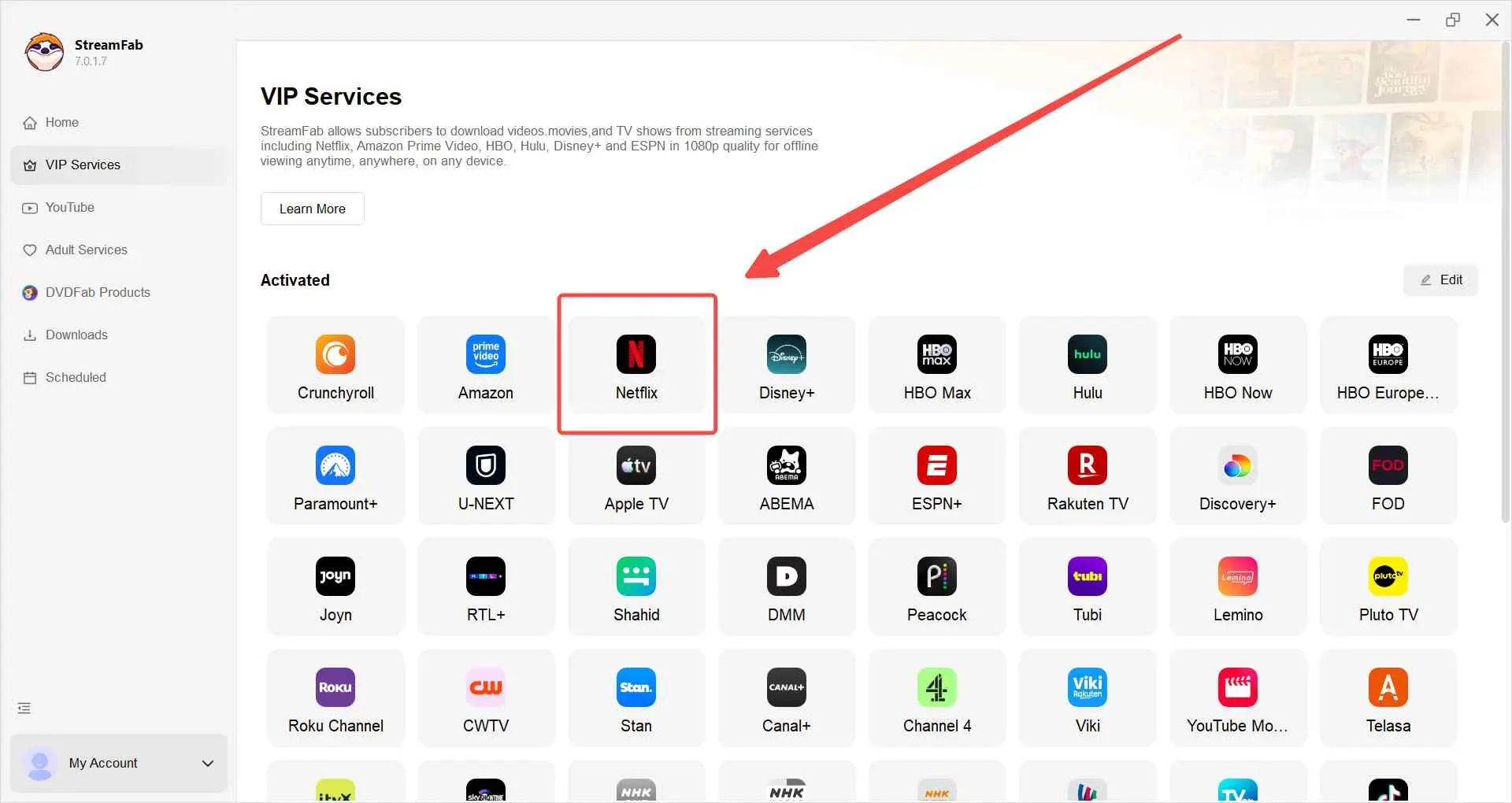
Open Netflix from the VIP Services menu.
Launch StreamFab, click the VIP Services tab, choose Netflix, and sign in with your own Netflix credentials. Your account must have an active subscription on a Netflix plan that entitles you to the title you want to save.
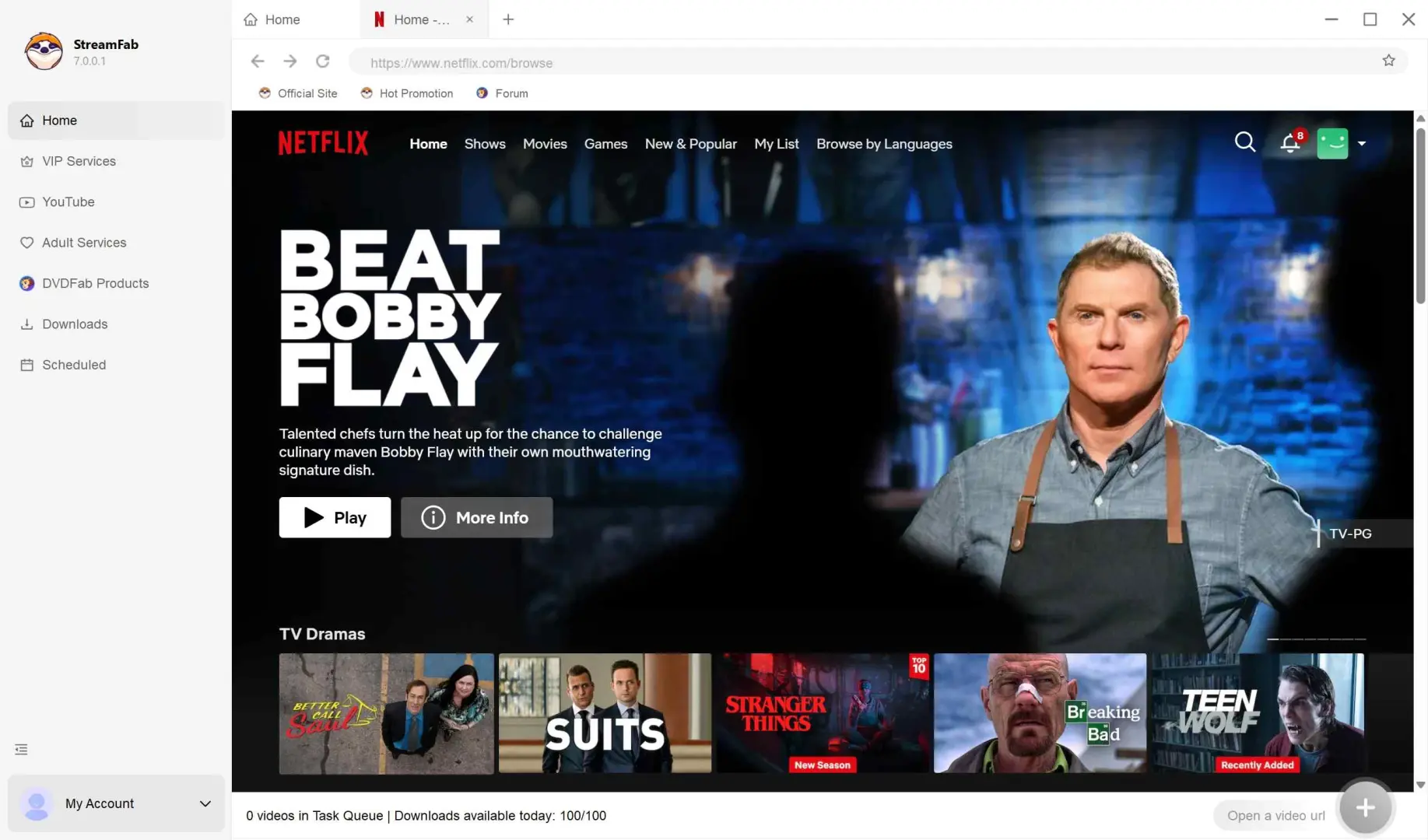
Find the title you want to save locally.
Use the search box, browse the Netflix home shelves, or paste a Netflix title URL. Click the title to start playback inside StreamFab's built-in browser.
Let StreamFab analyze the stream.
The tool detects the available resolution, audio tracks, and subtitle options and displays the settings panel when analysis finishes. You don't need to click anything during this step.
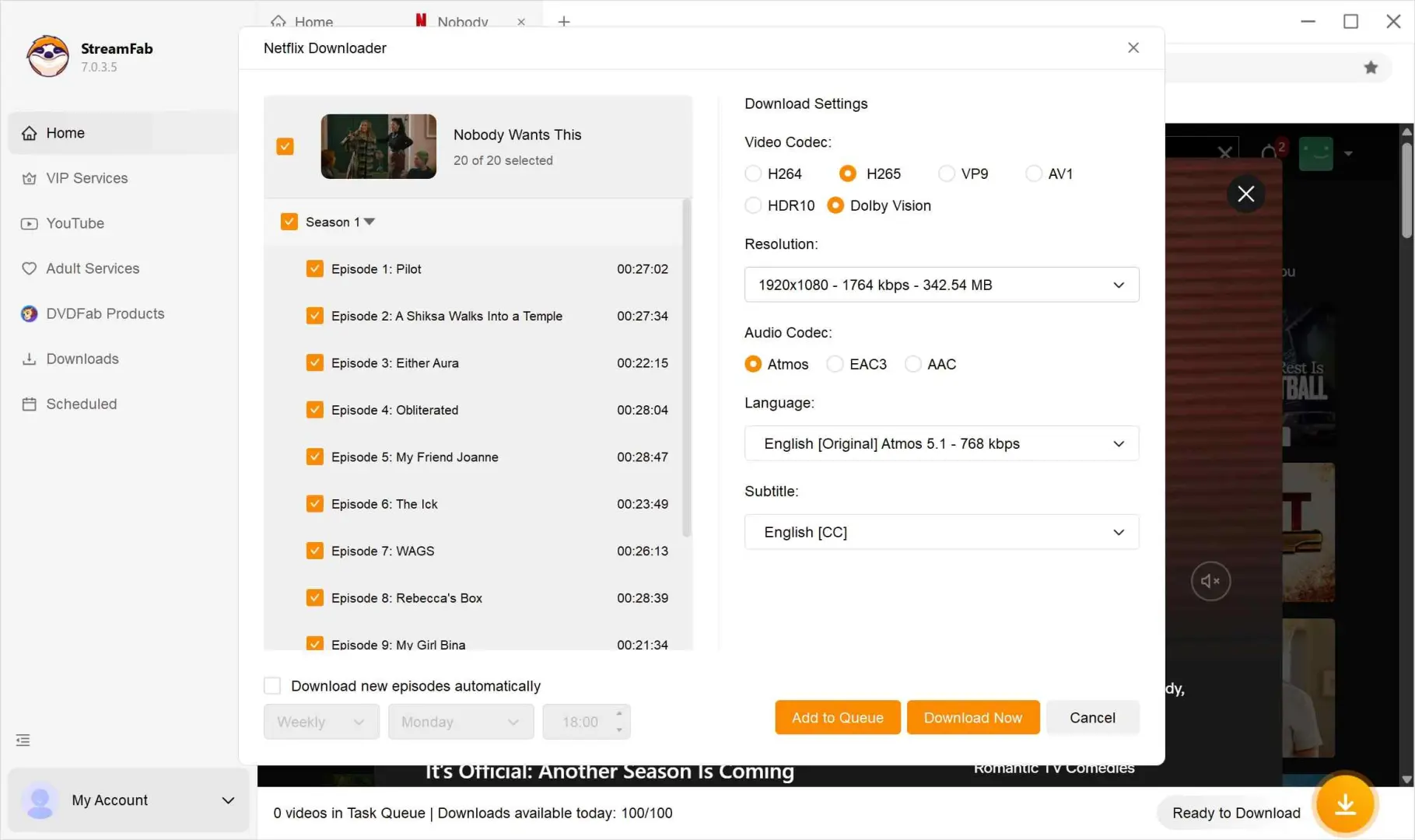
Save your local copy.
Confirm the resolution, available audio track, and subtitle language, then click Download Now. The file lands in your chosen output folder as MP4 or MKV and can play in a compatible player that supports its video codec, audio codec, subtitles, and HDR profile. For a personal series library, batch and scheduled tasks can organize multiple authorized episodes without changing this workflow.
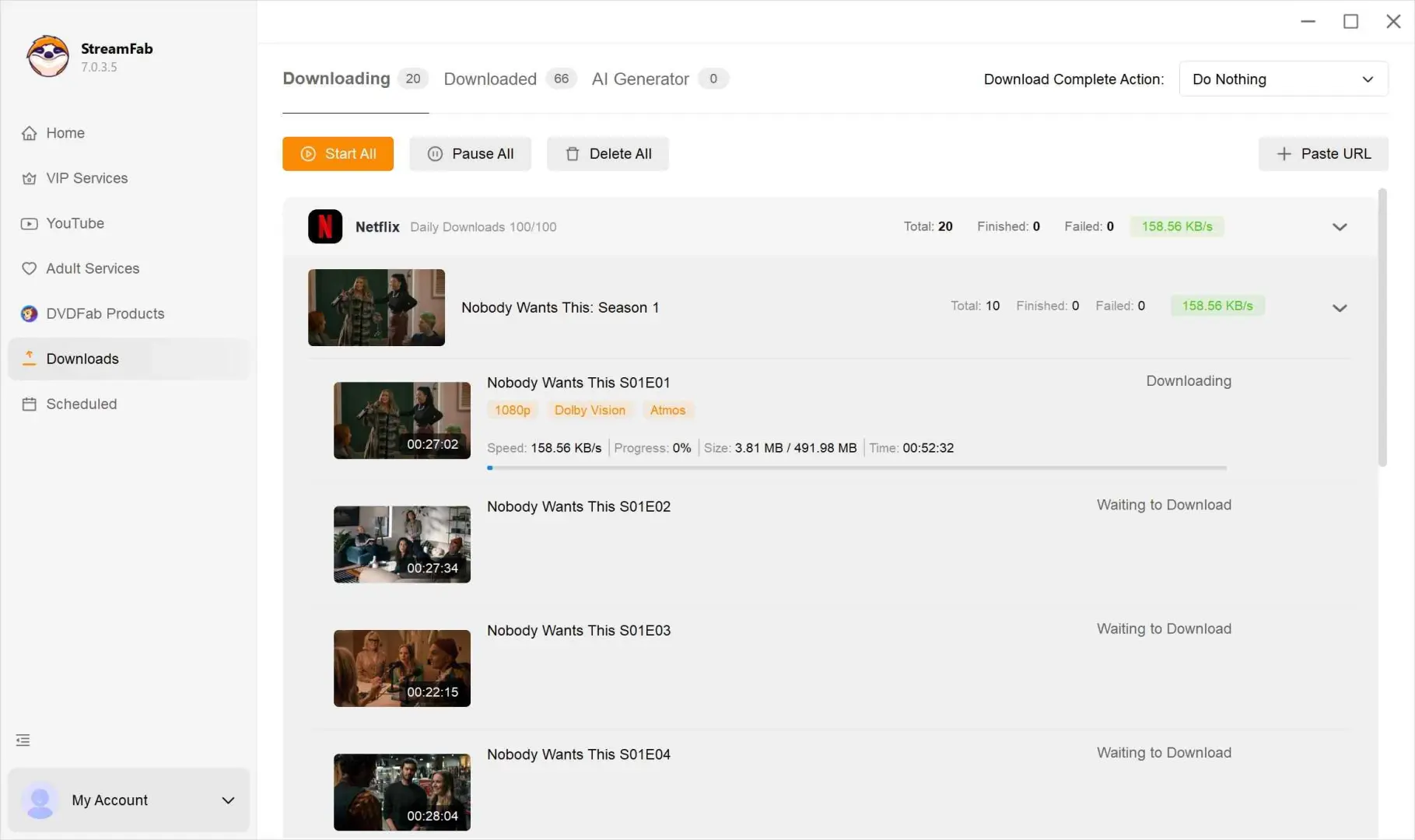

StreamFab, PlayOn, and Netflix: Which Workflow Fits?
Start with where you watch and whether you need an app-managed download or a standard local file. Netflix's official downloads are the simplest fit on supported mobile devices, Fire tablets, and eligible Chromebooks; StreamFab Netflix Downloader creates MP4 or MKV files on Windows or Mac, with Netflix output up to 1080p; PlayOn Home is a Windows DVR workflow. In my view, the useful question is not which option wins, but which output your device and player can actually use.
Desktop Support and Output Formats Compared
| Option | Desktop availability | File handling |
|---|---|---|
| StreamFab Netflix Downloader | Windows 10/11 and macOS 12+ | MP4 or MKV local files |
| PlayOn Home | Windows PC | MP4 recordings |
| Netflix official downloads | No native Windows or Mac downloads | Encrypted downloads inside supported apps |
PlayOn Home Is a Windows DVR; Cloud Is Separate
PlayOn Home is a Windows streaming DVR that records supported streams as MP4 files. PlayOn's FAQ describes recording at up to 1080p when the source and CPU support it. PlayOn Cloud is a separate hosted service that can deliver recordings to a PC or Mac. For readers comparing the wider product, the PlayOn review covers its broader positioning, while the Amazon Prime protected-playback explainer discusses a separate service without assuming that every black-screen issue has the same cause.
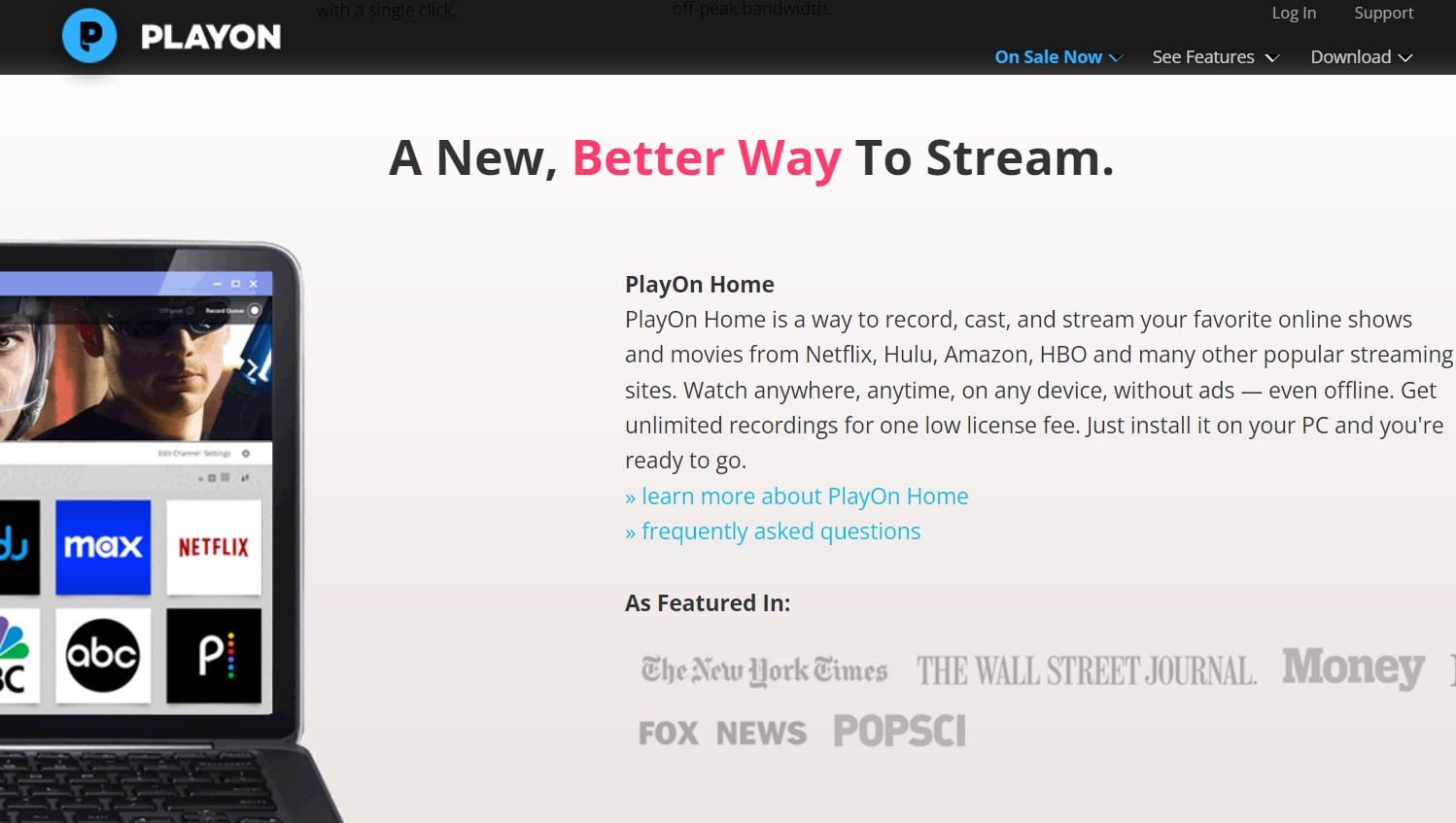
PlayOn Home suits readers who want the recording process to run on a Windows PC, while Cloud is the separate option for hosted recording and file delivery. With Home, you install the Windows application, sign in to a supported service, select a title, and record it while the stream plays. I would choose between the two based on where the recording should run and where you want the MP4 delivered, rather than assuming the same Netflix compatibility on every setup.
Install and launch PlayOn Home.
Download PlayOn Home from the official website and run it on a Windows 10 or 11 machine.
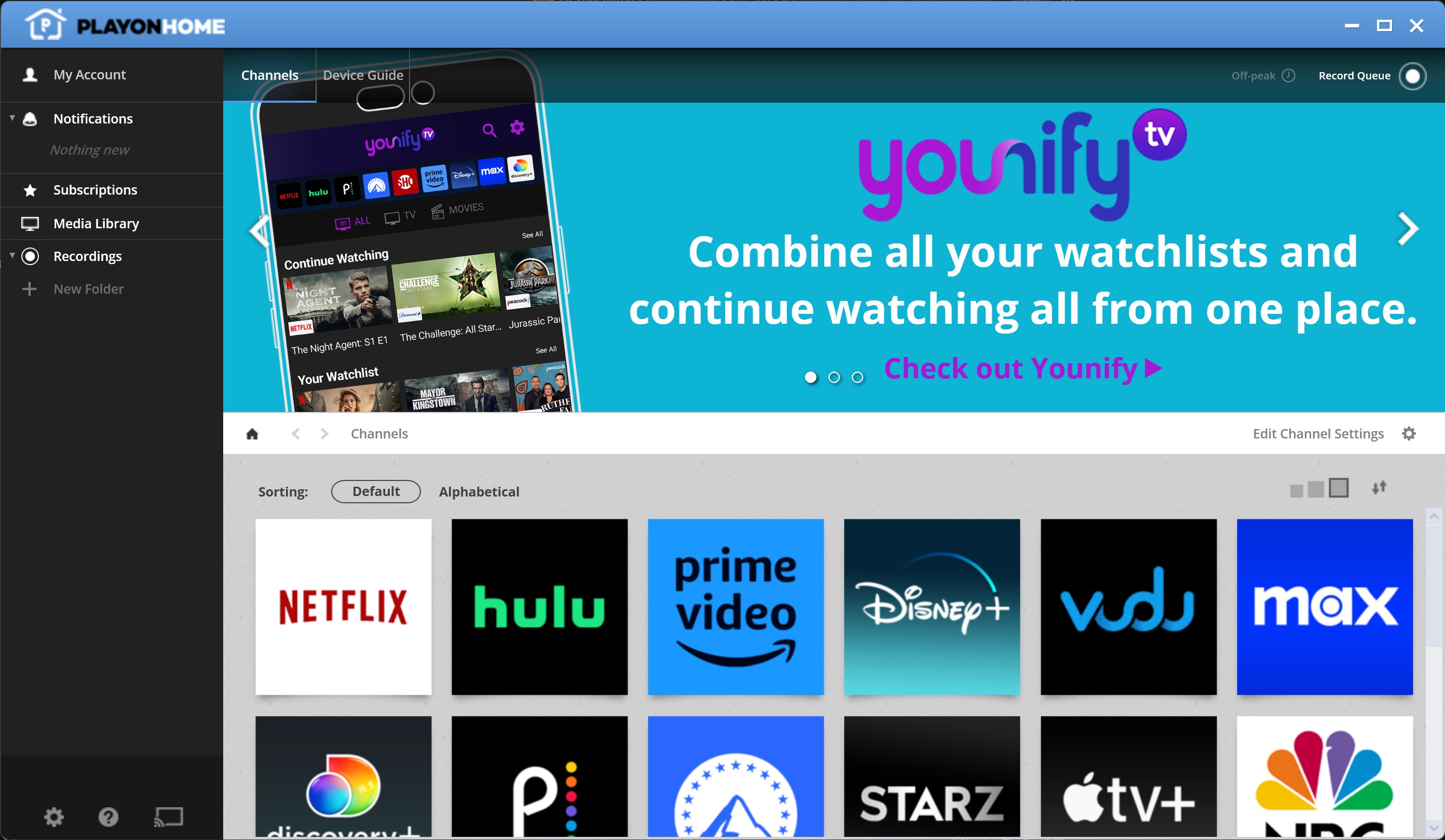
Sign in to Netflix.
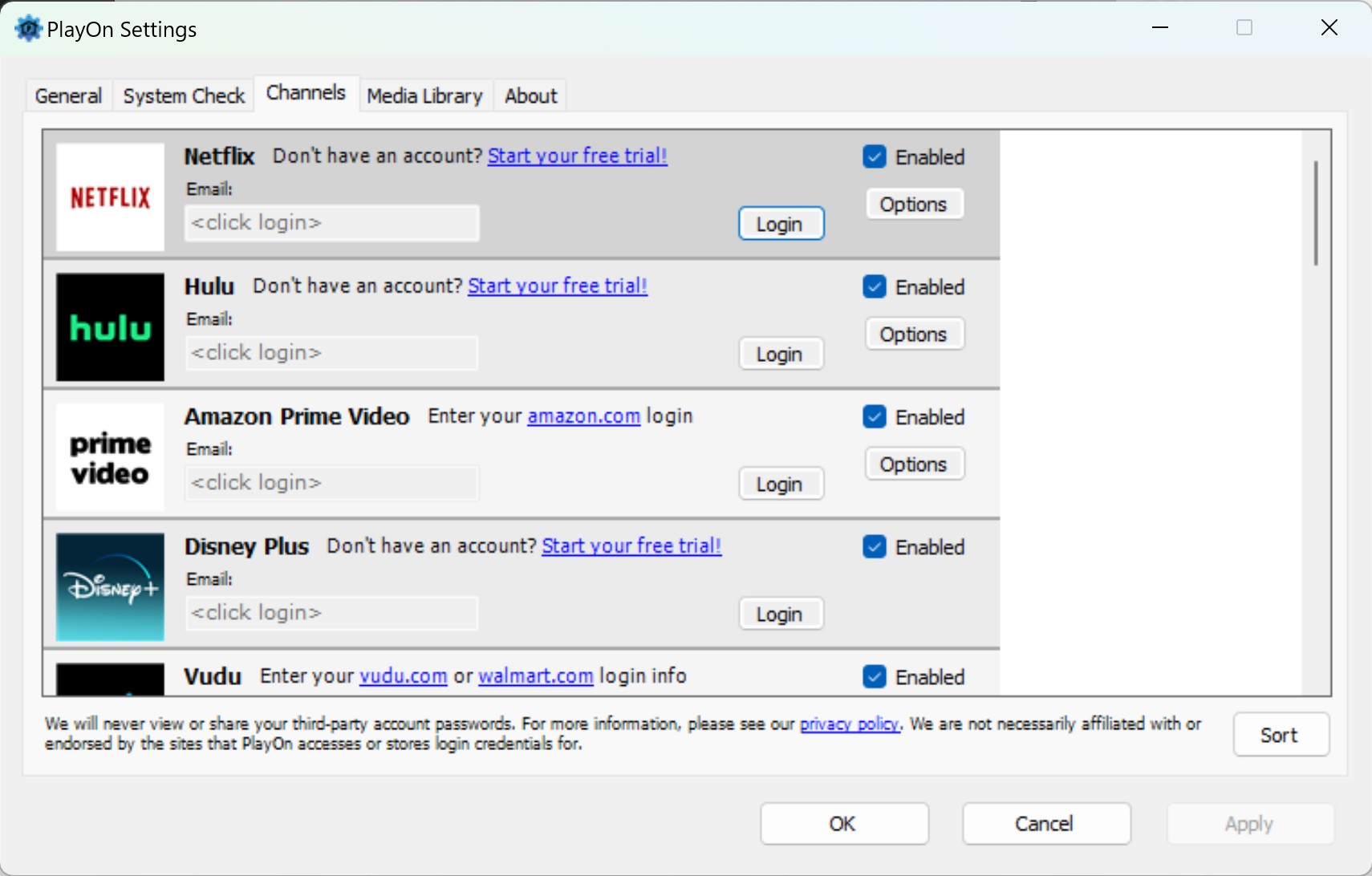
Open PlayOn Settings, click Login under the Netflix source, and sign in with your own Netflix account in the pop-up.
Start a recording.
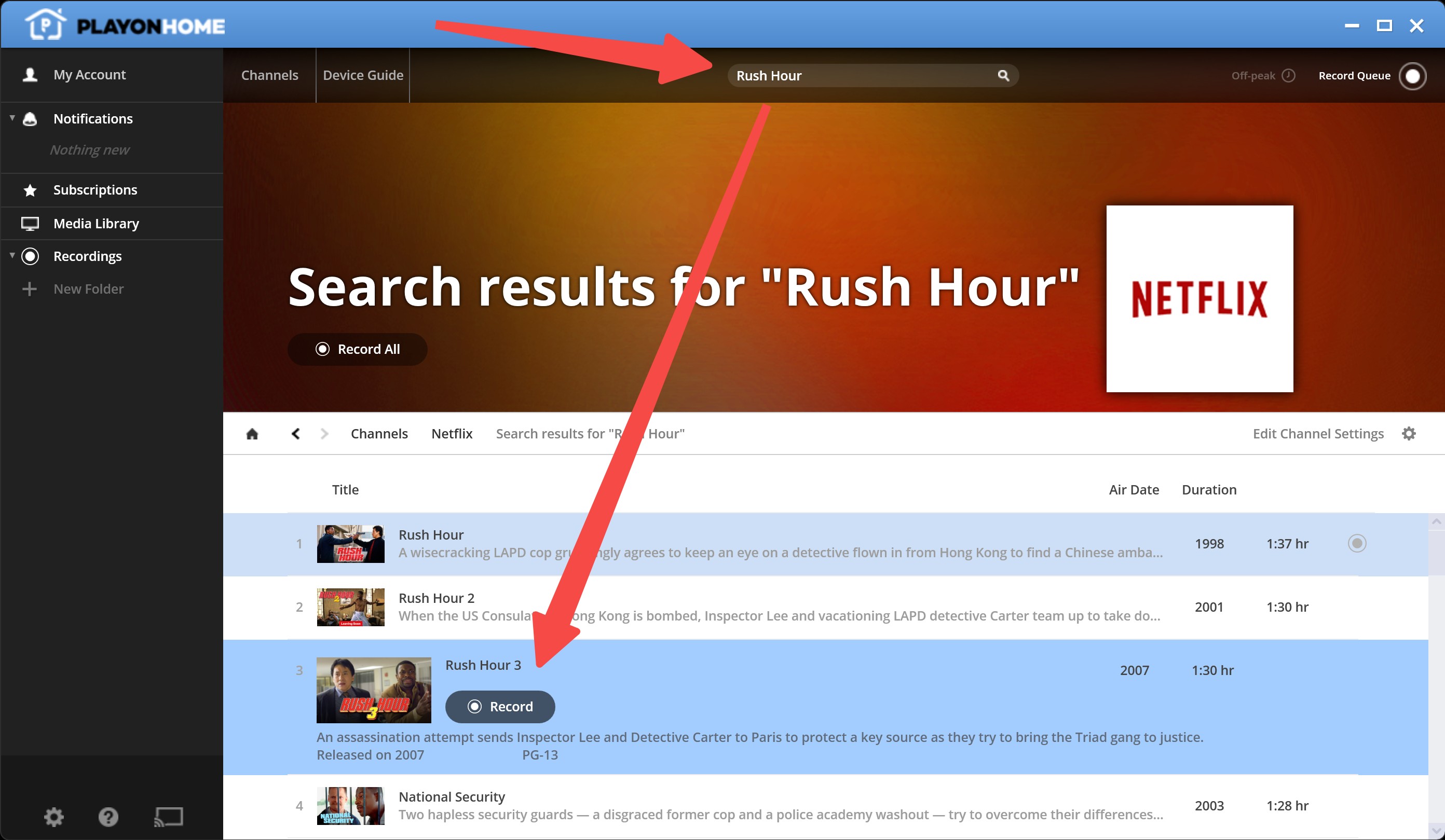
Browse Netflix inside PlayOn or paste a title URL, then click Record next to the title's thumbnail. Because PlayOn records as the stream plays, a 45-minute episode takes about 45 minutes to capture, and on Chrome 140+ setups the output may be blank frames because of HDCP 2.3 enforcement.
Troubleshooting Netflix DRM and Desktop Compatibility
Player and platform differences can produce three distinct desktop problems: protected playback may be disabled, a service update may affect local-file compatibility, or an account may have reached a device limit. First confirm that Netflix plays normally in the browser; for a title-specific StreamFab issue, use the latest supported build and follow the update log or support path.
Black Screens and Protected Playback
Problem: Netflix shows a black screen or error M7701-1003 in Chrome, or a capture tool receives blank frames. Fix: If Netflix plays normally but a capture remains black, the browser or operating system may be keeping the video in a protected output path; use Netflix's official download feature on a supported Android phone or tablet, iPhone or iPad, Fire tablet, or eligible Chromebook when you need the first-party offline route.
Quality Changes After a Platform Update
Problem: A title that previously saved at the expected quality may analyze differently or fail after Netflix, browser, or service parameters change. Fix: Treat this as a service-compatibility issue rather than a fixed drop to 720p. If StreamFab Netflix is not working with the same authorized title, install the latest supported build, review the update log, and contact StreamFab support if the problem continues.
On September 27, 2026, one U.S. user reported successful Netflix downloads, while another described success after retries. That same day, a different user reported repeated sign-outs and download failures; updating StreamFab and using its support channel are the next steps for a failing title. A Trustpilot review captured on October 27, 2026, also described a stalled task; the support channel is the appropriate path when processing does not complete. These individual reports do not establish a general success rate. The three-title trial can help you check a representative title you are authorized to access. If a paid StreamFab license still appears as a trial, sign in with the account used for the software purchase and contact StreamFab support; this activation is separate from your Netflix subscription.
Download-Device Limits and Account Settings
Problem: Netflix reports a device-limit issue when starting playback or an official download. Fix: First identify whether the message concerns download devices or simultaneous streams. The download-device allowance controls how many supported devices can hold Netflix downloads, while the simultaneous-stream limit controls how many devices can watch at the same time. Open Netflix's Account Settings in a browser and remove an unused download device or sign out of an inactive playback device as appropriate. If the message remains, allow a few minutes for the account state to update and try again.
Personal Netflix Copies Still Have Use Boundaries
A paid subscription and personal viewing do not automatically authorize every copying method. Netflix terms restrict unauthorized archiving and automated access. Use boundaries include authorized access, authorized content only, no redistribution, and compliance with applicable law and Netflix terms for the specific use case.
United States: A Subscription Is Not Blanket Copying Permission
In the United States, a paid Netflix subscription establishes authorized access to eligible content, but it does not automatically authorize every copying method or later use. Keep any local-copy workflow limited to content you are entitled to access, do not redistribute the files, and evaluate the specific method and purpose under applicable law and Netflix terms.
Use Rules Apply Where You Watch
Rules depend on where the viewing and copying take place. U.S. readers should apply U.S. law and Netflix terms to the specific use case, while users elsewhere must also follow the laws that apply in their location. A private or noncommercial purpose alone does not create blanket permission.
Netflix Terms Apply to Authorized Access
Netflix's Terms of Use govern how subscribers access and use its content, including when a desktop local-copy workflow is involved.
Netflix DRM FAQs
Conclusion: Choose the Workflow Your Device Supports
Three-line editorial takeaway for readers who want a practical decision, not another lap of theory:
- Start with Netflix's official download feature if you use a supported Android phone or tablet, iPhone or iPad, Fire tablet, or eligible Chromebook. It is the simplest choice when app-managed offline viewing meets your needs.
- If you use Windows or Mac and need an authorized local file, consider a desktop workflow such as StreamFab Netflix Downloader. Netflix supports streaming rather than native downloads on those desktop platforms, while local-file compatibility still depends on the selected container, codecs, audio, subtitles, HDR profile, and player.
- Keep the use boundaries clear: access only content you are authorized to view, do not redistribute saved files, and follow applicable law and Netflix's terms for your specific use case.