A search for a PlayOn review usually starts with one practical problem: should you keep a Windows PC running for PlayOn Home, spend credits on PlayOn Cloud, or choose another offline workflow when failed recordings cost too much time? The answer depends more on recording volume and reliability tolerance than on the longest feature list.
This review follows that decision from PlayOn cost and safety to setup, user evidence, and alternatives. My view is straightforward: Cloud generally fits occasional convenience-first use, while Home makes more sense for higher volume only if a Windows PC and real-time recording are acceptable.
What PlayOn Is: Home and Cloud
PlayOn is a streaming video recorder offered through two distinct workflows. PlayOn Home records on a Windows PC, while PlayOn Cloud handles recording remotely and lets you download completed recordings.
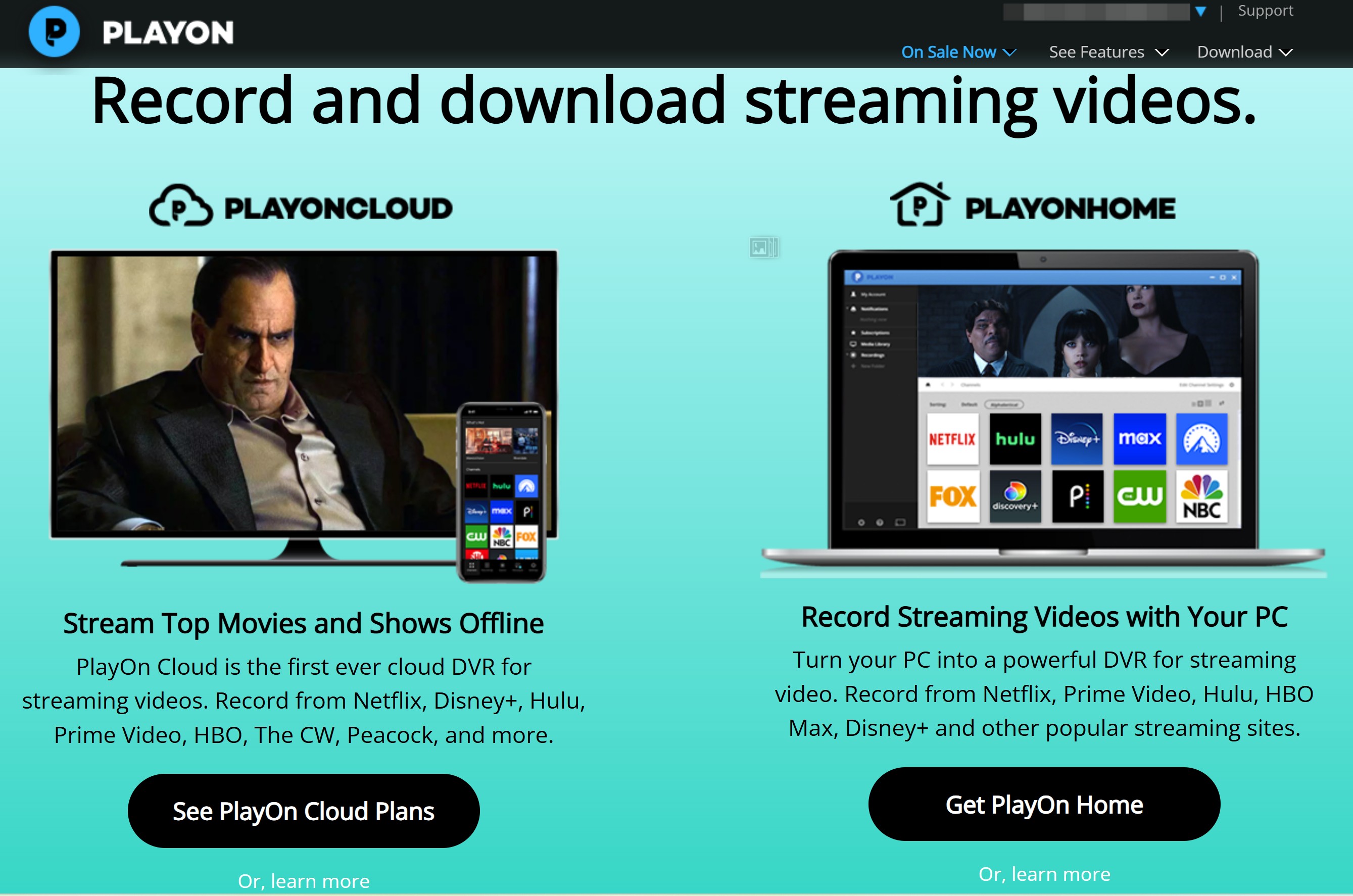
That distinction matters because recording, direct download and re-encoding involve different time, quality, and hardware tradeoffs. PlayOn follows a recording model rather than behaving like an over-the-air DVR or a generic screen-capture utility.
| Decision factor | PlayOn Home | PlayOn Cloud |
|---|---|---|
| Where it runs | On a Windows PC | On PlayOn's cloud service |
| Device requirement | Windows PC must remain available during recording |
Computer can be off after the Cloud request is submitted |
| Recording model |
Real-time local recording
|
Remote recording followed by local download |
| Output | MP4 file stored on the PC | MP4 file downloaded from Cloud |
| Advertised quality ceiling | Up to 1080p on paid Home | Up to 1080p on Cloud |
| Cost model | $4.99 monthly for unlimited recordings | $4.99 monthly with 30 recording credits |
| Best fit | Higher-volume Windows users who accept PC load and real-time recording | Occasional users who value convenience over per-recording economy |
| Not ideal for |
Mac users or anyone unwilling to leave a PC running
|
Heavy recording volume or users who may miss the download window
|
- PlayOn Home Free: A limited no-monthly-charge option for trying the Home workflow before deciding on paid Home.
- PlayOn Cloud: Uses monthly recording credits, with optional credit packs and storage handled separately.
- Paid Home and Cloud advertise up to 1080p, but the source, encoding behavior, and Home PC performance still shape the result.
Home or Cloud: Which Fits Better?
Choose Home for frequent recording when a Windows PC can stay on; choose Cloud for occasional requests when convenience matters more than credit efficiency. Neither path removes the possibility of provider-side changes or failed jobs.
- PlayOn Home is best for people who record often, have spare Windows capacity, and prefer local storage without counting each title.
- PlayOn Home is not ideal for Mac-only users, low-power PCs, or anyone who expects recording to finish faster than playback.
- PlayOn Cloud is best for occasional recordings started from a phone, tablet, Mac, or browser without keeping a home computer awake.
- PlayOn Cloud is not ideal for large queues, tight budgets, or people who do not want to manage credits and cloud-retention timing.
From a reliability standpoint, Cloud moves the workload away from your PC, but it also adds credit and retention mechanics. Home avoids per-title credits, yet its success is tied more closely to Windows performance and the uninterrupted real-time session.
Is PlayOn Legal and Safe?
PlayOn legal use cannot be reduced to a yes-or-no label. Software integrity, streaming-service terms, copyright rules, account access, and what you do with a recording are separate questions.
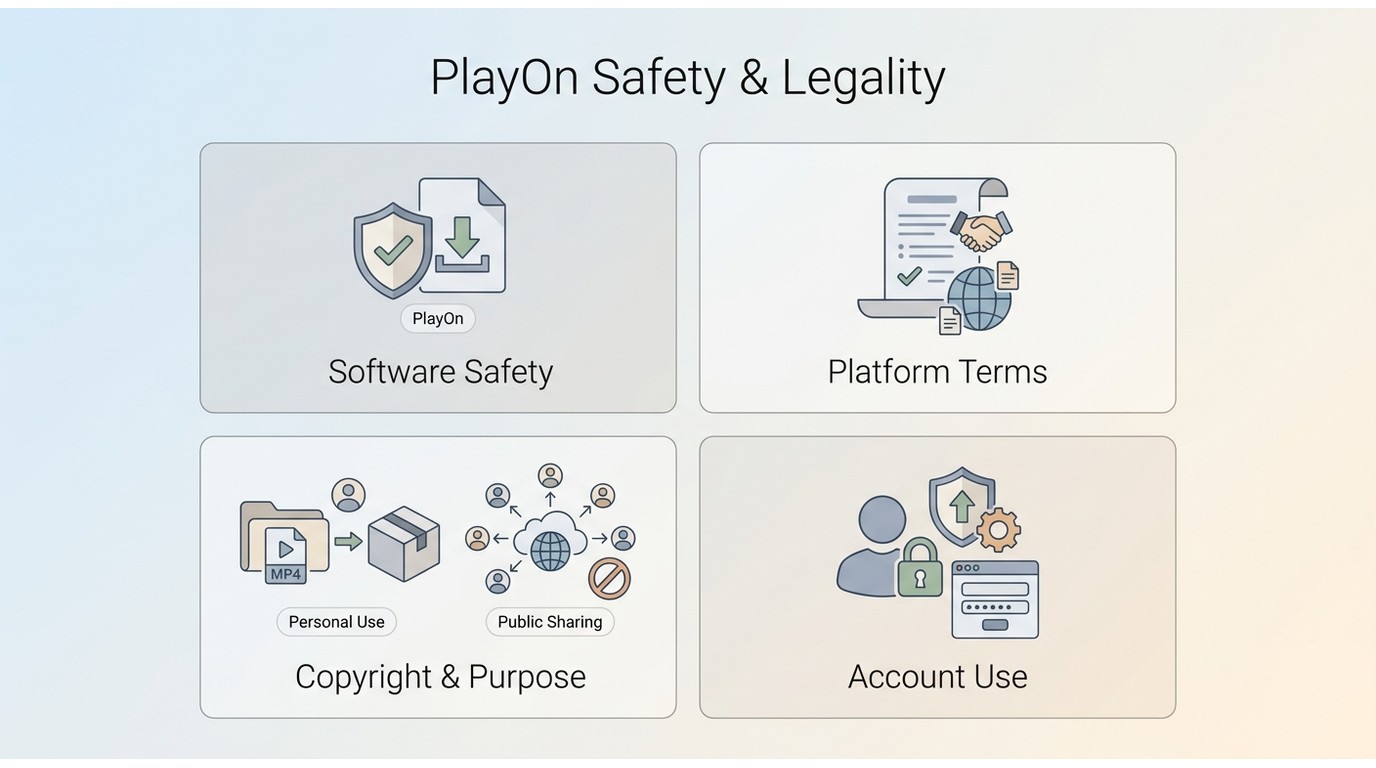

- Software safety: obtain the installer through PlayOn's official distribution channel and keep the operating system and security tools current. No software review can promise that every future build is risk-free.
- Platform terms: a service may restrict recording or automated access even when the content plays normally in your account.
- Copyright and purpose: private time-shifting arguments do not create a universal rule for every title, location, or use. Redistribution, public sharing, or commercial use changes the risk substantially.
- Account behavior: successful recording does not prove that a platform approves the workflow or that an account action is impossible.
For PlayOn Cloud safety, protect the service account, use unique credentials, and download recordings within the available window. For any recorder or desktop alternative, a valid subscription or other authorized access should be the starting point.
PlayOn Pricing, Credits, and Free Options
As of July 2026, PlayOn lists Cloud at $4.99 per month with 30 recording credits, paid Home at $4.99 per month with unlimited recordings, and a separate Home Free option.
| Product | Monthly price | Included recording allowance | Storage or retention |
|---|---|---|---|
|
PlayOn Home |
$4.99 |
Unlimited recordings |
Files use the Windows PC's local storage |
|
PlayOn Cloud |
$4.99 30 recording credits per month Seven-day default cloud retention; optional storage is separate PlayOn Home Free No monthly charge |
Limited Home features Files use local Windows storage Cloud credit packs Sold separately Add recording credits outside the monthly allowance |
Credits and optional storage are separate purchases |
The pricing becomes easier to understand when the subscription, recording credits, retention, and optional storage are treated as different pieces rather than one large Cloud plan.
-
1. Paid PlayOn Home is $4.99 monthly and is designed around unlimited local recordings on Windows.
-
2. PlayOn Cloud is $4.99 monthly and refreshes 30 recording credits each month.Standard-definition and 720p recordings use fewer credits than 1080p recordings.
-
3.Completed Cloud recordings have a seven-day default retention window, so download timing matters; optional storage does not make a universal availability promise.
-
4. Standalone Cloud credit packs add recording capacity and should not be confused with the base subscription or optional storage.
| Cloud recording quality | Typical credit use |
|---|---|
|
Standard definition |
1 credit per recording |
|
720p |
1 credit per recording |
|
1080p |
3 credits per recording |
|
Additional credit packs |
Available separately from the monthly plan |
The PlayOn free plan is useful for checking whether the Home interface and PC-based model fit your routine, but it should not be treated as equivalent to the paid feature set. A PlayOn trial should likewise be distinguished from Home Free unless the current offer explicitly labels a separate trial.
PlayOn Pros and Best-Fit Users
PlayOn's strongest advantage is choice: Home favors local, higher-volume recording, while Cloud makes occasional requests possible without tying up the user's computer.
In the larger streaming market, that two-product design is more meaningful than a generic list of PlayOn channels. It gives people a way to trade PC dependence against credits and convenience.
Where PlayOn Works Well
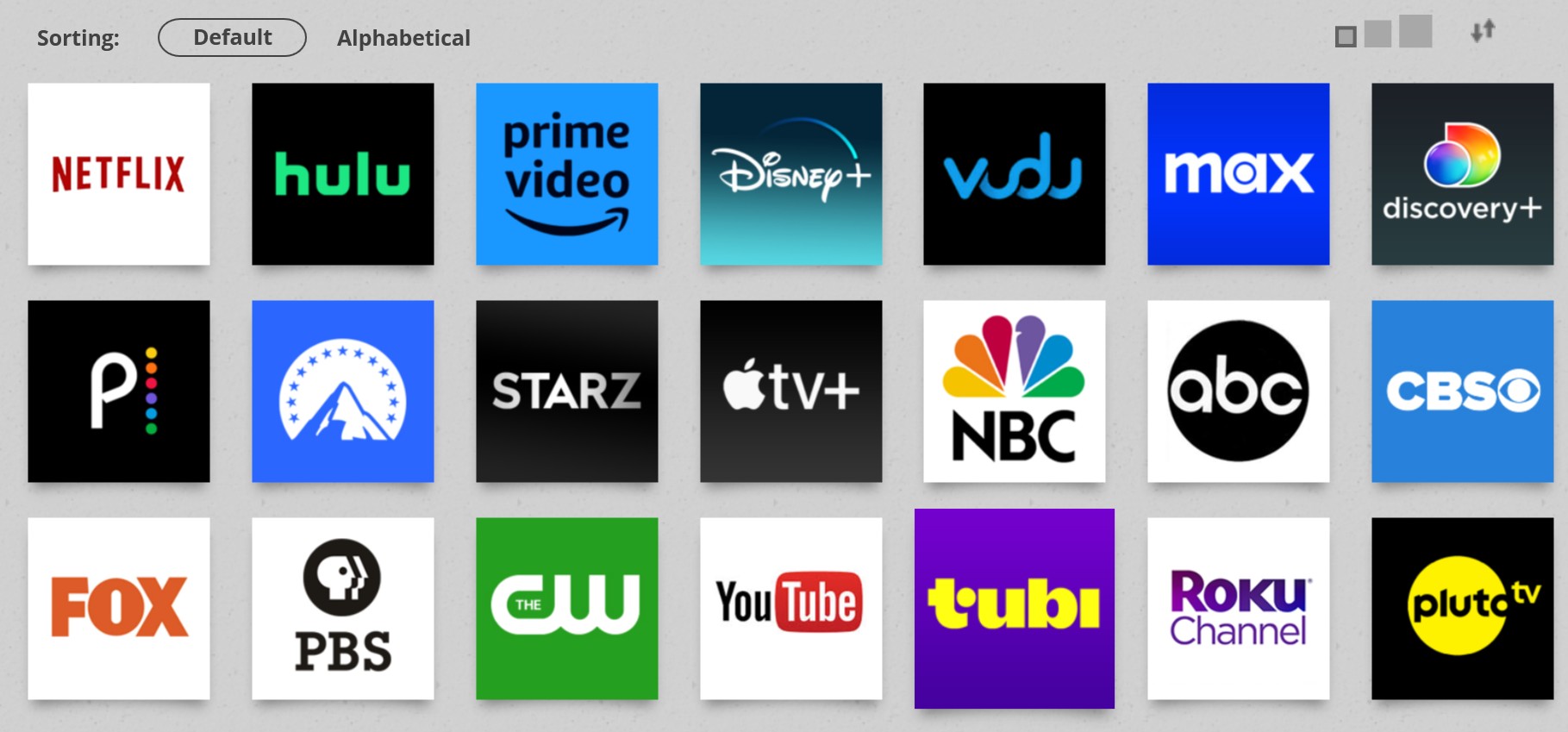
PlayOn works well when expectations match the recording model. Paid Home and Cloud advertise up to 1080p, offer downloadable MP4 recordings, and support a selection of major streaming services.
- Flexible starting device: Cloud requests can be managed without depending on a Windows PC at home.
- Local playback: completed recordings can be downloaded as MP4 files for personal offline viewing.
- Queue-oriented use: Home can line up episodes, while Cloud lets occasional users submit recordings remotely.
- Ad markers: PlayOn can support ad-skipping during playback, although results depend on the recording and service.

My practical takeaway is that resolution alone is a poor proxy for perceived quality. Source resolution, bitrate, frame rate behavior, encoding, and the Home PC's workload can matter as much as the 1080p label.
PlayOn Cons and Reliability Limits
PlayOn reliability is the main reason to read beyond the feature list. Real-time duration, Windows resource use, retries, credit handling, and provider changes can turn an apparently simple queue into a costly interruption.
- Home takes time: a movie-length recording generally occupies a movie-length window, and the PC must remain available.
- Late failures hurt more: a job that stops near the end can require a full retry rather than a quick resume.
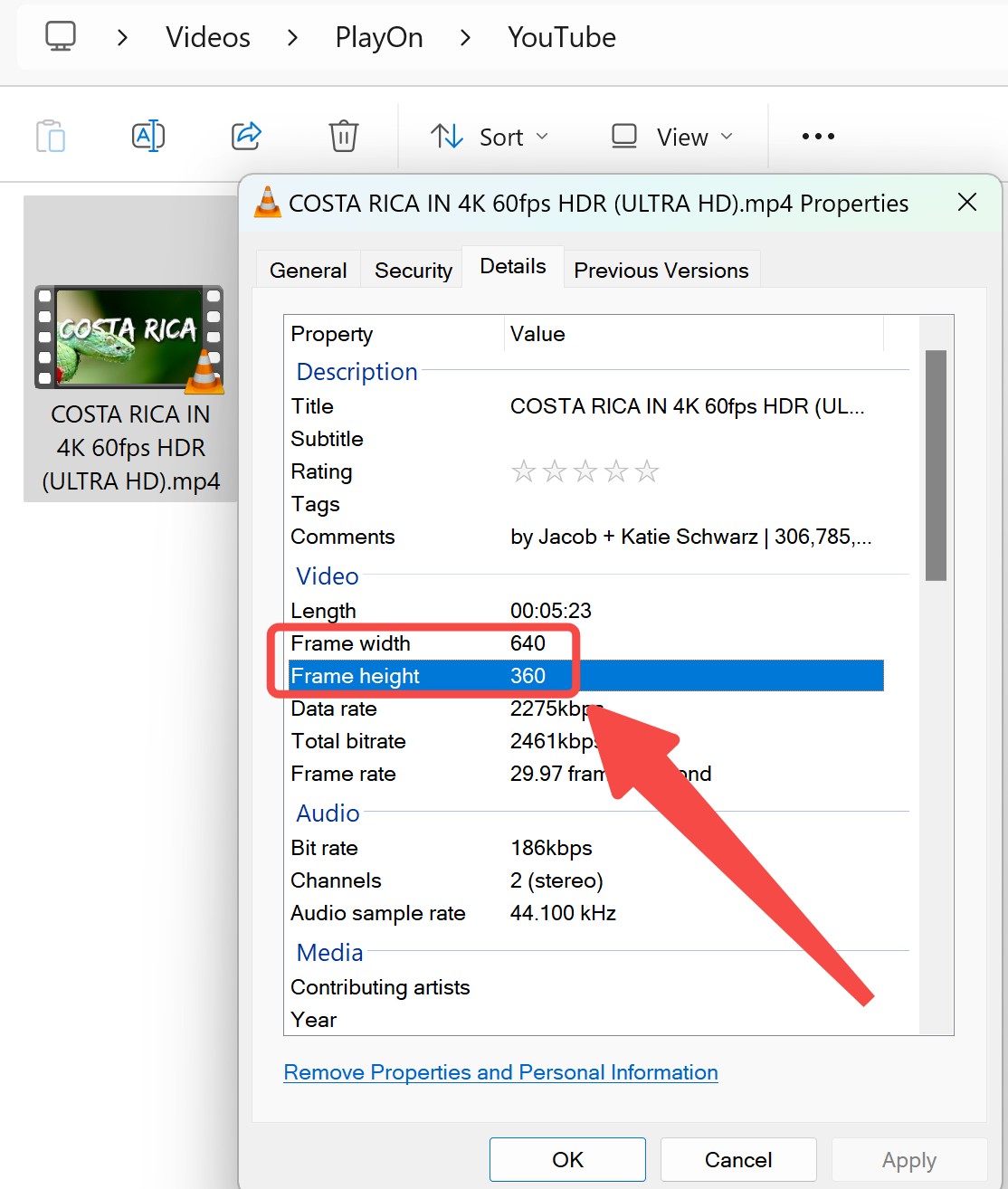
- Quality varies: paid products may offer up to 1080p, but the delivered file can still reflect source and encoding limits. Home Free has separate restrictions.
- Storage can grow quickly: PlayOn's H.264-oriented output may use more space than a comparable file encoded with a newer codec.
- Cloud adds transaction risk: user complaints include credits consumed by unsuccessful recordings, making reliability part of the effective PlayOn cost.
Searches for PlayOn reviews often surface the same pattern: convenience when a job works, frustration when a provider update, PC issue, or recording failure forces another attempt. That failure-retry cost matters more to me than a small difference in the headline feature count.
PlayOn Home Setup and Recording
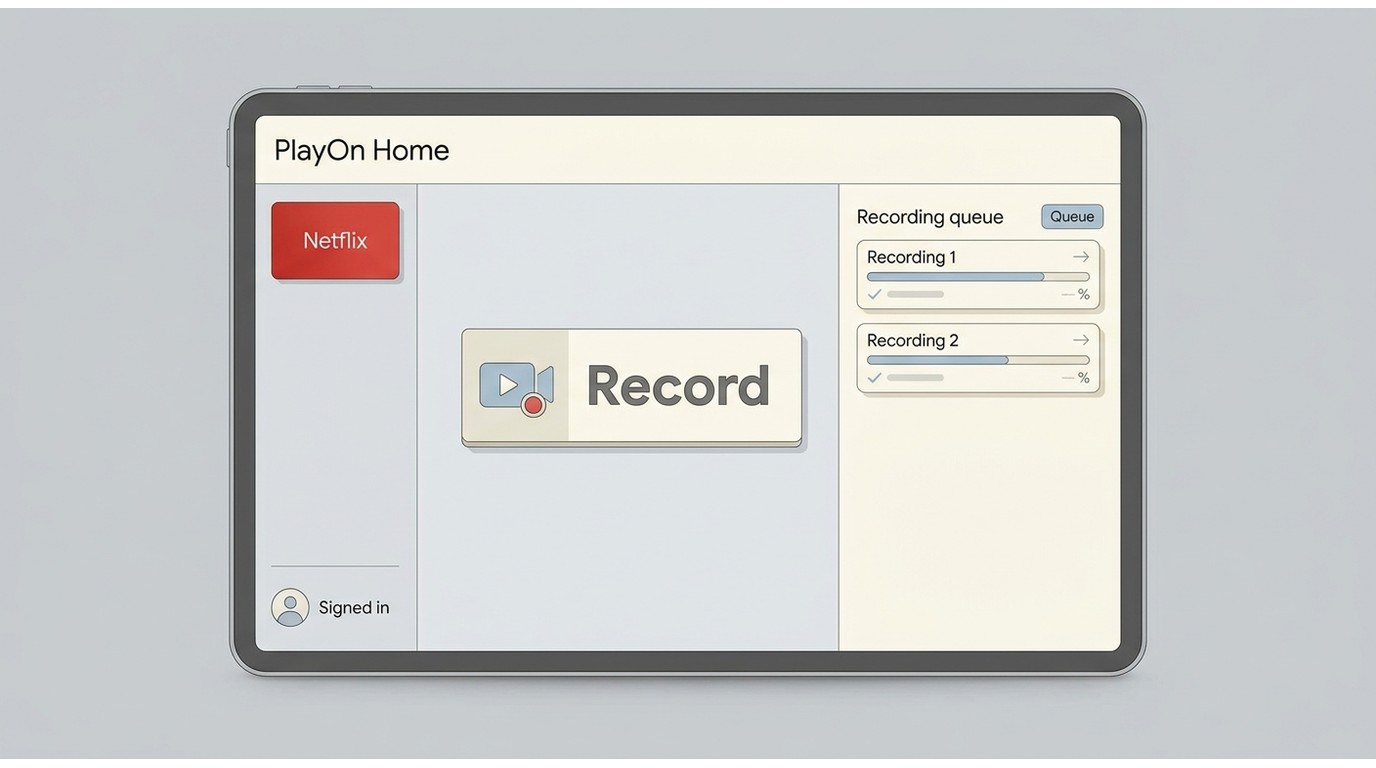
PlayOn Home setup is manageable, but the prerequisites should be clear before recording: a supported Windows PC, adequate local storage, stable playback, an authorized streaming account, and enough uninterrupted time for the title.
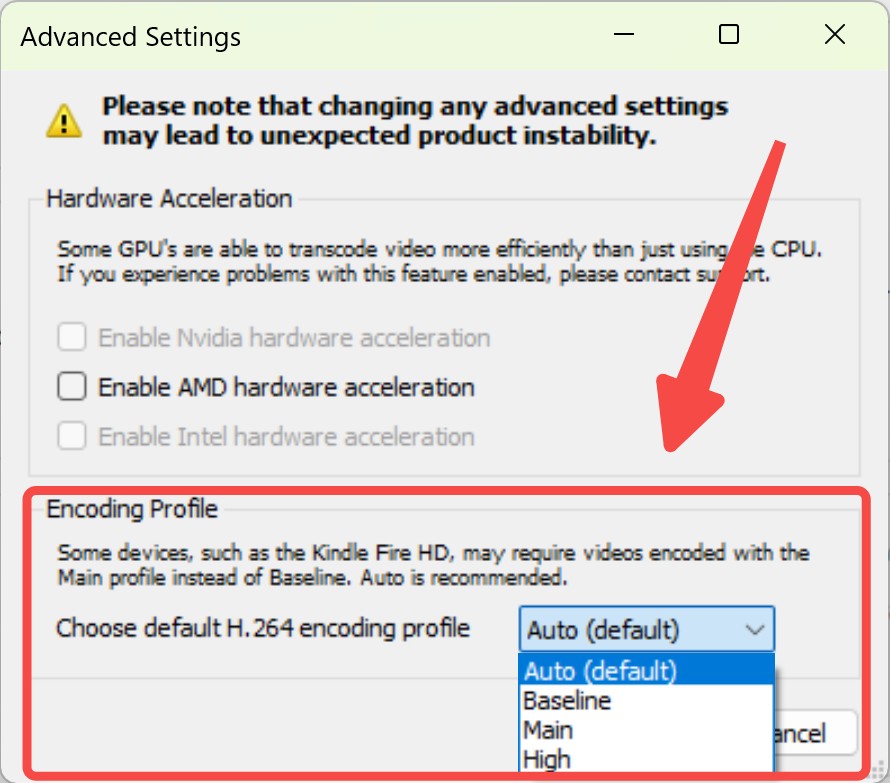
Install PlayOn Home on your device, then start it to get ready for recording your favorites.
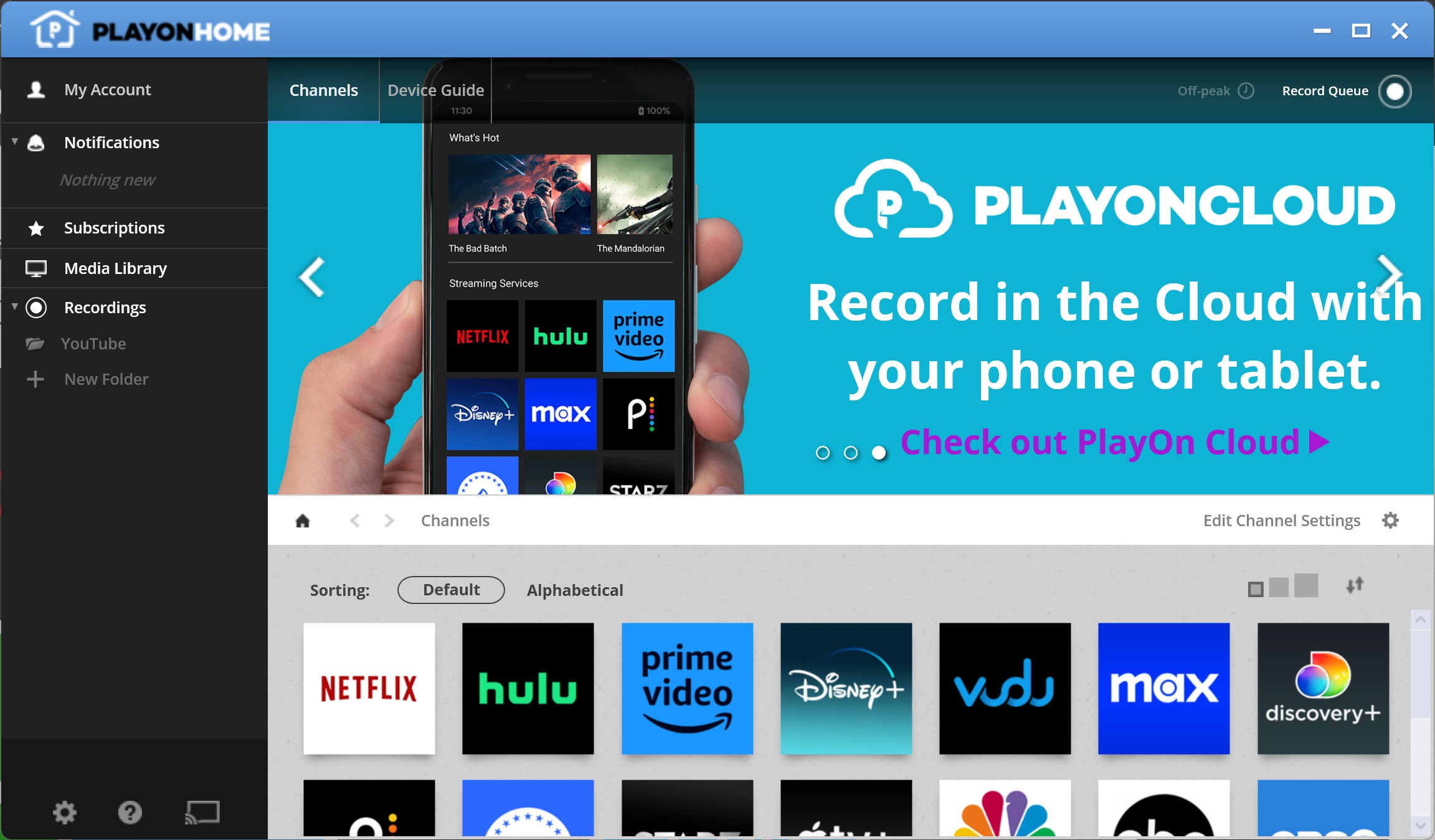
Click on any one of the listed streaming services to get started. You need to log in to the desired service with your own account.
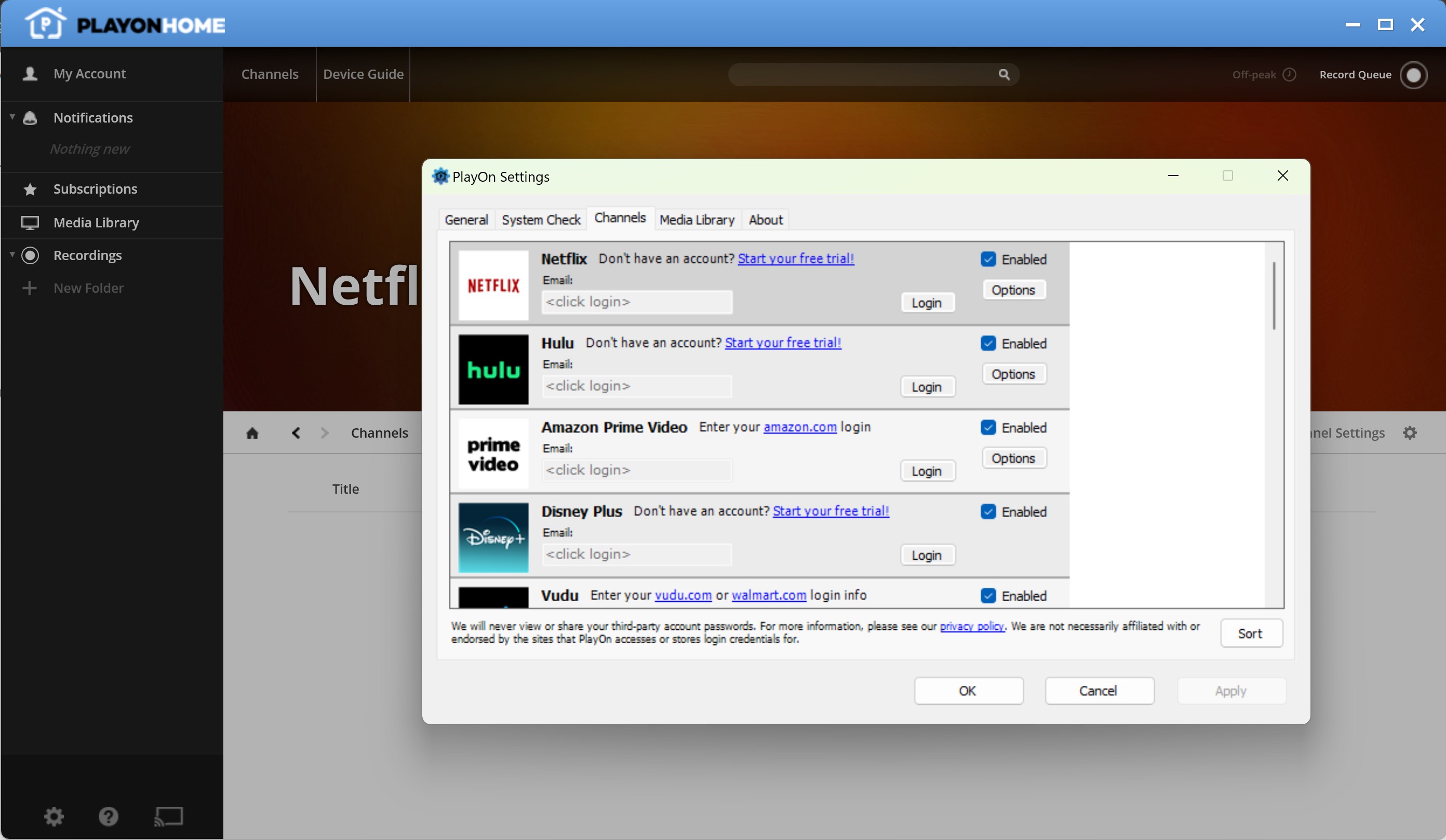
After logging in, find the video you want for offline viewing, then click on it. PlayOn will add it to the task queue and start recording.
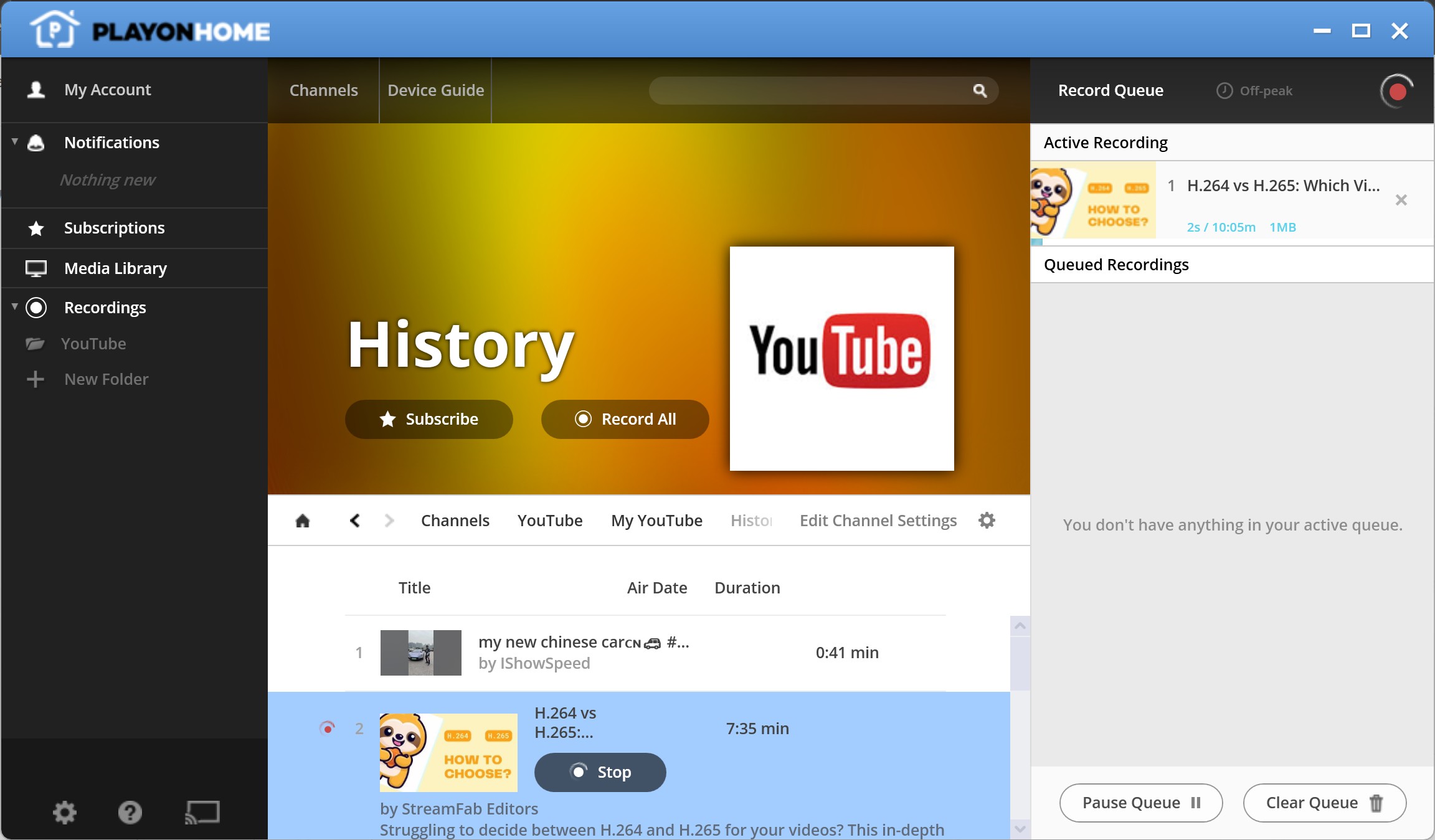
After the recording is done, you can find and play the videos in "Recordings". It will use your local video player to play the recorded videos.
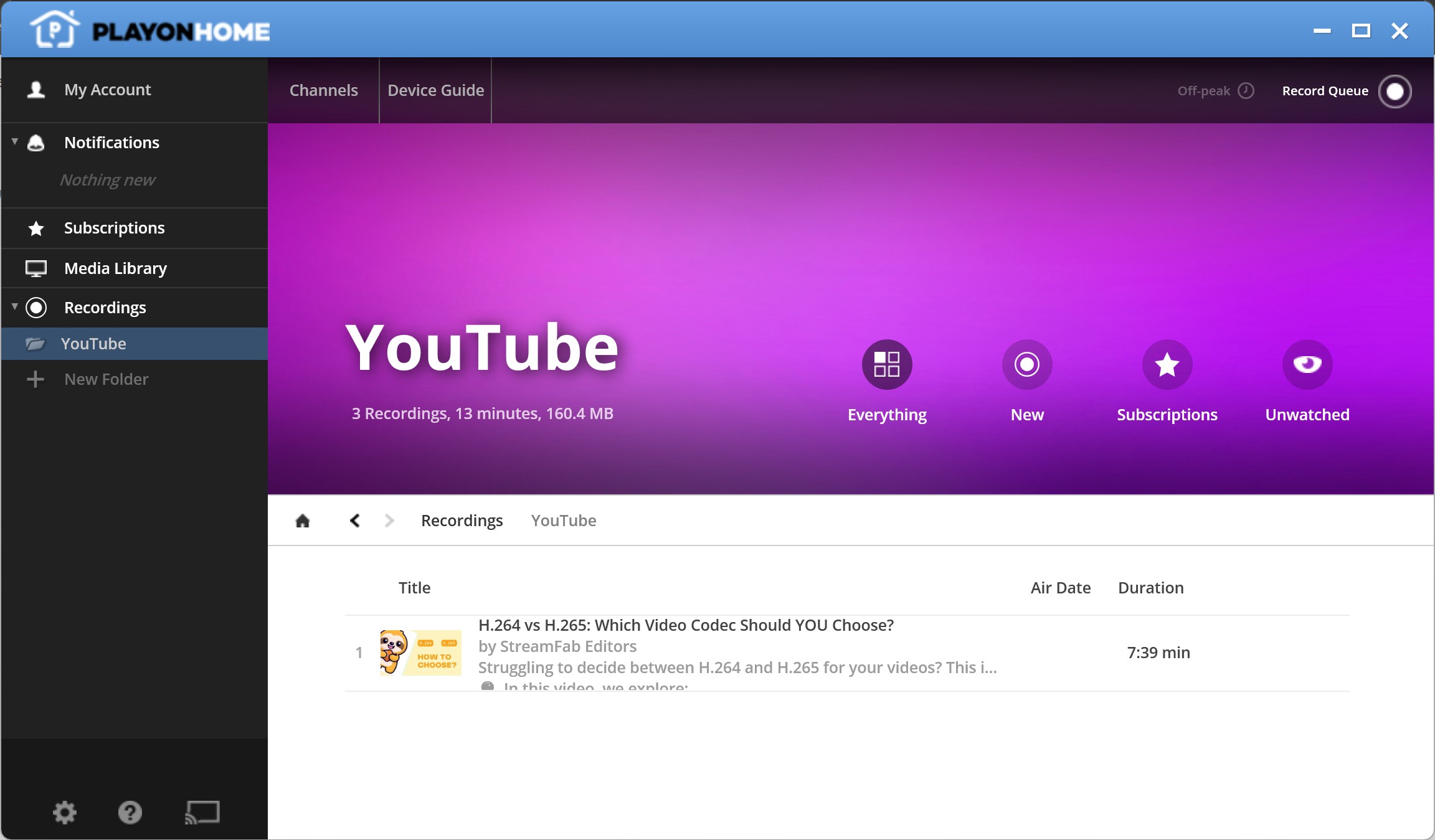
After a recording starts, avoid sleep mode, heavy background workloads, and network changes. Check a short recording first before committing to a long queue, because a smooth menu does not guarantee an uninterrupted full-length result.

Also check Troubleshooting PlayOn Not Recording Problems. That information makes support requests and troubleshooting more useful.
Community reports describe real-time jobs that fail near completion or require retries, but unsupported error-code definitions create more confusion than help. A focused review of PlayOn recording problems is more useful than assigning a fixed meaning to every code.
What PlayOn Users Report
PlayOn user complaints are mixed across platforms, so one score should not stand in for the entire experience. The useful signal is the recurring subject of the reviews, not a blended average.
A July 2026 US search snapshot for PlayOn's Trustpilot page showed 2.5 out of 5 from 54 reviews. The directly fetched US Google Play listing showed 2.8 from 2.68K reviews and a June 17, 2026 update, while a live search snippet displayed a conflicting 4.5. Those figures should remain separate because they represent different platforms and collection methods.
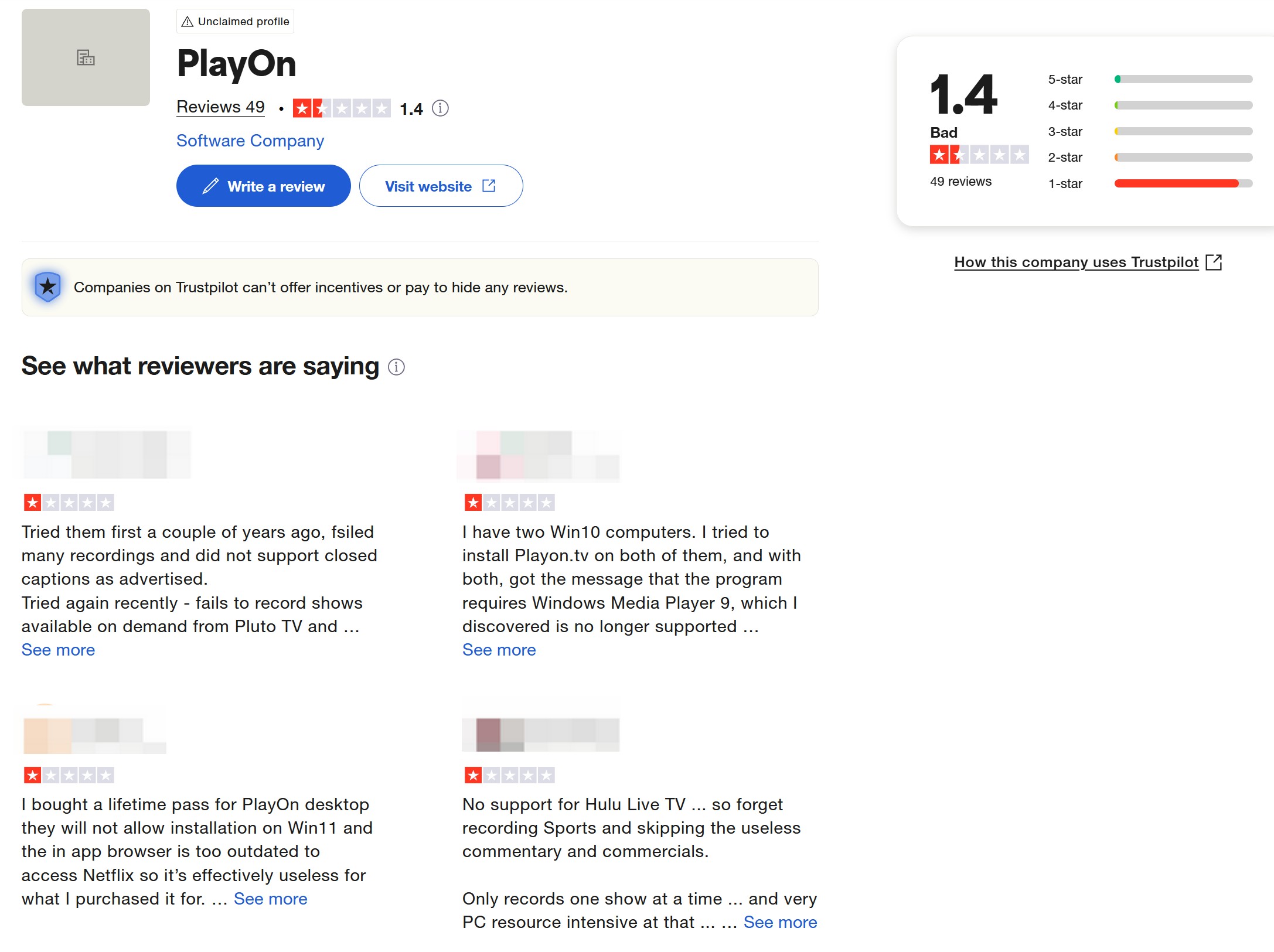
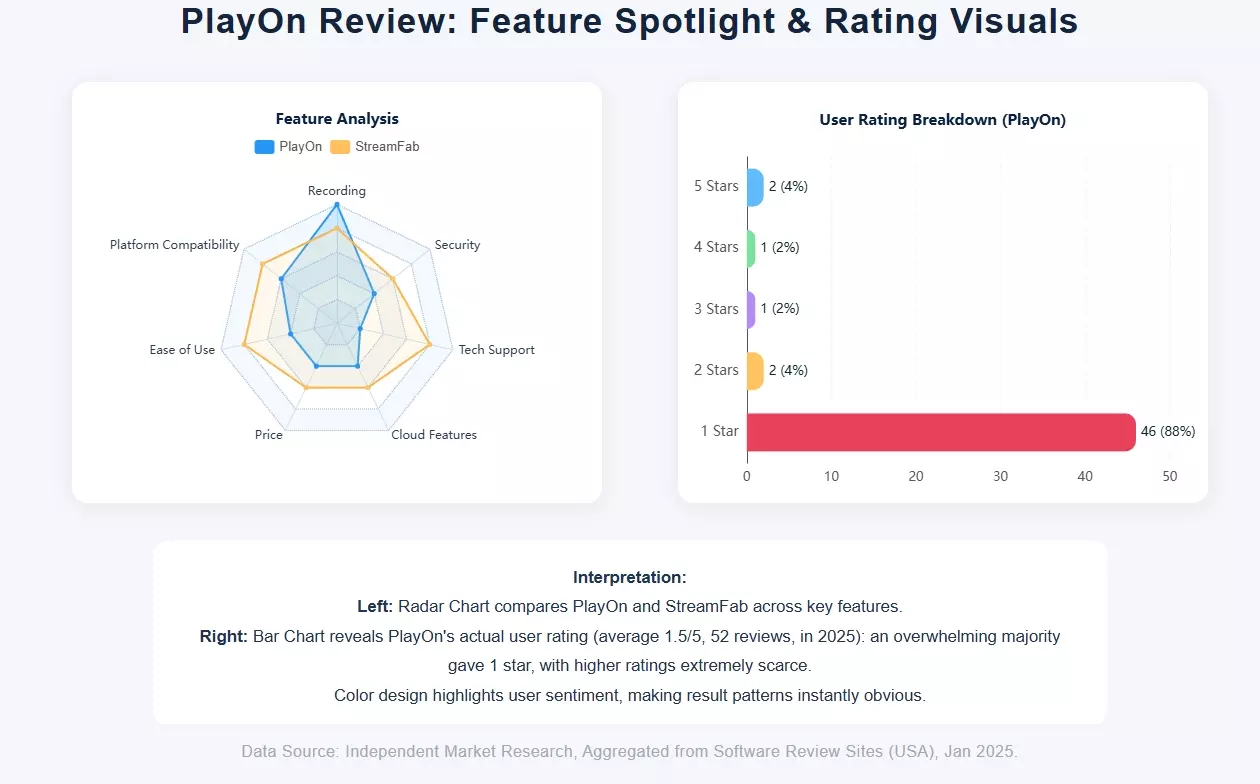
Reddit PlayOn reviews and other community threads repeatedly discuss failed recordings, Windows resource load, support response, and the legacy lifetime-license dispute. Some customers expected lifetime access to remain functional; PlayOn's explanation is that the unsupported Desktop product stopped receiving updates and lost compatibility as streaming providers changed.
That distinction matters. It is more precise than saying licenses were simply revoked, yet the history still affects a 2026 subscription decision because buyers are being asked to trust continued compatibility in a market where services change frequently.
PlayOn Alternatives: Recorder or Downloader?
A PlayOn alternative is worth considering when the reader values a Windows or Mac local-file workflow, broader format control, or batch processing more than PlayOn's DVR-style Home and Cloud model.
The decision is not that one product is universally better. A StreamFab vs PlayOn comparison is most useful when it starts with workflow fit: recording in real time, requesting a cloud recording, or processing authorized content through a desktop queue.

A Windows and Mac desktop local-file alternative for users who prioritize batch queues, format choice, and scheduled episode checks.
For content you're authorized to access, where platform terms and applicable law permit personal offline viewing, StreamFab All-In-One uses a desktop recording and saving workflow. It supports Windows and macOS, MP4 and MKV output, batch queues, subtitle selection, and scheduled episode checks; service, title, account-plan, and module conditions still determine what is available.
- Runs on Windows and macOS rather than offering a cloud-first mobile workflow.
- Saves supported titles in MP4 or MKV, with up to 4K available on supported services and plans.
- Supports batch queues and scheduled episode checks for compatible services.
- Resolution, audio, subtitles, and ad handling depend on the service, title, subscription, and module.
- An active, authorized service account is required for the content being accessed.
- Provider and software changes can interrupt a module until compatibility is restored.
- It is not ideal for users who want a phone-only cloud recorder or who need guaranteed support for every title.
StreamFab Review: Use it when the workflow choice is still unclear.
The fixed comparison below focuses on decision factors rather than unsupported speed or success-rate precision.
| Decision factor | PlayOn Home / PlayOn Cloud | StreamFab All-In-One |
|---|---|---|
|
Workflow type |
Real-time Windows recording / remote Cloud recording |
Desktop local-file recording and saving workflow |
|
Supported operating systems |
Home: Windows; Cloud: browser and supported mobile access |
Windows and macOS |
|
PC must stay on |
Home: yes; Cloud: no after submission |
Desktop app must remain available during processing |
|
Processing pace |
Home follows real-time playback; Cloud uses a remote queue |
Batch pace varies by service, title, network, and module |
|
Advertised maximum resolution |
Up to 1080p for paid Home and Cloud |
Up to 4K on supported services and subscription plans |
|
Output and subtitles |
MP4; subtitle behavior depends on the recording |
MP4 or MKV with selectable subtitle handling on supported services |
|
Batch behavior |
Home queues recordings; Cloud consumes credits per recording |
Batch queues and scheduled episode checks on supported services |
|
Best fit |
Home: higher-volume Windows use; Cloud: occasional convenience |
Desktop users prioritizing format choice and multi-title queues |
|
Not ideal for |
Users unwilling to accept real-time duration, credits, or retention limits |
Users wanting mobile-only recording or guaranteed compatibility with every title |

Speed, file size, bitrate, failure handling, and trial restrictions vary with the operating system, service, title, and software build. In my view, those metrics should influence a purchase only when every option is measured under the same conditions.
A Short StreamFab Workflow
The prerequisite is the same: use a valid account and choose content you are authorized to access. The full StreamFab workflow covers service sign-in, title analysis, format choices, queue management, and output checks in more depth.
- Example device: Lenovo ThinkPad X1 Carbon Gen 10
- Example system: Windows 11 64-bit
- Purpose: confirms the desktop workflow prerequisites without claiming universal performance
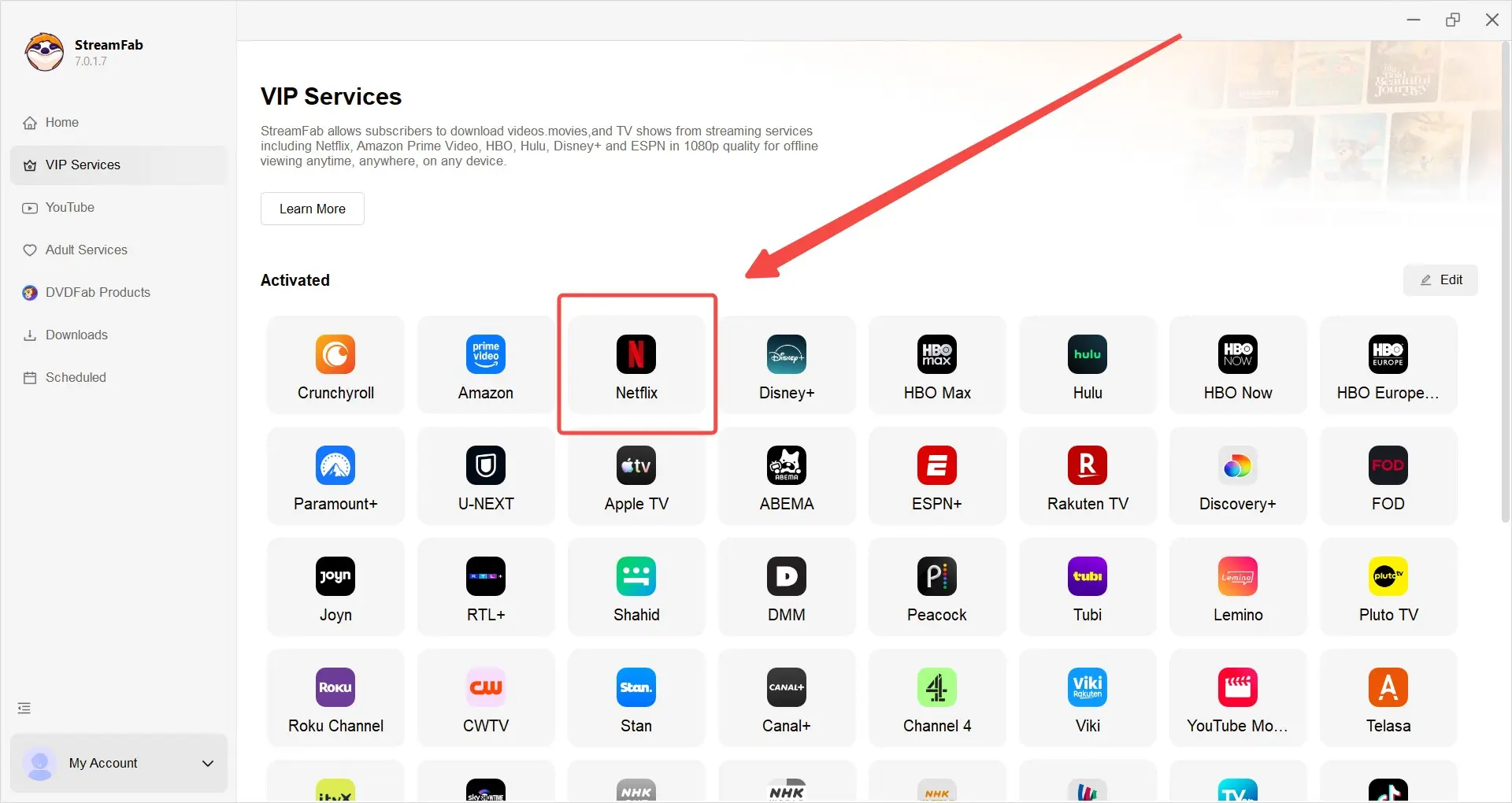
Go to VIP Services and find the streaming website for Netflix.
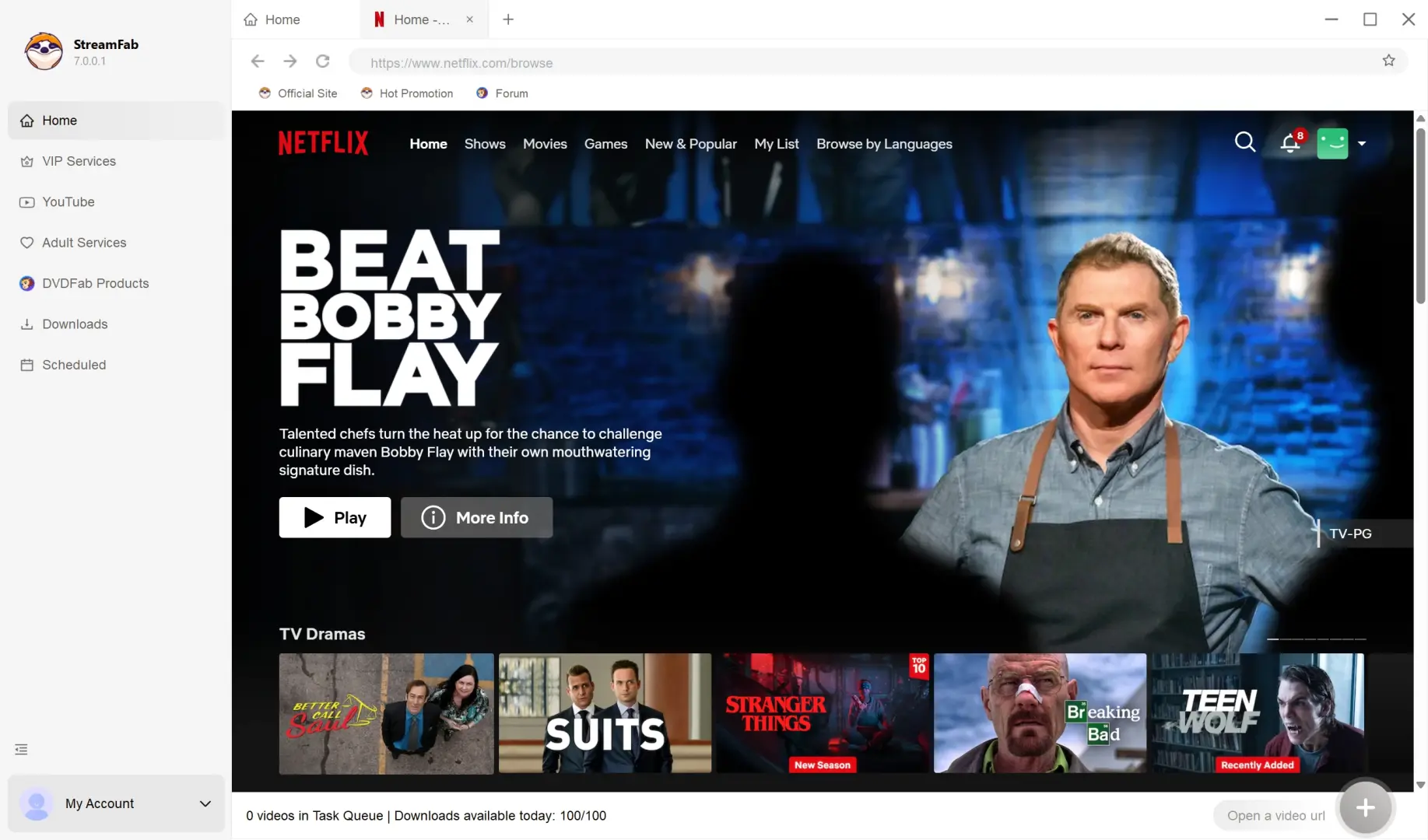
Choose and play a video or search for the video name on Netflix. You can also copy and paste your video URL directly into the address bar on the Homepage. StreamFab will analyze it automatically.
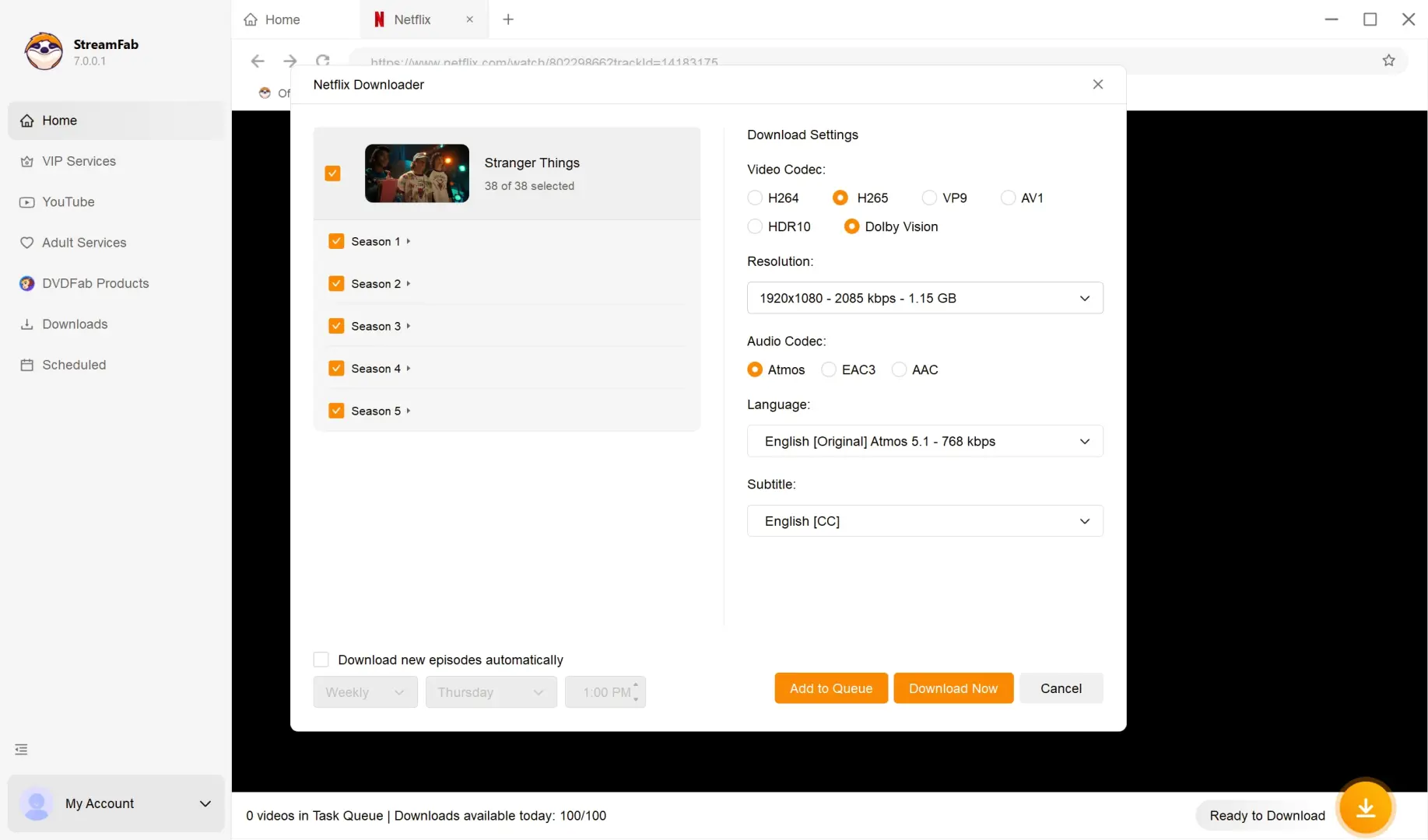
Then a pop-up window will ask for your customization. You can choose the audio, subtitle language, format, resolution, etc. Then you can click the "Download Now" or "Add to Queue" to download it right now or add it to the queue.
For a short evaluation, confirm one title first, inspect the finished file and subtitle behavior, then expand the queue. That sequence limits wasted time when a service or software module has changed.
- Home recordings can fail late and require another real-time attempt.
- Home depends on Windows resources and uninterrupted playback time.
- Cloud uses credits and a default retention window, so failed jobs and delayed downloads can increase cost.
- Service or module changes can temporarily interrupt supported workflows.
- It requires a Windows or Mac desktop and is not a cloud-first phone workflow.
- Quality and format availability depend on the service, title, subscription plan, and current module support.
PlayOn remains appealing for its familiar DVR-style idea. StreamFab fits a different priority set, especially desktop users who want MP4 or MKV files, batch queues, and scheduled checks, but it also depends on continuing service compatibility.
PlayOn FAQ
PlayOn's current lineup includes Home Free alongside paid Home and Cloud. Home Free is the clearest free option; do not assume a separate PlayOn trial unless the current offer explicitly identifies one.
PlayOn channels include a selection of major streaming services, with examples such as Netflix, Hulu, Disney+, Max, Peacock, and Paramount+. Availability can differ between Home and Cloud, by region, and as services change.
Conclusion: Is PlayOn Worth It in 2026?
PlayOn is worth considering when its workflow matches the user's tolerance for time, credits, and platform change. It is not a universal answer to offline streaming.
- Choose PlayOn Home for higher-volume Windows recording when unlimited jobs matter more than real-time duration and PC dependence.
- Choose PlayOn Cloud for occasional convenience when starting remotely matters more than managing credits and a retention window.
- Consider a desktop local-file alternative when Windows and Mac support, MP4 or MKV choice, batch queues, and scheduled checks matter more than a cloud recorder.
Every path has an honest limitation: Home ties up a Windows PC, Cloud can become expensive at volume, and desktop alternatives can be interrupted by service or module changes. That balanced fit test is the most useful verdict I can give after separating the marketing claims from the actual workflow.