PlayOn not working is frustrating, especially when a failed recording gives you little context. If PlayOn is not recording, first identify whether the failure affects every channel, one service, or one saved file; then change one variable, retest one title, and send logs if the symptom persists.
The PlayOn product overview provides broader context on the app and its workflows, while this guide focuses on isolating one failure at a time instead of changing every setting at once.

Let’s get started with what’s actually going wrong behind the scenes.
PlayOn Not Working: Match the Symptom First
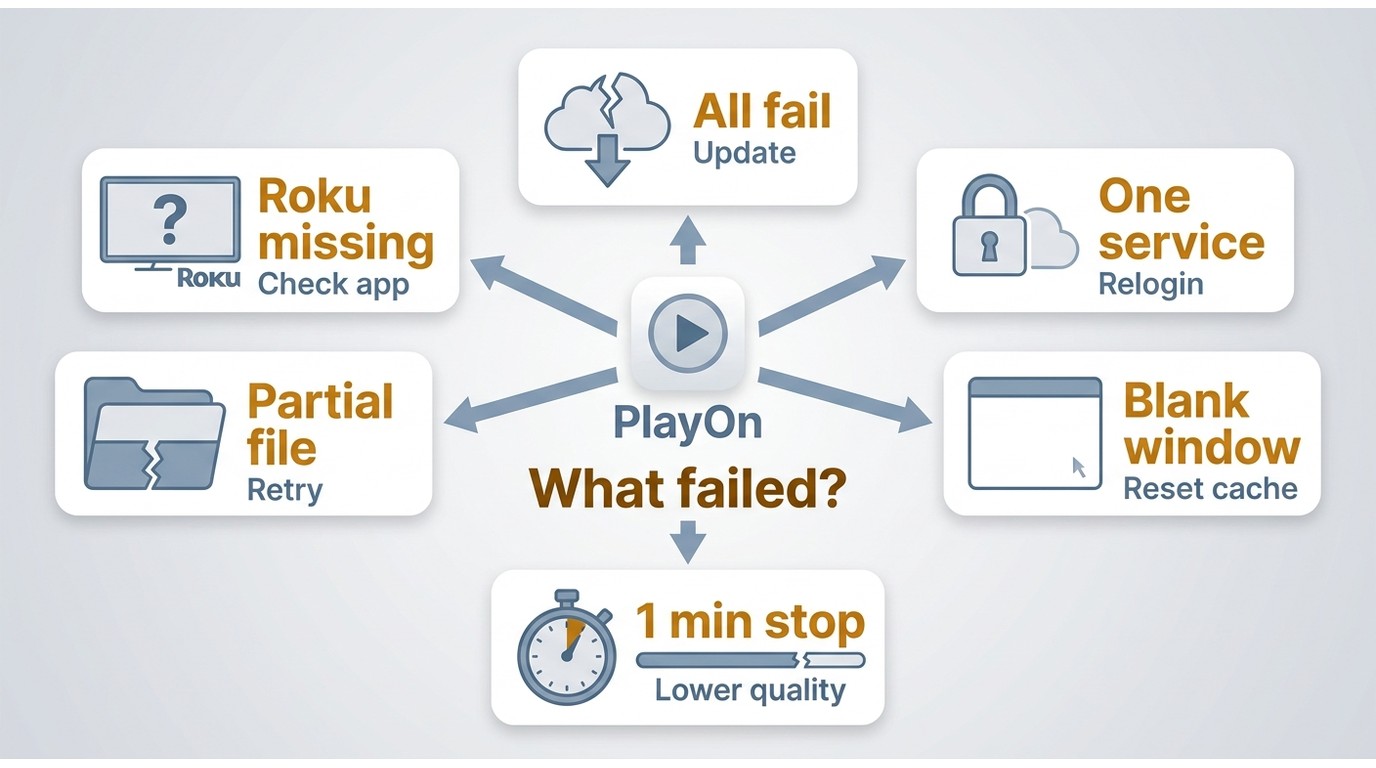
Start by matching what you see to the fastest test below. No checklist can promise a fixed success rate, but this split helps you avoid treating one channel, device, or local setting as a service-wide failure. Apply the Windows CPU, sleep, cache, and local-folder checks to PlayOn Home. PlayOn Cloud has a separate cloud-and-mobile workflow, so app, locker, and sync problems follow its Cloud support path. PlayOn Desktop is the retired product and should not be treated as the current PC app.
| Symptom | Fastest test | Likely cause | Next action |
|---|---|---|---|
| All channels fail | Try another channel and normal browser playback | Browser state, security software, or a local Home issue | Record the exact error and Home version, then retest one title |
| One service or login fails | Test another service and check the affected account login | Channel credentials or a provider-side change | Sign in again and retest one title in a writable local folder |
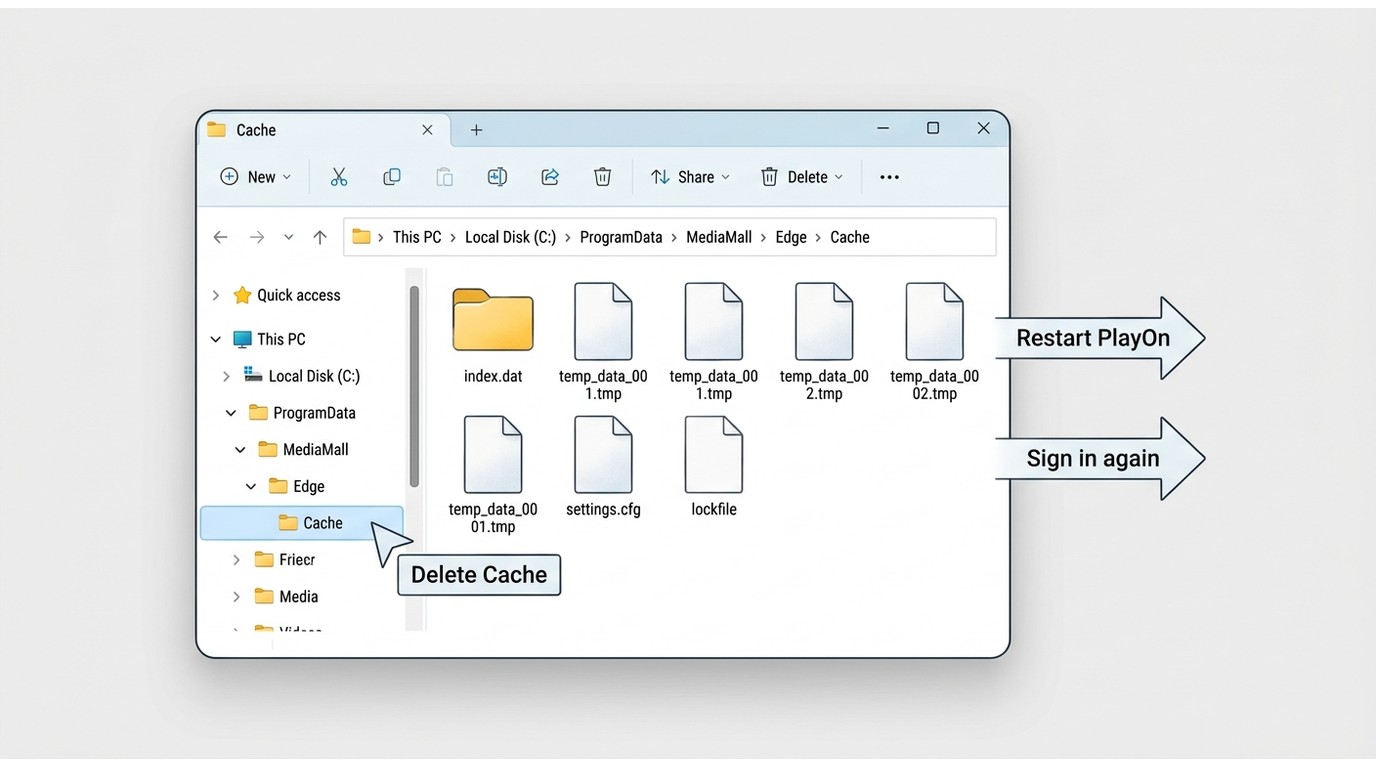
| Blank recording window | Check whether the blank window appears across channels | Embedded-browser cache or sign-in state | Use the Edge cache reset steps below |
| Stops after about one minute | Retry one title at a lower quality | Login, security, network, or CPU pressure | Note the failure time and submit logs if it repeats |
| Partial or unplayable MP4 | Check duration, audio, video, and subtitles | Interrupted recording or player compatibility | Try another player and record the failing timestamp |
| TV or Roku is missing | Confirm the devices share a network and look for “PlayOn server not found” | Local-network discovery, firewall, or VPN interference | Stop and start the PlayOn server, then check local-network access |
My rule of thumb is simple: first determine whether the problem affects everything or one channel. A clean second test tells you more than reinstalling software or switching tools immediately.
- • Can the title play in Chrome or Edge?
- • Did you sign in to the affected service again in PlayOn?
- • Can you run one controlled test without a conflicting VPN, firewall, or filter?
- • Did you restart PlayOn and your PC?
- • Is PlayOn Home updated?
- • Is CPU usage near its limit? Try a lower recording quality.
- • Will the PC stay awake during scheduled recordings?
- • Does the recording destination have free space and folder permission?
PlayOn Home Unknown Error: Browser and Login Checks
When PlayOn Home reports an unknown error, first determine whether every channel fails or only one service. Test the title in Chrome or Edge, but treat successful browser playback and login as preliminary checks, not confirmation that PlayOn can record it.
Capture the exact error text, your PlayOn Home version, and any recent Windows, security, or account changes. Then sign in again inside PlayOn and run one title to a writable local folder. If the same error persists after that controlled retest, submit the result with PlayOn support logs.
- Open the streaming site in a normal browser (e.g., Chrome).
- Make sure the video plays without buffering, CAPTCHA, or error.
- Confirm you're logged in properly—especially on services with multiple profiles like Disney+.
Security, VPN, and DNS Blocking
Security software can interrupt PlayOn, but it is not the universal explanation for a recording failure. Antivirus tools, firewalls, VPNs, browser ad blockers, and DNS-level filters can each affect playback or produce partial recordings. Run one controlled test with the suspected conflict removed, then restore protection and add only the exception you actually need.
- Temporarily pause one suspected security or filtering tool for one recording test
- Restore protection, then add a narrowly scoped PlayOn exception if the test succeeds
- Turn off a VPN or DNS filter only long enough to test, then use the account's normal region settings.
Network, Sleep, and Storage Checks
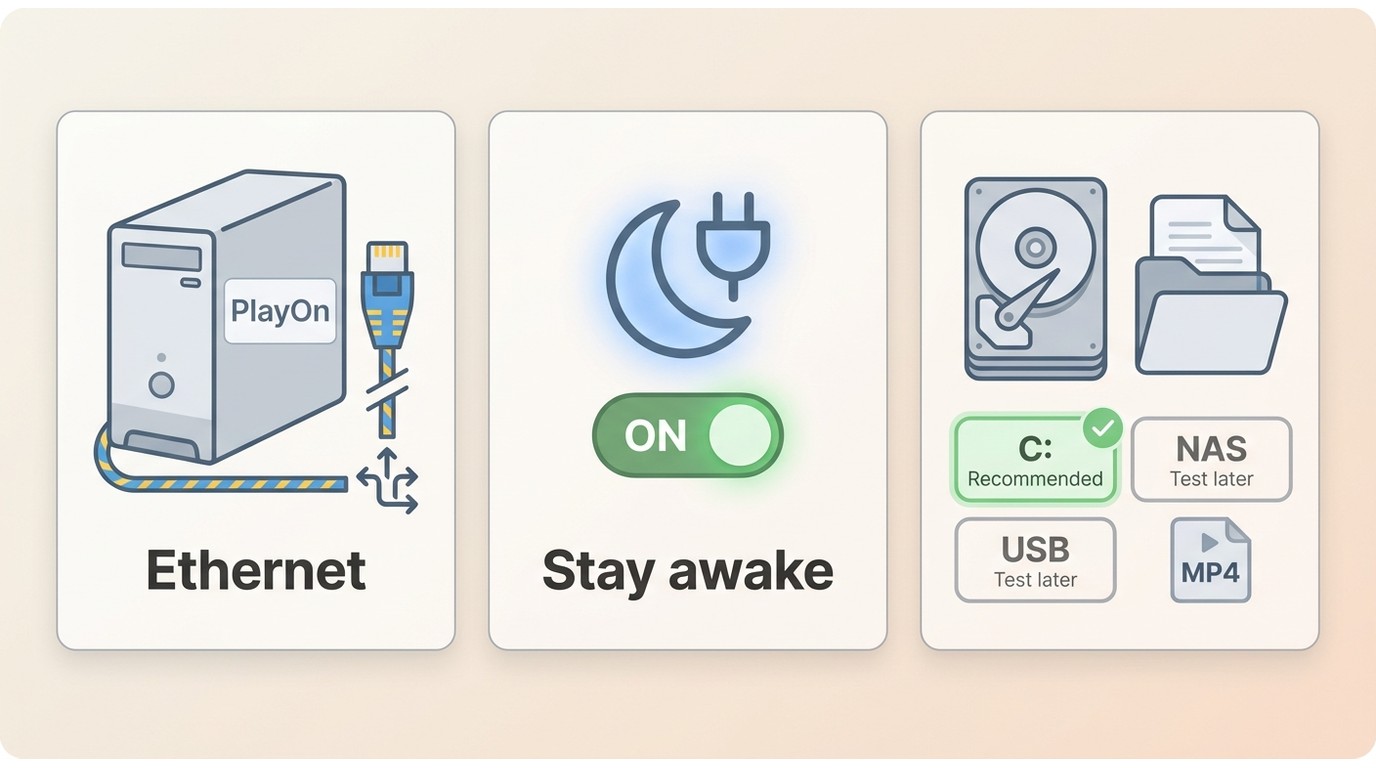
PlayOn records during playback, so a connection that buffers or drops can leave you with an incomplete file. Use Ethernet when possible, avoid competing streams or large downloads, and run a single test when the network is otherwise quiet. A local recording problem is not, by itself, evidence that a provider is down.
- Use Ethernet instead of Wi-Fi
- Avoid streaming or large downloads while recording
- Set PlayOn’s Off-Peak Recording window to cover the entire recording, and test the same title during the day if a scheduled job fails
- Restart your router if you notice frequent buffering
If you are using PlayOn Home, make sure your PC doesn’t go to sleep during the recording. Then check the recording destination: confirm that the folder has free space and write permission; verify that PlayOn MP4 recordings appear where expected; and test a local C: drive before using a NAS, USB drive, or other external destination.
Check the saved MP4: Queue completion does not confirm intact audio, the expected subtitle track, or compatibility with every player. Inspect the file’s duration and size, then play a representative scene with video, audio, and the intended subtitles. If the duration appears complete, try another player before treating the file as interrupted; size alone does not establish corruption. Include the output duration and failing timestamp in a support report.
For storage-related failures, change one variable at a time. In my view, one short recording to a known local folder is more useful than changing the network, quality, and destination all at once.
Updates, Credentials, and Provider Changes
Streaming services can change playback pages, sign-in flows, and channel behavior. When a previously reliable channel fails, update PlayOn Home, sign in to the affected service again, and confirm that the embedded browser has an active session before assuming the issue has a single cause.
If a saved PlayOn recording subscription fails, use the red dot beside it to refresh the subscription. If the provider has moved the video to a different location, recreate that recording subscription so PlayOn uses the new location. A PlayOn recording subscription is a saved recording task, not the paid subscription for the streaming service.
If another channel works but one service does not, compare normal browser playback and the provider's status before treating the problem as a broad PlayOn outage. A reproducible second test is more reliable than immediately reinstalling the app or changing workflows.
In October 2026, individual Prime Video users reported a “currently unavailable” recording message and, in a separate login case, an old email address returning during authentication. These are channel-specific symptoms to include in a support report, not evidence of a service-wide outage.
- Open the app, go to Settings → About, and check for updates
- Always use the latest version, especially if one specific service (like Disney+ or Amazon Prime) suddenly stops recording
- PlayOn Desktop is the retired product and should not be treated as the current PC app.
- PlayOn Home is the current PC product. PlayOn Cloud uses a separate cloud-and-mobile workflow.
Updates matter, but they are one part of a broader check that includes playback, credentials, browser state, security software, CPU load, storage location, scheduling conditions, and provider changes.
CPU and Recording Quality Bottlenecks
If PlayOn starts strong but chokes halfway through, or recordings look choppy, check your CPU. It might be crying for help. PlayOn can place a heavy load on the CPU while a recording is active.
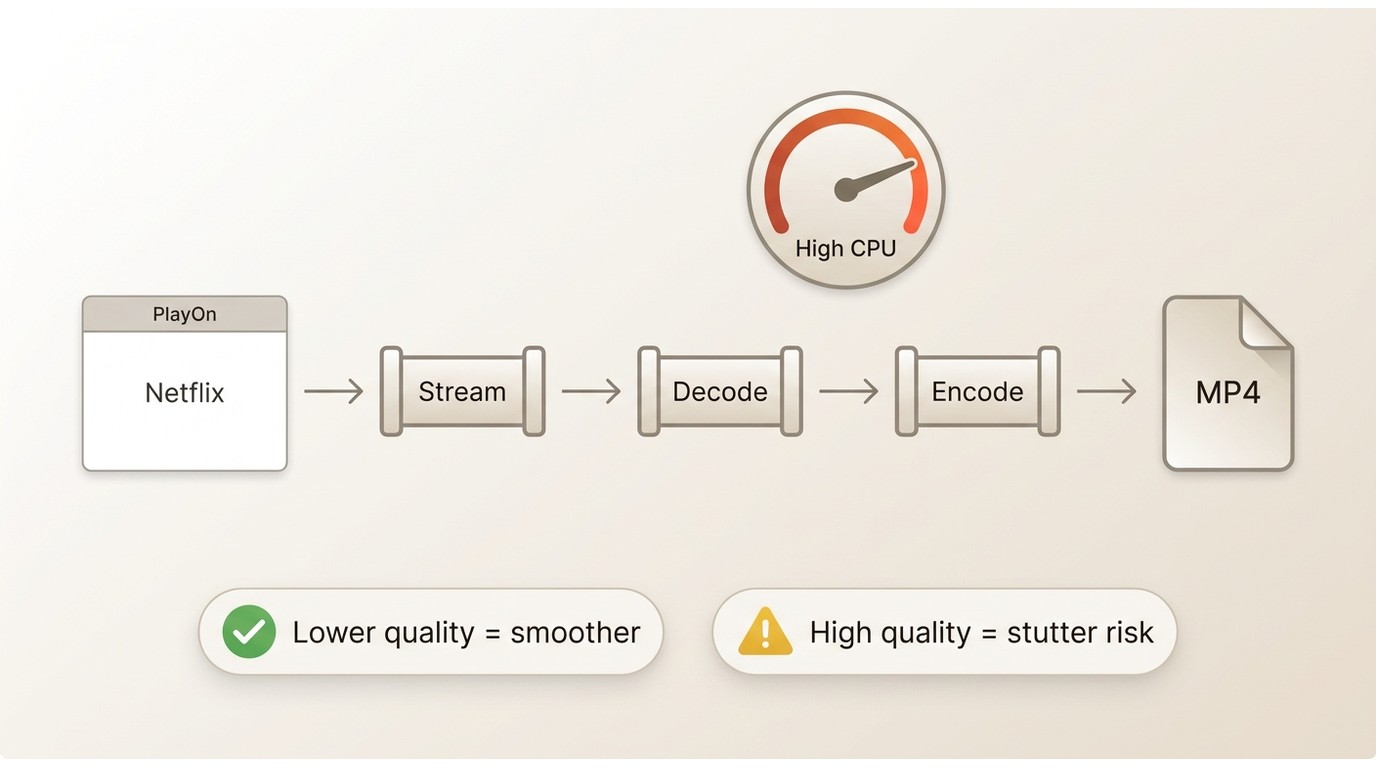
Because it records in real-time, your computer has to stream, decode, and re-encode the video—all at once. If your system is already multitasking or on the older side, it might not keep up. What you end up with is stuttering video or out-of-sync audio. Or worst of all: blank or partially recorded files.

When a recording competes with video calls, browser tabs, and other demanding apps, CPU pressure can become the bottleneck. Close nonessential tasks and retry one item before assuming the channel itself failed.
- Hit Ctrl + Shift + Esc to open Task Manager.
- Look at CPU usage while a recording is active.
- If CPU usage stays near its limit, reduce the workload before retesting.
- Close everything non-essential before recording.
- In PlayOn’s settings, lower the video performance profile or change recording quality to standard (not high).
- Record in Off-Peak mode when the system is idle.
- Make sure your PC’s power plan is set to High Performance, not “Battery Saver” or “Balanced.”
Some users also disable “hardware acceleration” inside the PlayOn browser settings, which can reduce CPU load in older systems.
Blank Window: Reset PlayOn's Edge Cache
If the recording window is blank across several channels, first reboot the PC. Then open %PROGRAMDATA%\MediaMall\Edge, delete the Cache folder, restart the PlayOn server, sign in to the affected channel again, and retest one recording. This is a targeted reset for a blank window or broad channel failure, not a first response to every single-service problem.
When PlayOn Support Needs Your Logs
Use this support path after a matched single-title retest reproduces the same symptom.
Reproduce the Failure Before Submitting
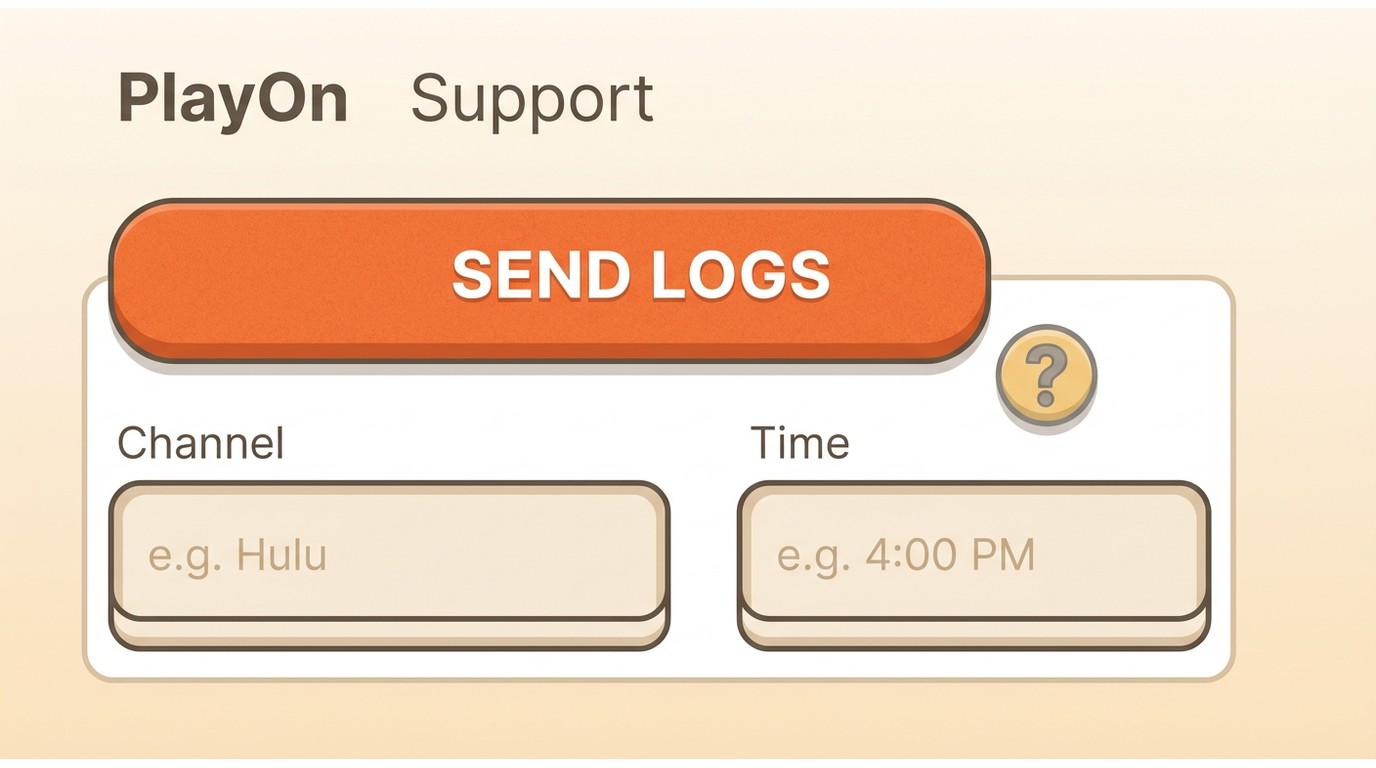
When the focused checks do not resolve the problem, reproduce it with one title rather than a long mixed queue. Record the exact error text, PlayOn Home version, channel, title, writable local destination, approximate failure time, and any recent system change. When relevant, include the service account and whether access is direct or routed through Roku; if output validation fails, add the saved-file duration and the failing scene timestamp.
Send Logs from PlayOn Settings
Submit the support request from PlayOn Settings so diagnostic logs are available with the report. Logs are most useful after a clean, single-item retest because they give support one failure path to investigate instead of several overlapping variables.
When a Local-File Workflow Fits Better
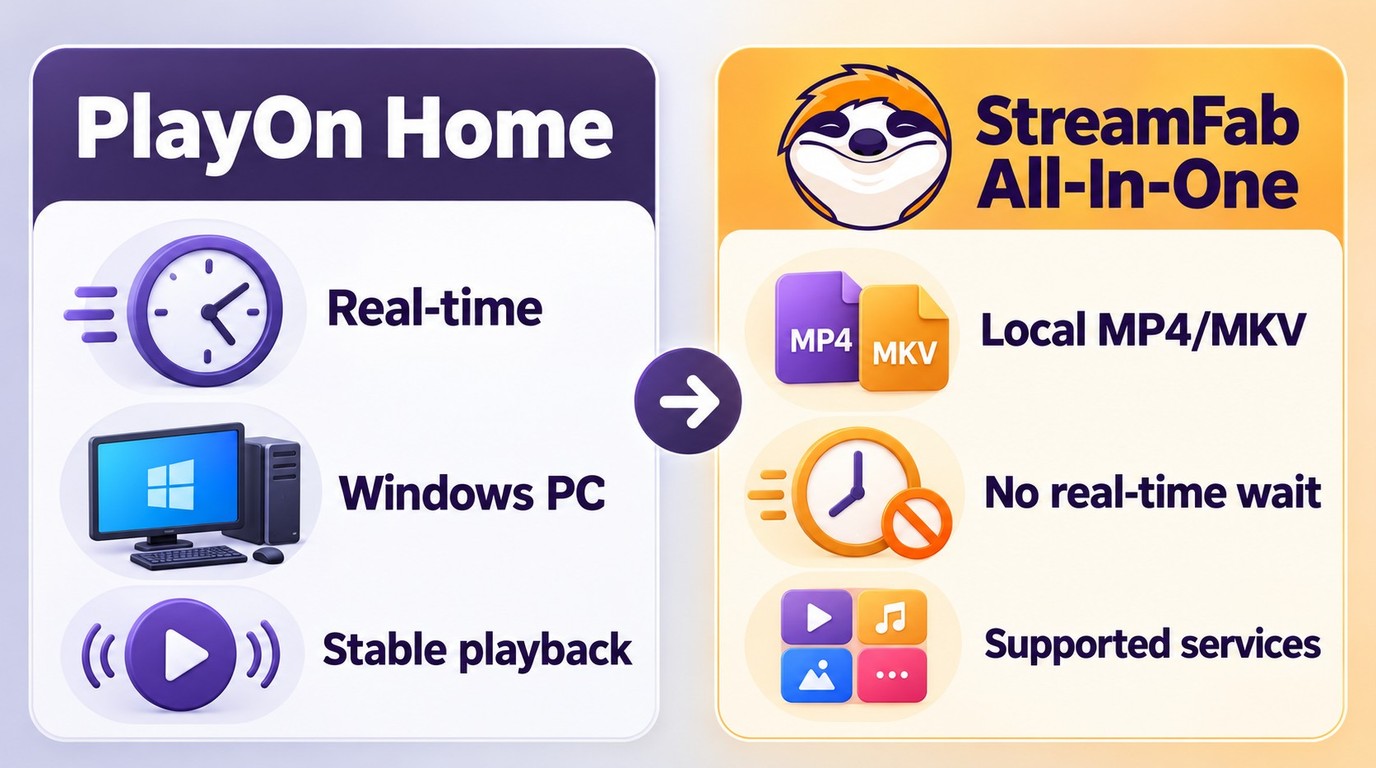
PlayOn Home records during playback on a Windows PC, so its workflow depends on the PC, network, storage destination, and power settings remaining stable throughout the recording. If you are dealing with a simple PlayOn failure, finish the matched single-title test and submit logs before changing workflows.
For content you’re authorized to access, where permitted by platform terms and applicable law, StreamFab All-In-One provides a separate local-file workflow for supported services and titles. It supports MP4 and MKV output with available audio languages and subtitles. Service, title, account, and Windows or Mac availability determine whether it fits a specific case; StreamFab 4K video support also depends on the platform, title, and account. The official 30-day trial provides a direct way to check that fit.
The practical difference involves download versus re-encoding rather than a universal ranking: PlayOn records during playback, while StreamFab creates supported local files for personal offline viewing. The PlayOn and StreamFab workflow comparison provides more detail without turning a recording error into an automatic reason to switch. Use either workflow only with an active subscription and content you have permission to access, and do not redistribute saved files.
| Dimension | PlayOn Home | StreamFab All-In-One |
|---|---|---|
| Core method | Real-time recording during playback | Local-file workflow for supported services |
| Operating systems | Windows PC | Windows and Mac |
| Maximum quality | 1080p or 720p recording options | Up to 4K when the platform, title, and account allow it |
| Output format | MP4 recordings | MP4 or MKV |
| Real-time playback dependency | Yes | No real-time recording requirement for supported titles |
| Batch and scheduling fit | Useful for recording queues and off-peak sessions | Supports batch tasks and scheduled follow-up downloads |
| Best fit | Users who prefer PlayOn's recording workflow | Users who need a local-file workflow for personal offline viewing |
| Not ideal for | Unattended recordings on an unstable PC or network | Anyone seeking a free, quick fix instead of completing PlayOn troubleshooting |

- Save supported videos as local files for personal offline viewing when permitted by service terms and applicable law.
- Output MP4 or MKV files, with availability depending on the service, title, account, and operating system.
- Choose available audio languages and subtitles for supported titles.
Here’s what I found after a month of side-by-side testing.
- PlayOn captures video as it streams—essentially a smart screen recorder with browser automation.
- StreamFab actually downloads the video file directly (when supported), bypassing the need to play the stream in real-time.
If you only need a quick fix inside PlayOn, finish the controlled troubleshooting path first. A local-file workflow is a separate fit decision, not proof that a PlayOn issue cannot be fixed.
Choose the streaming service
Click on the VIP Service present on the left side of the screen. This will open a list of different streaming services, and you can click on the one you want to use.
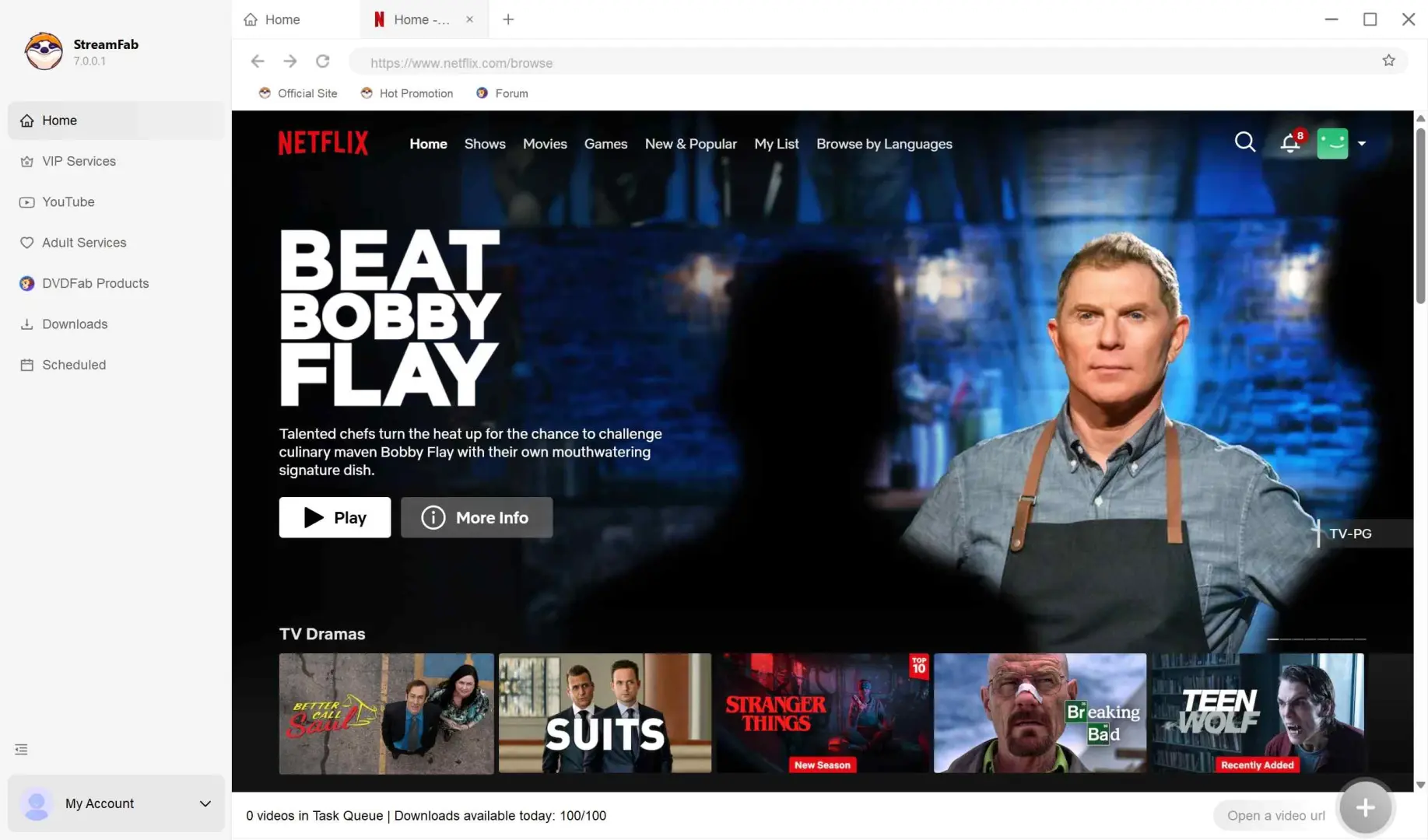
After choosing the streaming service, log in to your account and find the series or movies you want to download. A new popup window will open, and here, you need to choose the audio, video resolution, language, and a few other things.
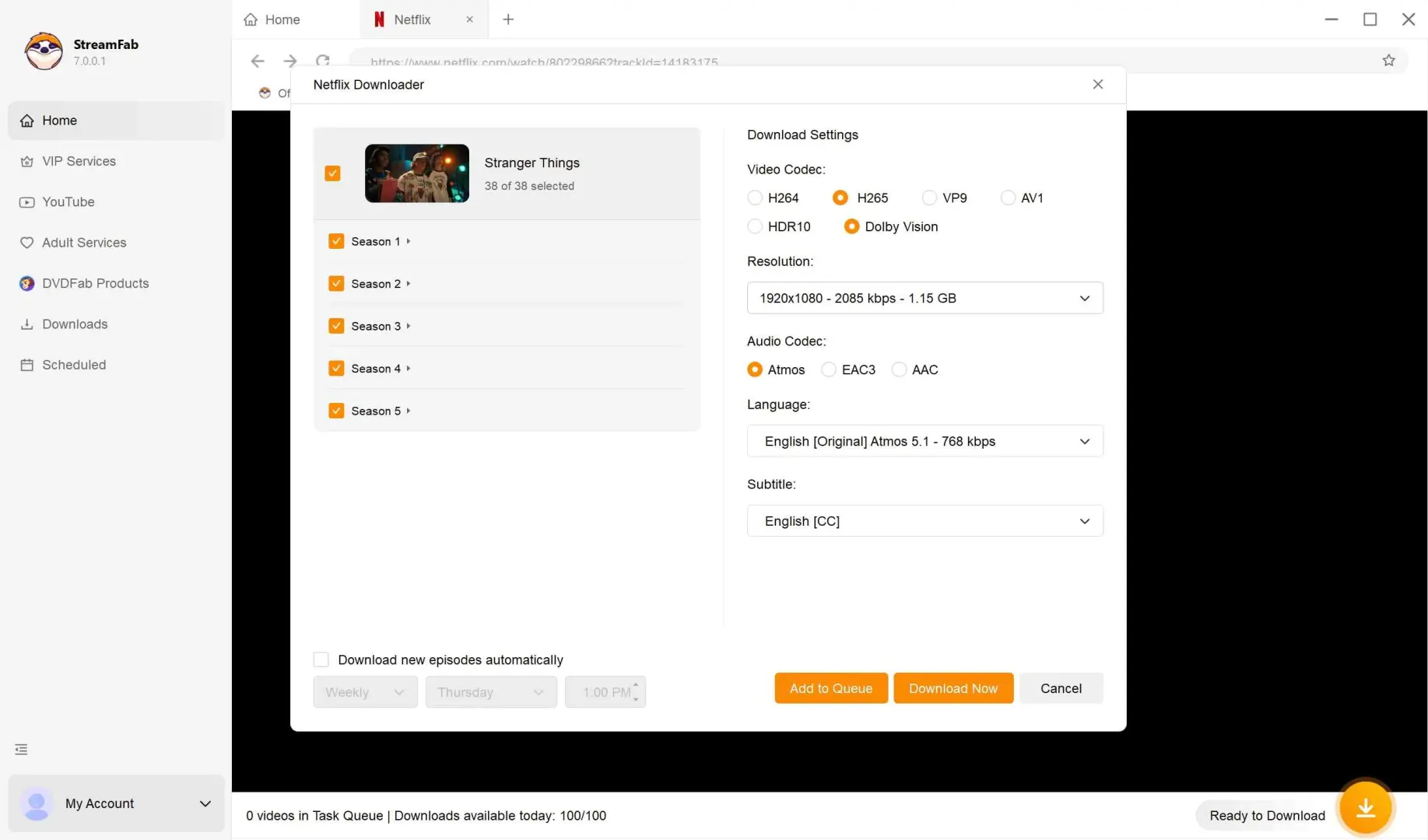
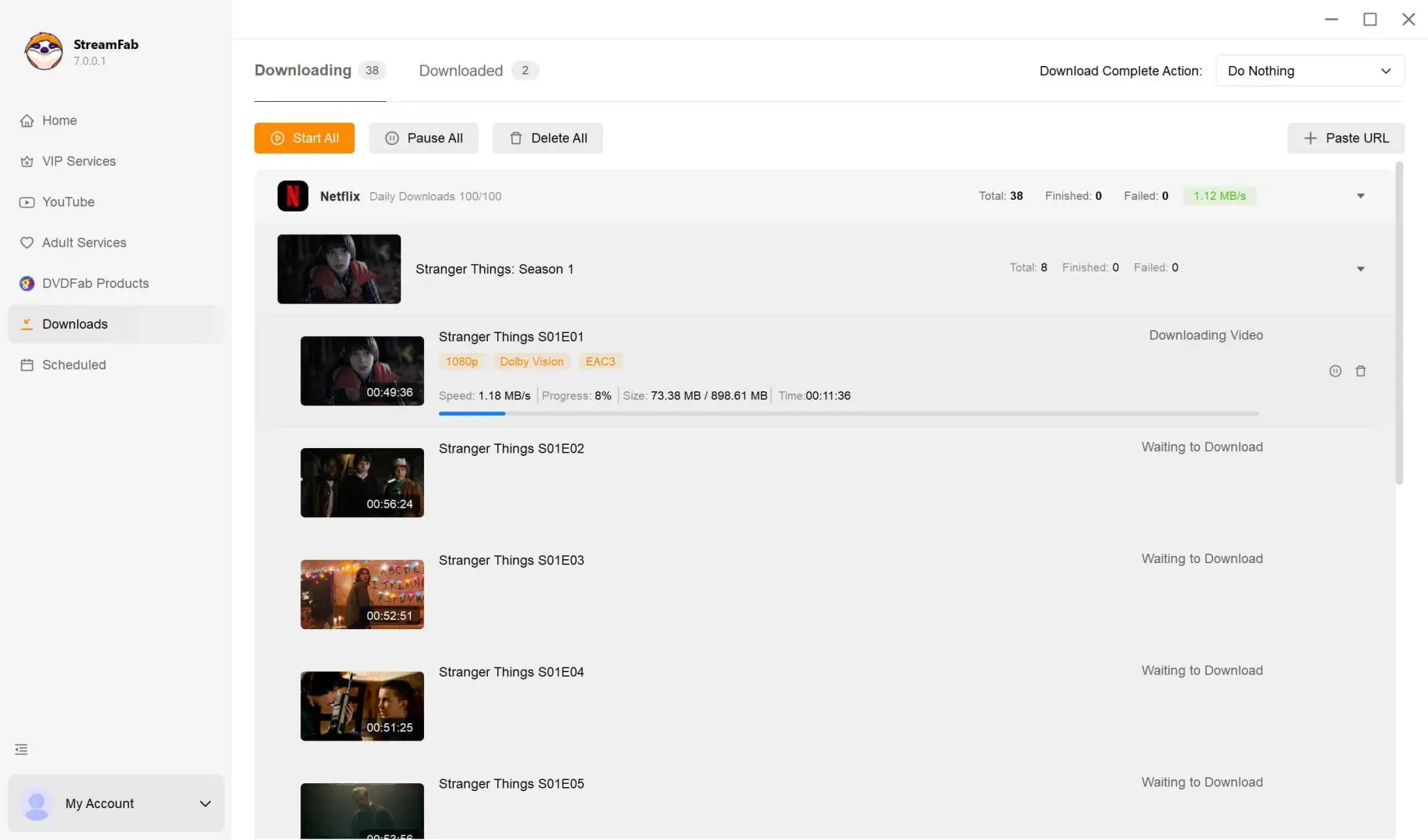
You can click the Download Now button and watch your videos offline whenever possible.
FAQs
Conclusion: What to Try Next
First, decide whether the failure affects every channel, one service, a saved recording, or only device discovery. Then run one controlled test and apply the matching cache, login, storage, network, or CPU fix. If it persists, send PlayOn support a clean log-backed report.
I would avoid changing every setting at once because a single controlled retest gives you a much clearer next decision.
- Identify whether the failure is system-wide, channel-specific, or device-specific
- Retest one item after applying the matching fix
- Submit logs when the same symptom persists after a clean retest