What is M3U8? In short, an M3U8 file is a UTF-8 text manifest used by HLS to point a player to variant playlists or timed media segments; it is not the video itself. This M3U8 review explains the manifest, playback, links, saved files, and common failures. Start with the M3U8 essentials, then follow the page into playback, saved files, link discovery, and troubleshooting.
What are M3U8 files?
M3U8 files are UTF-8 playlists most closely associated with HTTP Live Streaming. The M3U8 file format holds text instructions, while the M3U8 playlist points a player toward alternate stream qualities or a timed sequence of media segments.
Think of the manifest as a routing sheet. It tells the player what to request and in what order, but the actual audio and video live in the referenced segments. That distinction explains why opening, playing, and saving an M3U8 source are separate tasks.
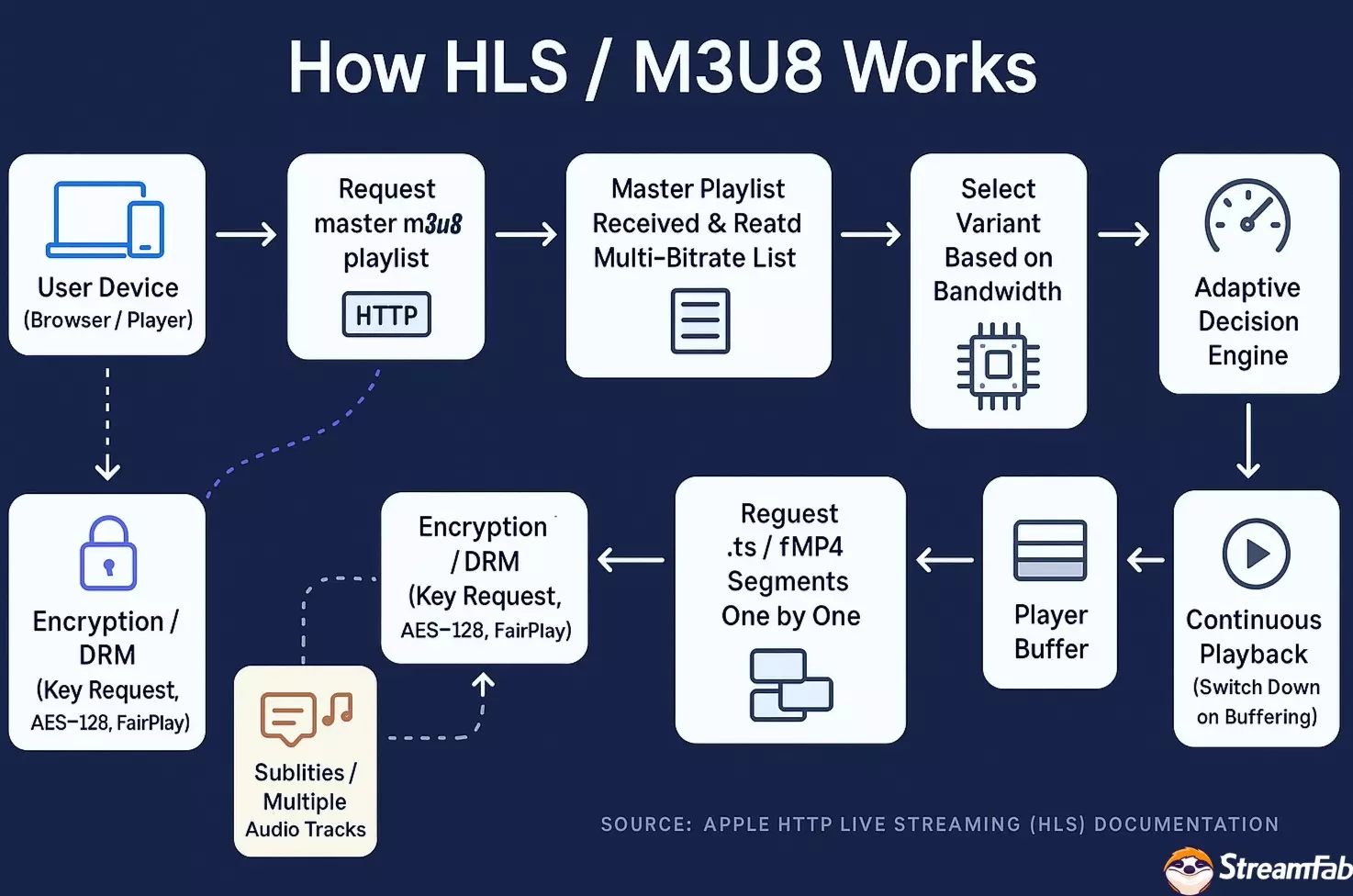
- UTF-8 encoding: M3U8 supports international characters more consistently than older M3U conventions.
- Text-based structure: A text editor can display the manifest, although it cannot play the referenced media.
- Playlist references: Entries point to local paths, remote segments, or alternate stream variants.
- Adaptive streaming: HLS can switch between listed quality levels as connection conditions change.
- Player compatibility: Playback requires an HLS-capable player or a site player with HLS support.
- Media segmentation: Media playlists arrange short audio or video segments in playback order.
- Protected delivery: A manifest can reference media that requires a valid account session and authorized requests.
Inside an M3U8 Manifest
An M3U8 manifest is readable text with a strict job: describe stream variants or list the segments in one selected stream. Recognizing which playlist you have prevents a player, converter, or downloader from being asked to do the wrong job.
Master playlist excerpt:
#EXTM3U
#EXT-X-STREAM-INF:BANDWIDTH=2800000,RESOLUTION=1920x1080
video-1080.m3u8
Media playlist excerpt (video-1080.m3u8):
#EXTM3U
#EXTINF:6.006,
segment001.ts
The first excerpt points to the variant playlist; the second shows that variant playlist pointing to a timed media segment. Both are abbreviated examples, not complete playable playlists.
Master and Media Playlists
A master M3U8 lists variant playlists, often separated by bandwidth, resolution, or audio choice. A media playlist sits one level deeper and lists the timed segments for a selected variant. In the excerpts above, #EXT-X-STREAM-INF identifies the master level, while #EXTINF appears in the referenced media playlist.
- Master playlist: points to alternate qualities or renditions.
- Media playlist: defines the sequence for one rendition.
- Media segment: carries a short portion of audio or video.
Segments and Core #EXT Tags
The #EXTM3U header identifies the playlist. #EXT-X-STREAM-INF describes a variant, while #EXTINF gives the duration of the next segment. Other tags can describe media sequence numbers, encryption metadata, discontinuities, or the end of an on-demand playlist.
My practical rule is simple: identify the playlist level before choosing a workflow. A master playlist is useful for quality selection; a media playlist is what a player follows segment by segment.
M3U8 Files in Practice
Playing an accessible manifest and creating a normal media file are different operations. Start by deciding whether you need temporary stream playback, an audio extract, or a local MP4/MKV file from media you are authorized to access.
Convert M3U8 to MP4 or MP3
Changing the .m3u8 extension does not create video or audio. Conversion or remuxing works with the media referenced by an accessible manifest, then packages that media into MP4 or extracts an audio track into a supported format such as MP3.
For an unprotected source you control, maintained tools such as FFmpeg can read the manifest and package accessible media without re-encoding when the source tracks and destination container are compatible. If access tokens or required headers are missing, conversion cannot begin because the segments remain unavailable.
Play M3U8 Files.
Safari can play HLS natively, while Chrome, Edge, and Firefox commonly rely on a site player or JavaScript HLS support. A reachable manifest URL can still fail when its segments require valid tokens, session cookies, a Referer header, CORS permission, or authorized access.
On Windows
- Text editors: Notepad can display an M3U8 manifest, but it cannot play the referenced stream.
- Media players: VLC can open an accessible M3U8 URL, while Windows Media Player support depends on the installed codecs and stream requirements.
On Windows, M3U8 playback in VLC is a practical first check for whether an accessible manifest and its segments are reachable.
On Mac
- Browser playback: Safari can open authorized HLS streams when the manifest and segments remain accessible.
- Media players: VLC offers a standalone option for reachable M3U8 playlists and supported codecs.
M3U8 Manifests and Saved MP4/MKV Files
An M3U8 manifest contains instructions; a saved MP4 or MKV contains media that a normal local player can open. For authorized sources, a workflow to download M3U8 retrieves accessible segments before packaging them into a media container.
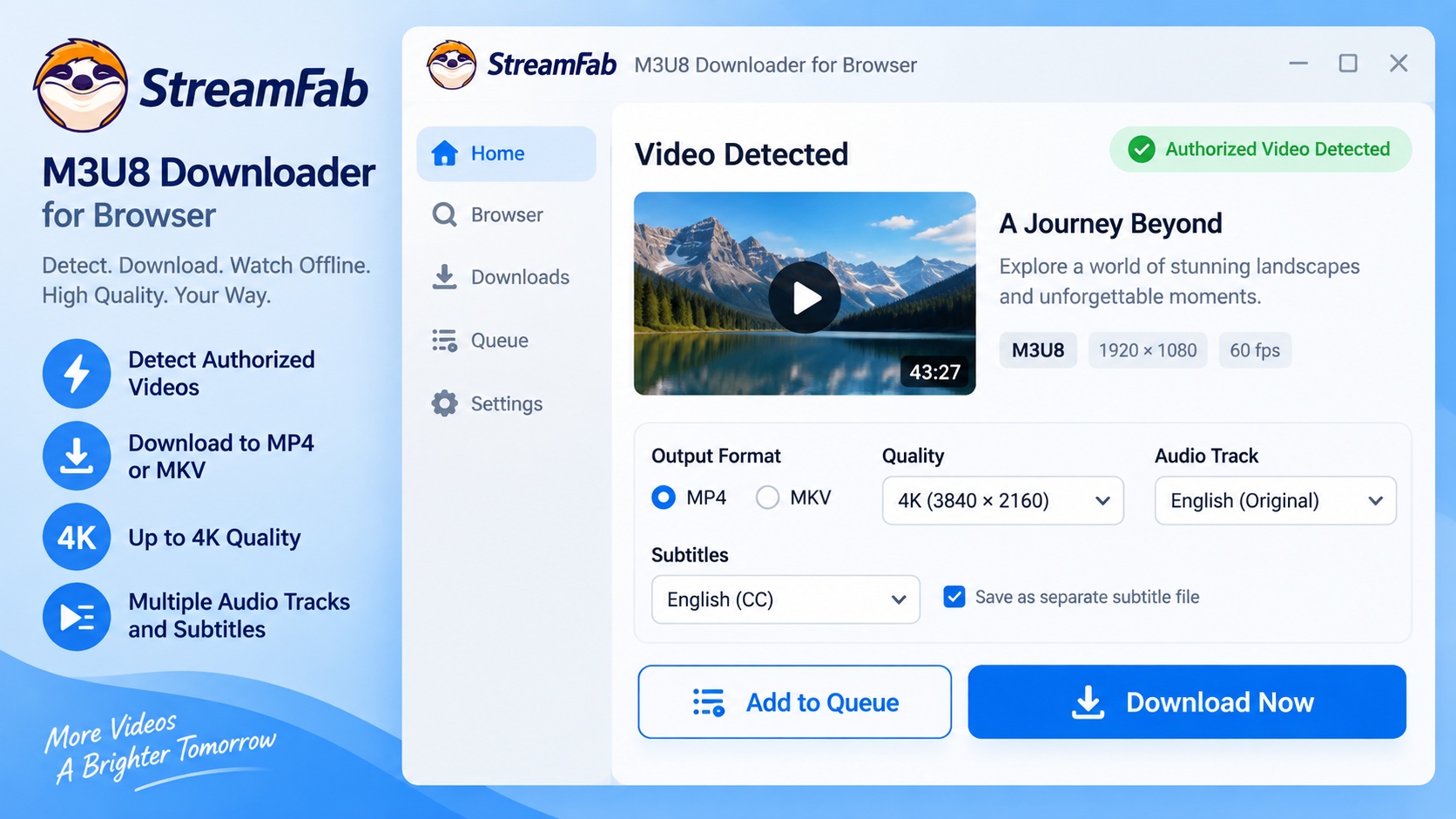
StreamFab M3U8 Downloader for Browser
For content you're authorized to access, where permitted by platform terms and applicable law, StreamFab DRM M3U8 provides a Windows and Mac workflow for saving content you are authorized to watch as local MP4 or MKV files, with available source quality up to 4K where supplied, selectable audio and subtitles, batch queues, and metadata. Local-file output does not permit unrestricted use: do not access titles without authorization or redistribute saved files.
It fits you when copied links expire or require the active viewing session, and you want selectable audio or subtitles, batch queues, metadata, and source quality up to 4K where supplied. The saved result is a media file, not an M3U8 video format.

Detect authorized M3U8 playback in the browser and save available media as MP4 or MKV on Windows or Mac.
- Detect supported M3U8 playback through the built-in browser after you sign in with an authorized account
- Save available source quality up to 4K where the service supplies it
- Choose MP4 or MKV for broad local-player compatibility
- Keep the active browser session available while the app analyzes the selected title
- Apply supported ad handling during compatible downloads
- Select available audio and subtitle languages before saving
- Queue multiple episodes with batch downloading
- Download subtitles with the selected title
- Write available metadata for easier media-library organization
How to use StreamFab M3U8 Downloader for Browser
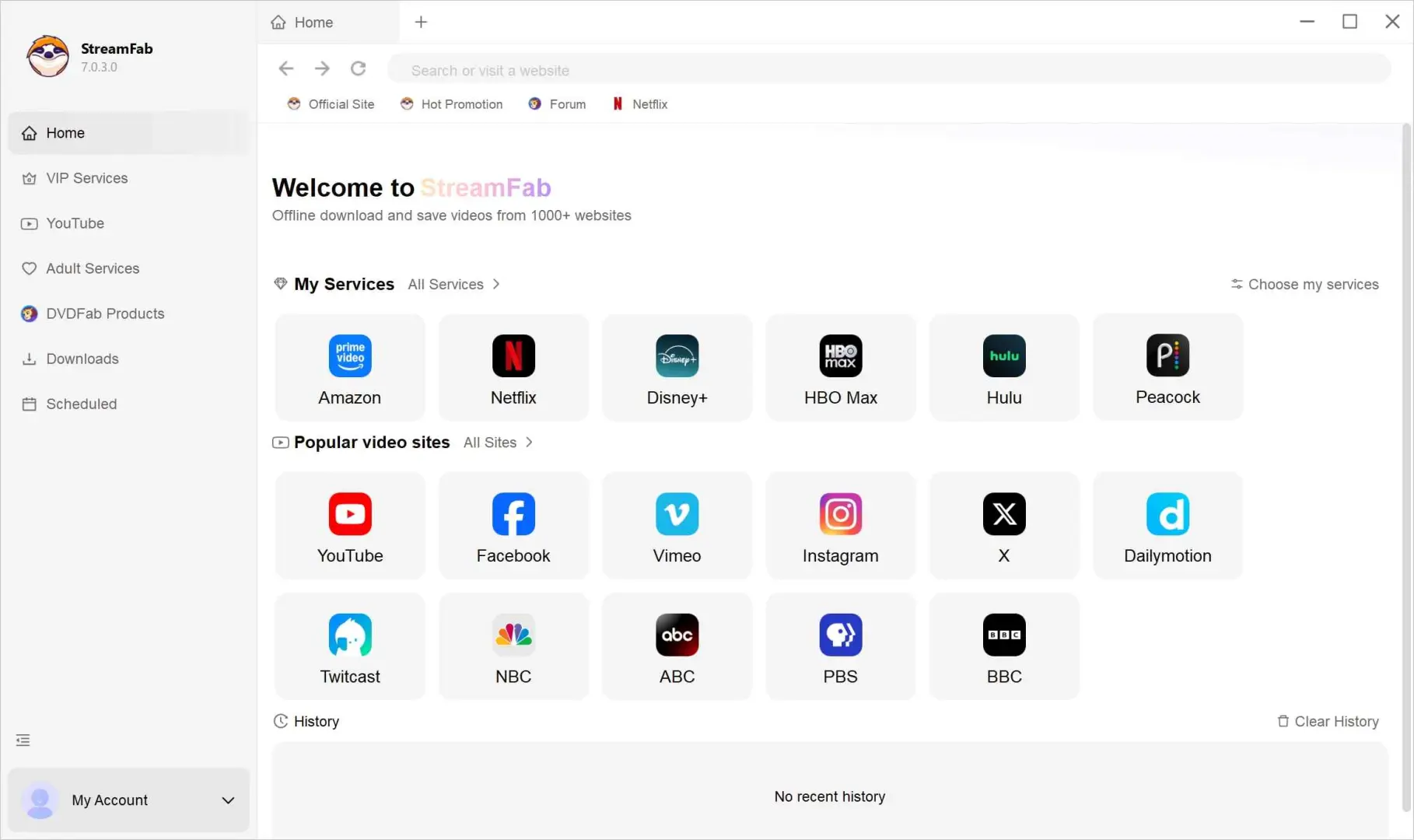
Open the supported site in StreamFab's browser, sign in with your valid account, and play the title you are authorized to access.
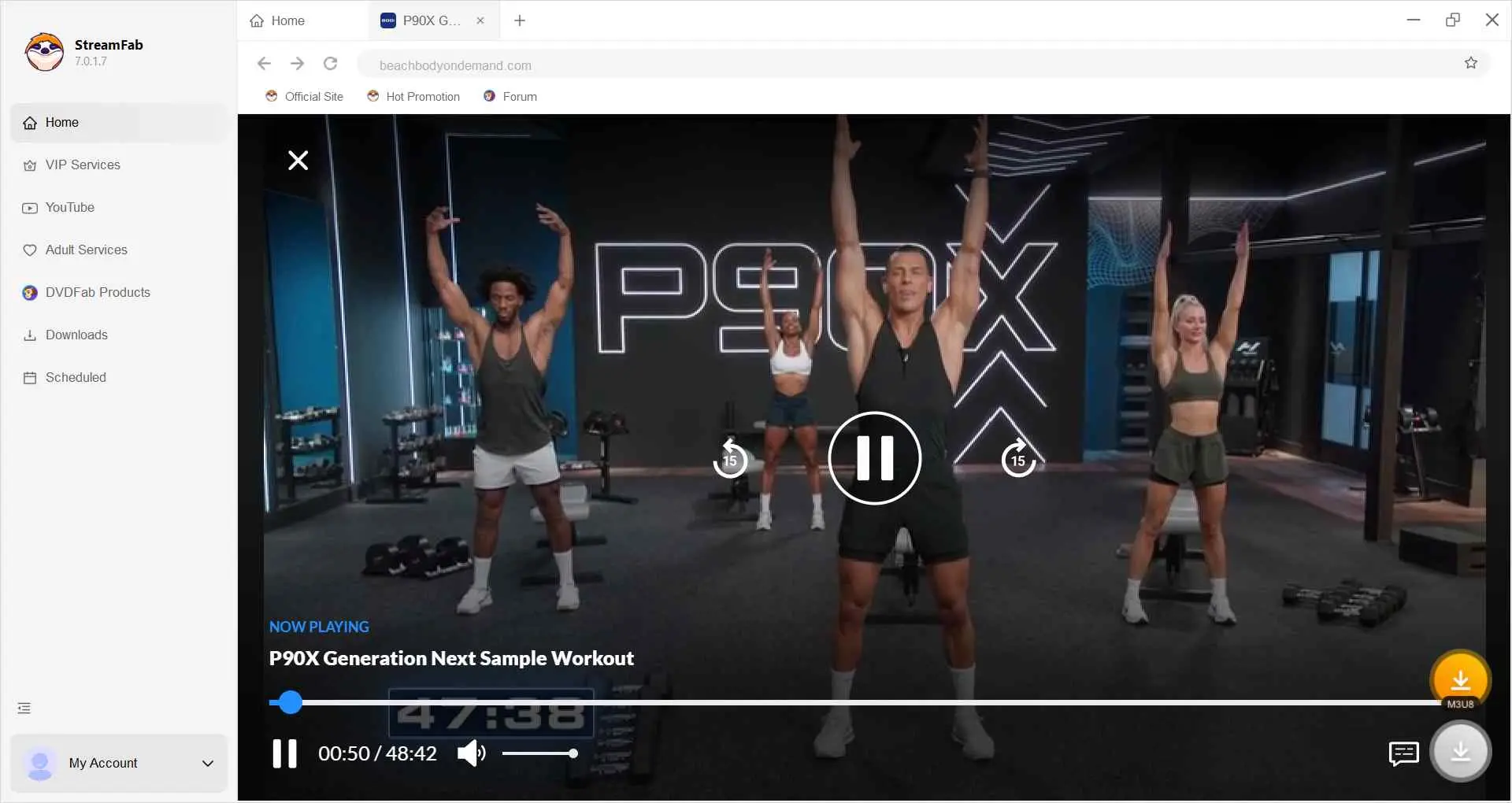
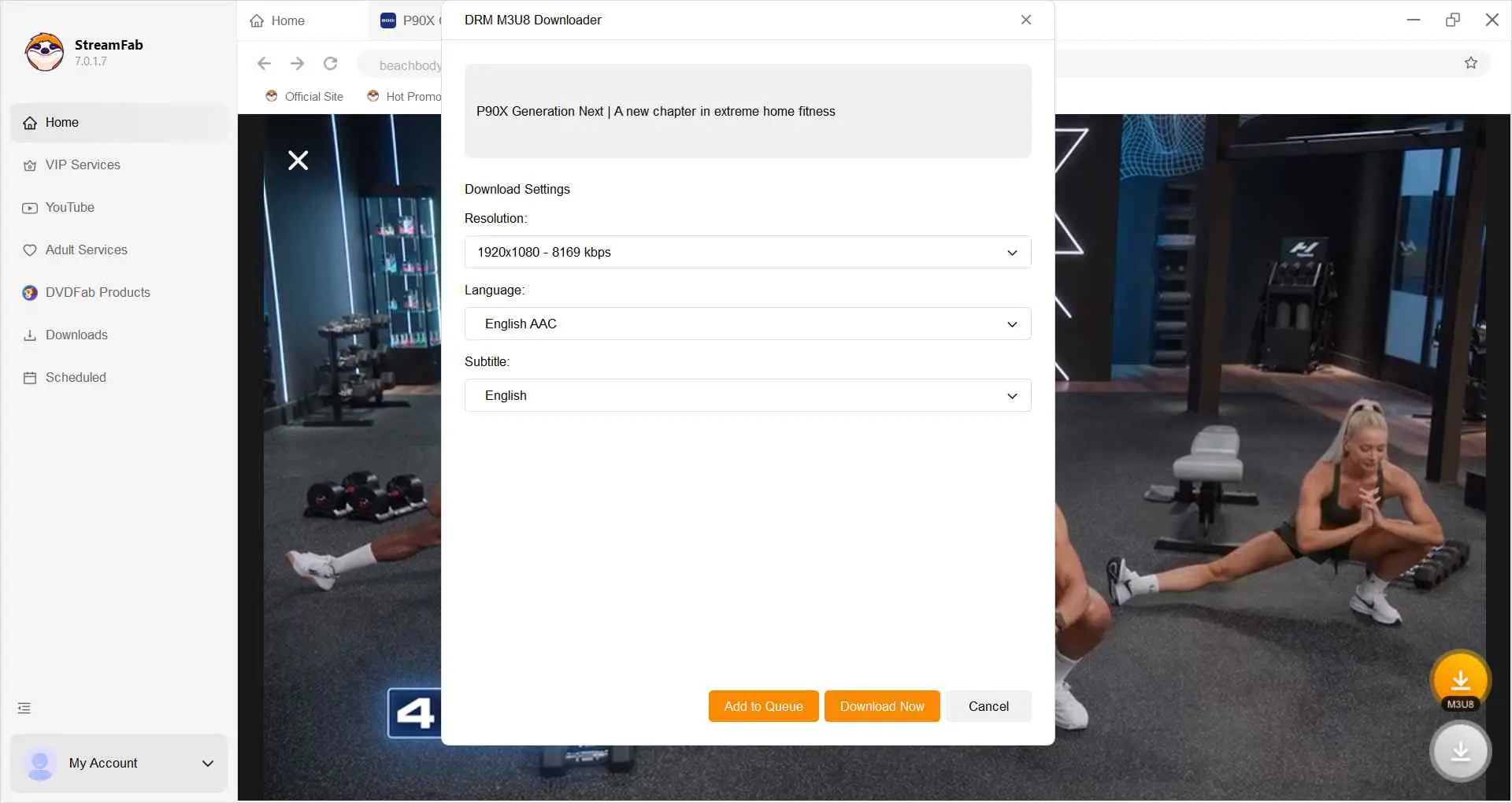
When the download panel appears, choose the available format, quality, audio, and subtitle options, then start the task.
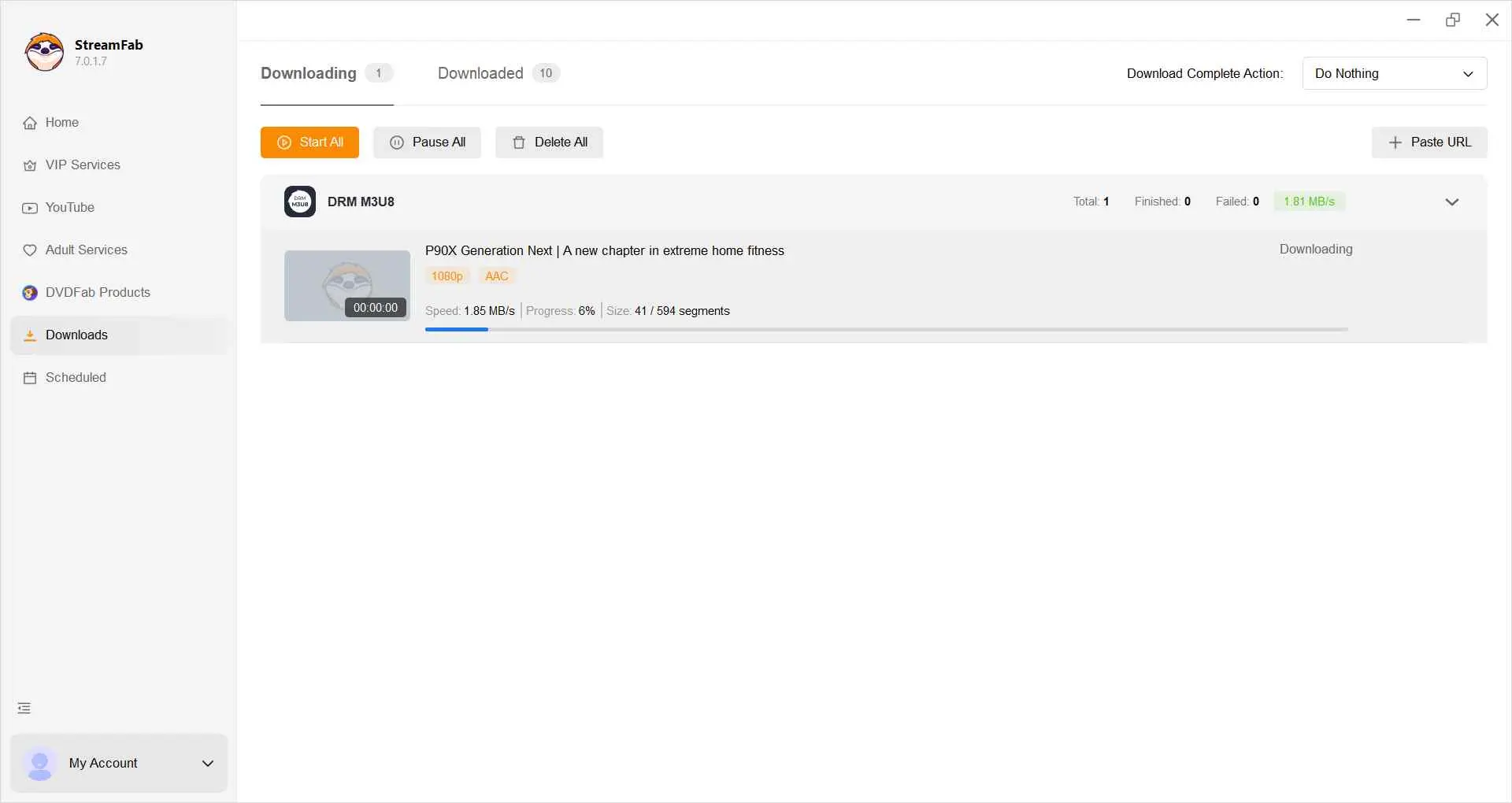
Open the completed MP4 or MKV in a compatible local player and keep its use within personal, authorized viewing.
Open-Source Android M3U8 Downloaders
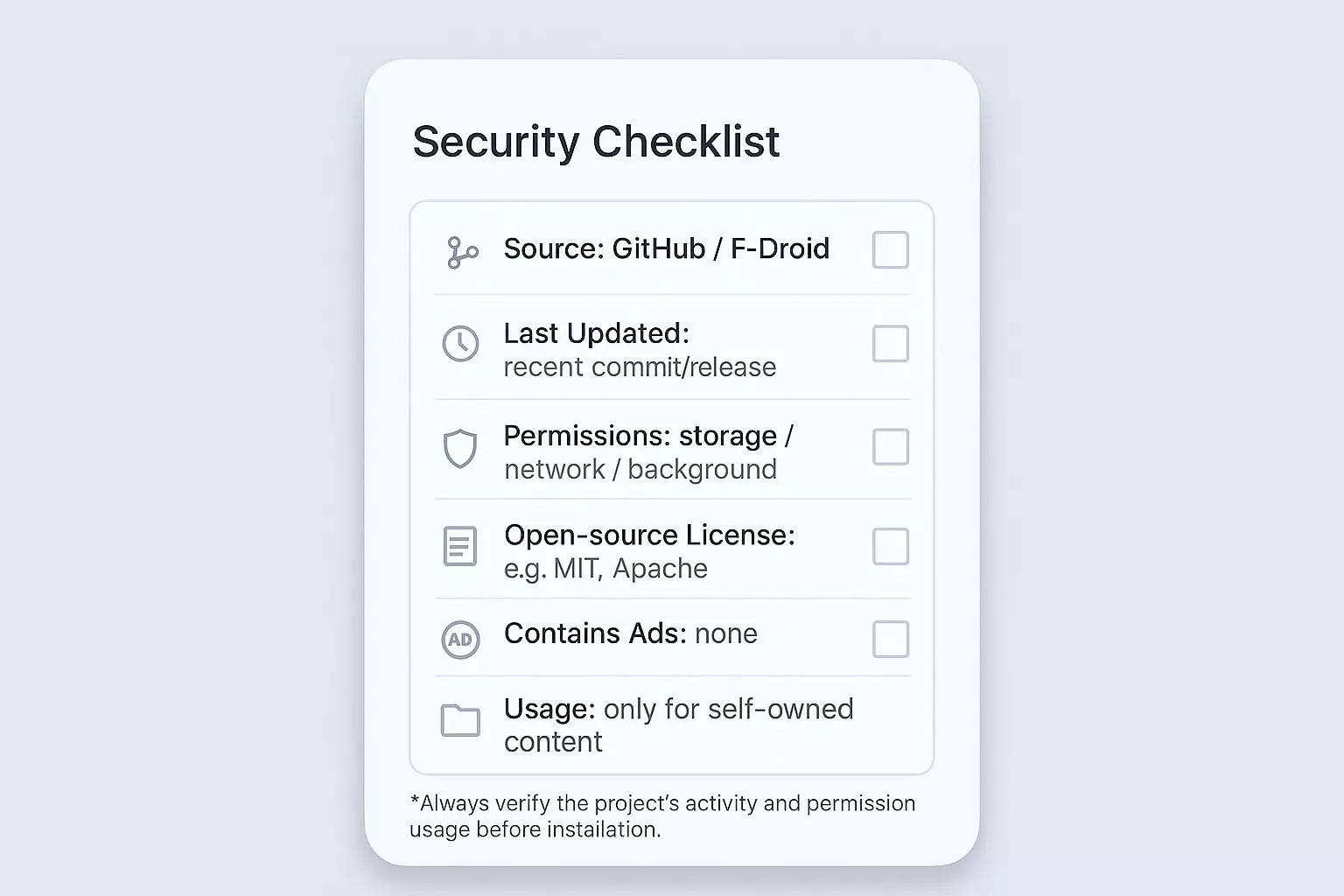
Android apps are most useful for unprotected manifests you own or are authorized to retrieve. Choose an app from its official repository, then judge it by recent releases, requested permissions, license, and whether it clearly explains its supported stream types.
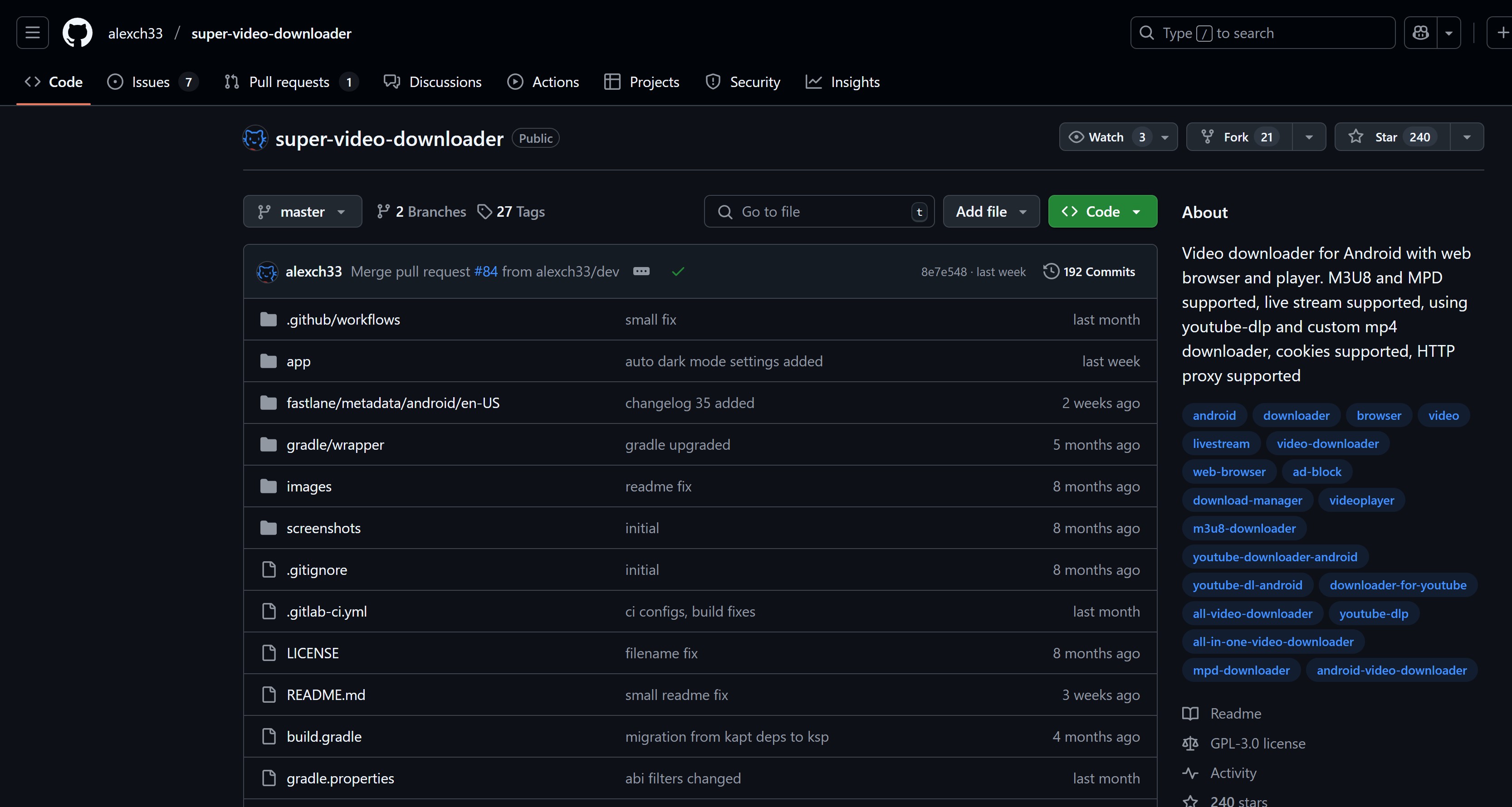
- Install the app from its official repository or trusted store listing.
- Review its update history, permissions, license, and supported output before opening a manifest.
- Use it with content you control or have authorization to save, then test the output in your chosen player.
Finding an M3U8 Link on a Website
An M3U8 link usually appears in the browser's network requests after playback begins. Finding the URL does not grant access to the stream: temporary signatures, account cookies, request headers, and server rules still control whether the manifest and segments respond.
Browser Developer Tools
Developer Tools gives you the clearest view of which manifest the page requests. Use it only on pages and streams you are authorized to inspect.
- Open the video page in Chrome, Edge, or Firefox
- Press F12 or right-click and choose Inspect to open Developer Tools
- Select the Network tab
- Enter m3u8 in the filter box
- Start playback and watch for M3U8 requests in the list
- Right-click the relevant request, then choose Copy and Copy URL
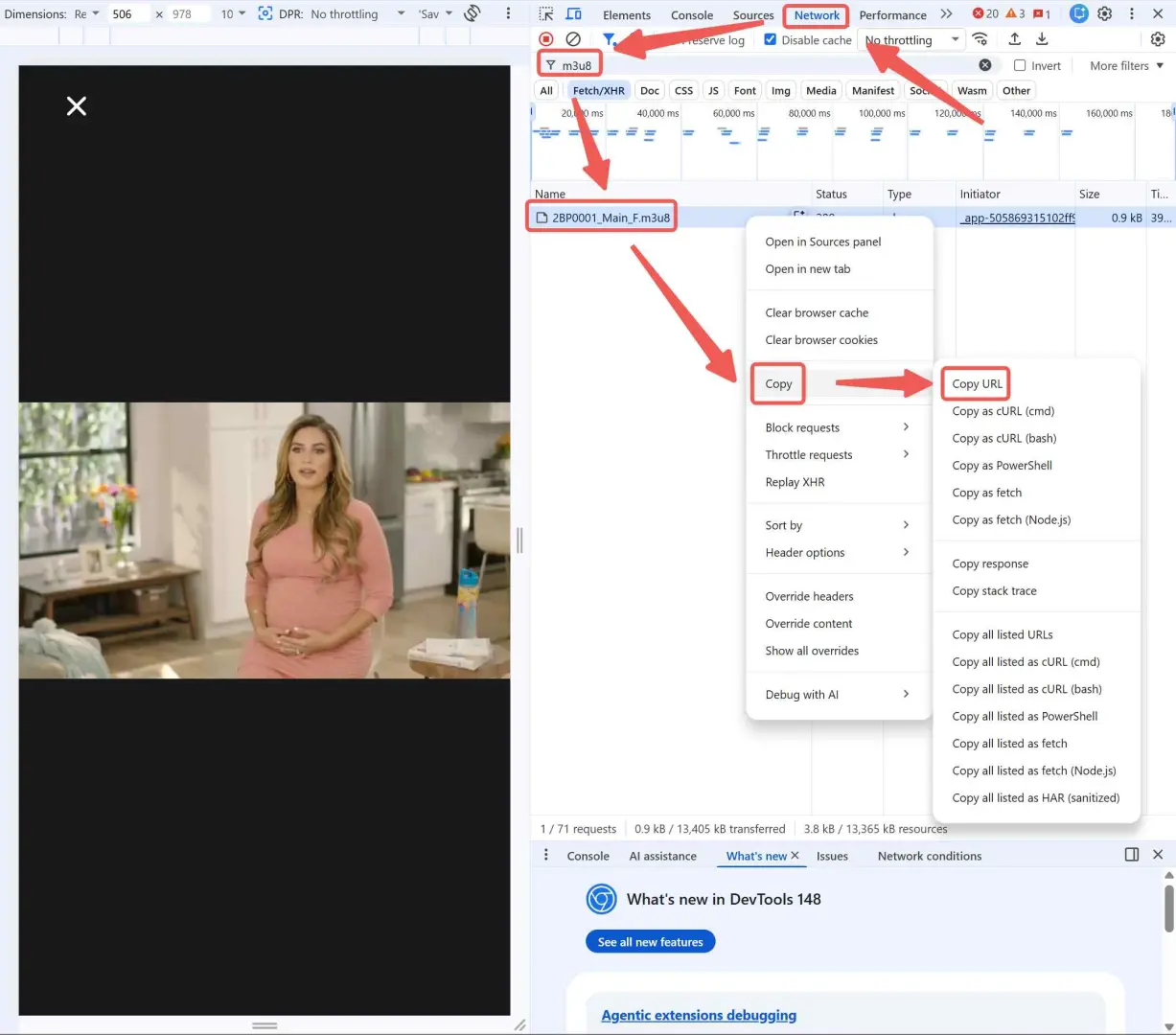

If the copied M3U8 link returns 403, capture a fresh request and confirm that your authorized session is still active. A rotating query string is a sign that the URL has a short lifetime.
Browser Extensions
Extensions reduce the manual work of filtering network traffic, but their store availability and permissions can change. I favor a current official listing with recent maintenance and restrained permissions over a longer list of barely maintained tools.
- M3U8 Link Finder (Firefox): Displays detected M3U8 links from the current page in a popup.
- Video DownloadHelper (Chrome/Firefox): Detects M3U8 and several other media request types.
- Selection rule: Prefer an official store or repository listing with recent maintenance and permissions that match link detection.
Method 3: Page Source (For Simple Sites)
A static page sometimes includes the manifest URL directly in its source. This approach is less reliable than the Network panel because many players request the link only after JavaScript runs.
- Right-click the page and choose View Page Source, or press Ctrl+U
- Press Ctrl+F to open the page search
- Search for .m3u8
- If the full URL appears, copy it and use it only within your authorized access
M3U8 Formats and Tools Compared
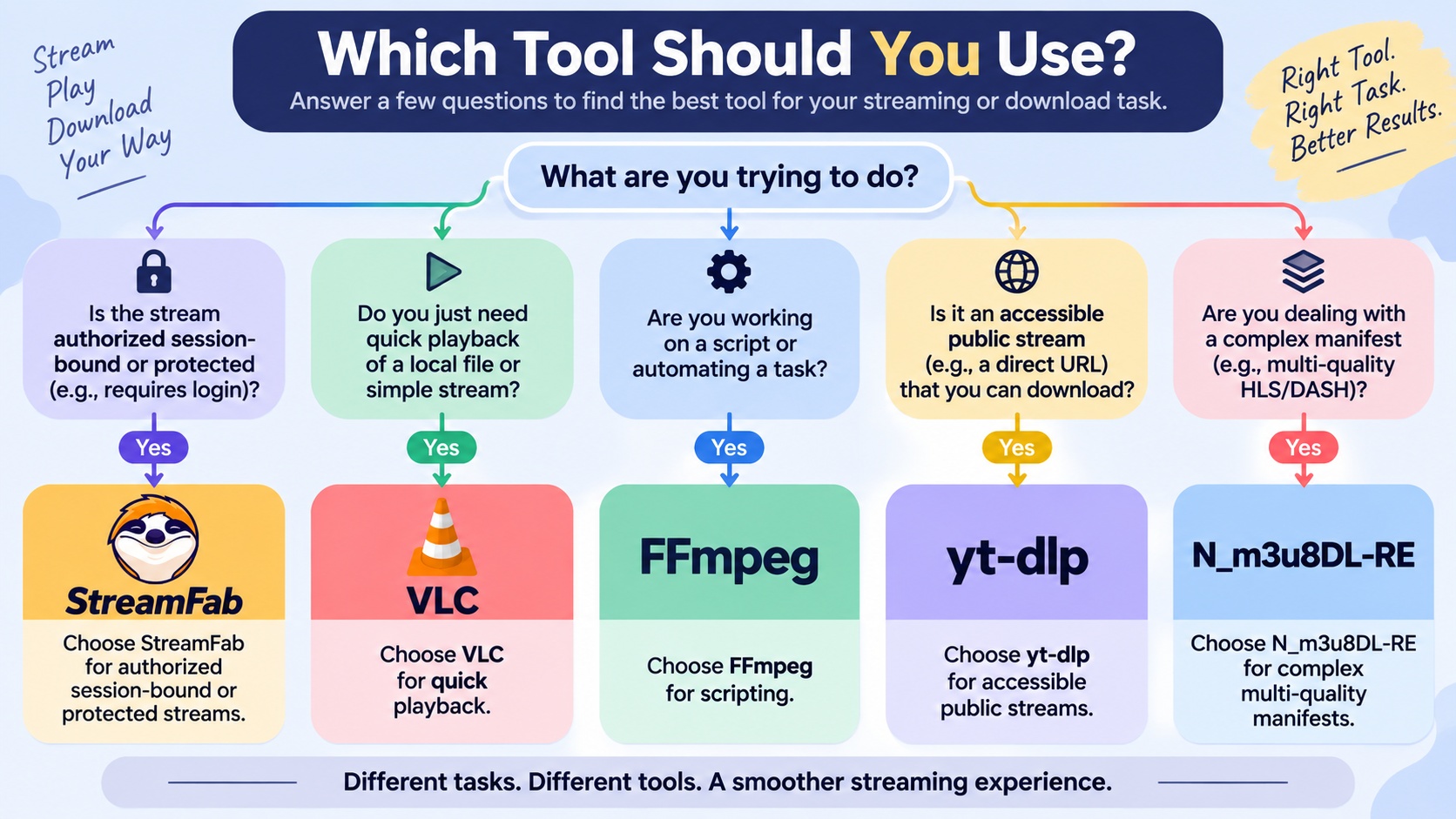
M3U vs M3U8 is mainly an encoding distinction: M3U8 explicitly uses UTF-8 and is the common HLS manifest form. M3U8 and MPD are manifests for HLS and MPEG-DASH respectively, while yt-dlp is a downloader, not a manifest format.
- M3U8/HLS: UTF-8 text manifest with broad Apple and HLS ecosystem support.
- MPD/MPEG-DASH: XML manifest used by DASH players and services.
- Downloader or media tool: software that reads an accessible manifest, plays it, or packages its referenced media.
Tool status and product specifications are current as of September 2026. For an accessible public stream, a player or command-line tool is often enough. For authorized session-bound playback and a managed Windows or Mac workflow, StreamFab is the more direct fit.
| Tool | Role | Best fit | Output or playback | Protected-stream workflow |
|---|---|---|---|---|
| StreamFab M3U8 Downloader for Browser | Browser-focused saver | Authorized Windows/Mac local files | MP4/MKV; up to 4K | Audio/subtitles, batch, metadata |
| yt-dlp | Command-line downloader | Supported public sites | Media files | Not for protected playback |
| N_m3u8DL-RE | Command-line HLS tool | Complex accessible manifests | Selected stream output | Requires accessible media |
| VLC media player | Media player | Quick playback checks | Network or local playback | Requires accessible manifest |
| FFmpeg | Media toolkit | Remuxing and automation | Chosen media container | Requires accessible media |
FAQs
{{FAQ}}
Update Log
September 2026: M3UExportTool remains stale after its May 2014 update, the m3u8 Sniffer TV Chrome listing is unavailable, and Safari provides native HLS playback while Chrome, Edge, and Firefox commonly rely on a site player or JavaScript support.
Conclusion
An M3U8 manifest is a map, not the finished media. Use an HLS-capable player when the accessible stream is all you need; choose a local-file workflow when you need an authorized MP4 or MKV with selected tracks. StreamFab offers a 30-day trial for checking that Windows or Mac workflow against your own supported title.
