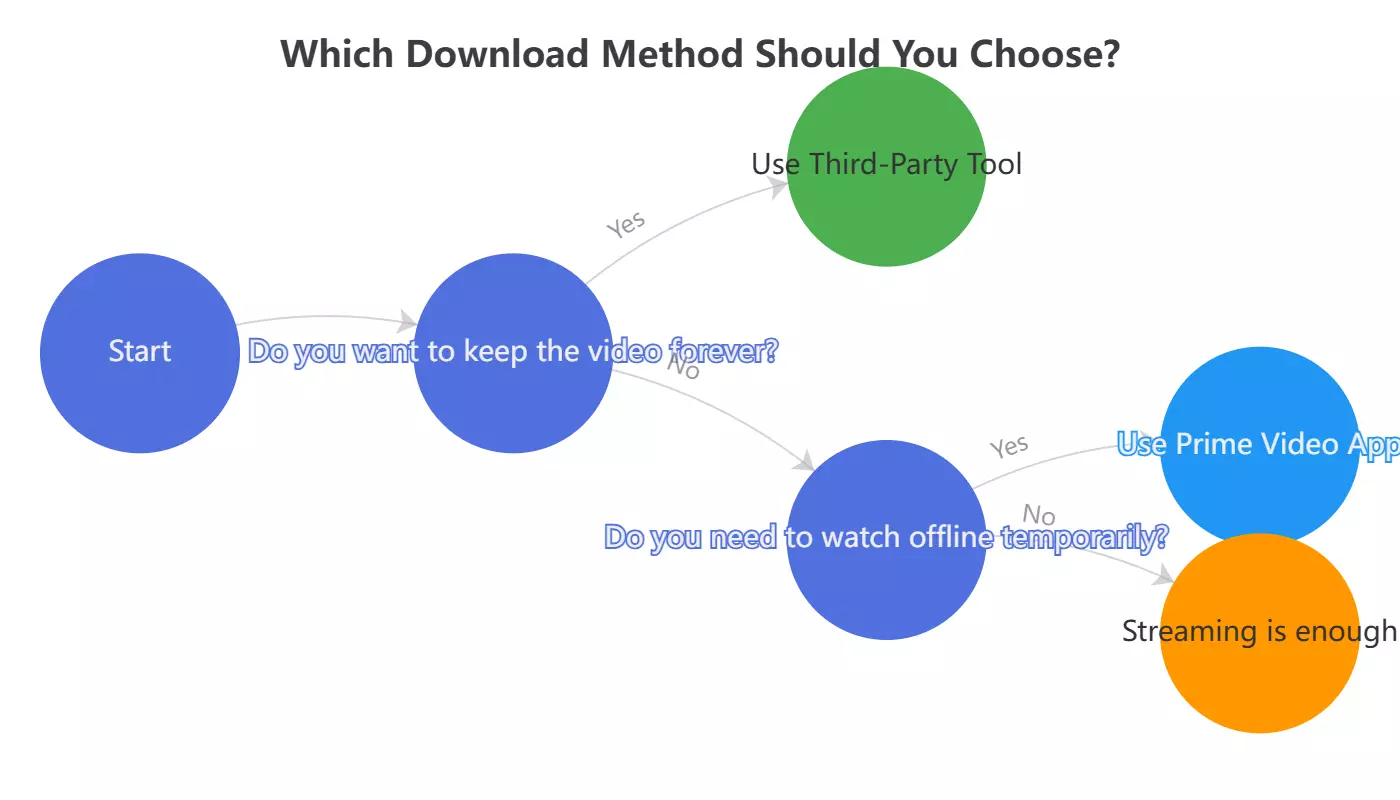
When you search to download Amazon Prime Video to a PC, the real question is whether you need a short-term offline title in the Prime Video app or a local file you can manage on your laptop. Prime Video downloads on PC are not all the same thing.
Quick answer: Browsers do not offer official Prime Video downloads. A compatible Prime Video app manages offline titles inside its own playback environment, while MP4 or MKV files are part of a separate desktop local-file workflow.
- Amazon Desktop App: Official Prime Video app: best for short-term offline viewing, such as on a flight.
- Professional PC Archiving Solution: StreamFab Amazon Downloader is best for authorized personal offline viewing when you need local MP4/MKV files and library controls.
The practical distinction is simple: official downloads stay inside the app, while local files are managed separately.
Download Prime Video With the Official App
If you need a quick movie for a flight or a weekend trip, the Amazon app is the most straightforward route. However, it is important to remember that web browsers do not support downloading. Amazon protocols require a dedicated desktop application for any offline access on a PC.
1. Prime Video App Availability on Windows and Mac
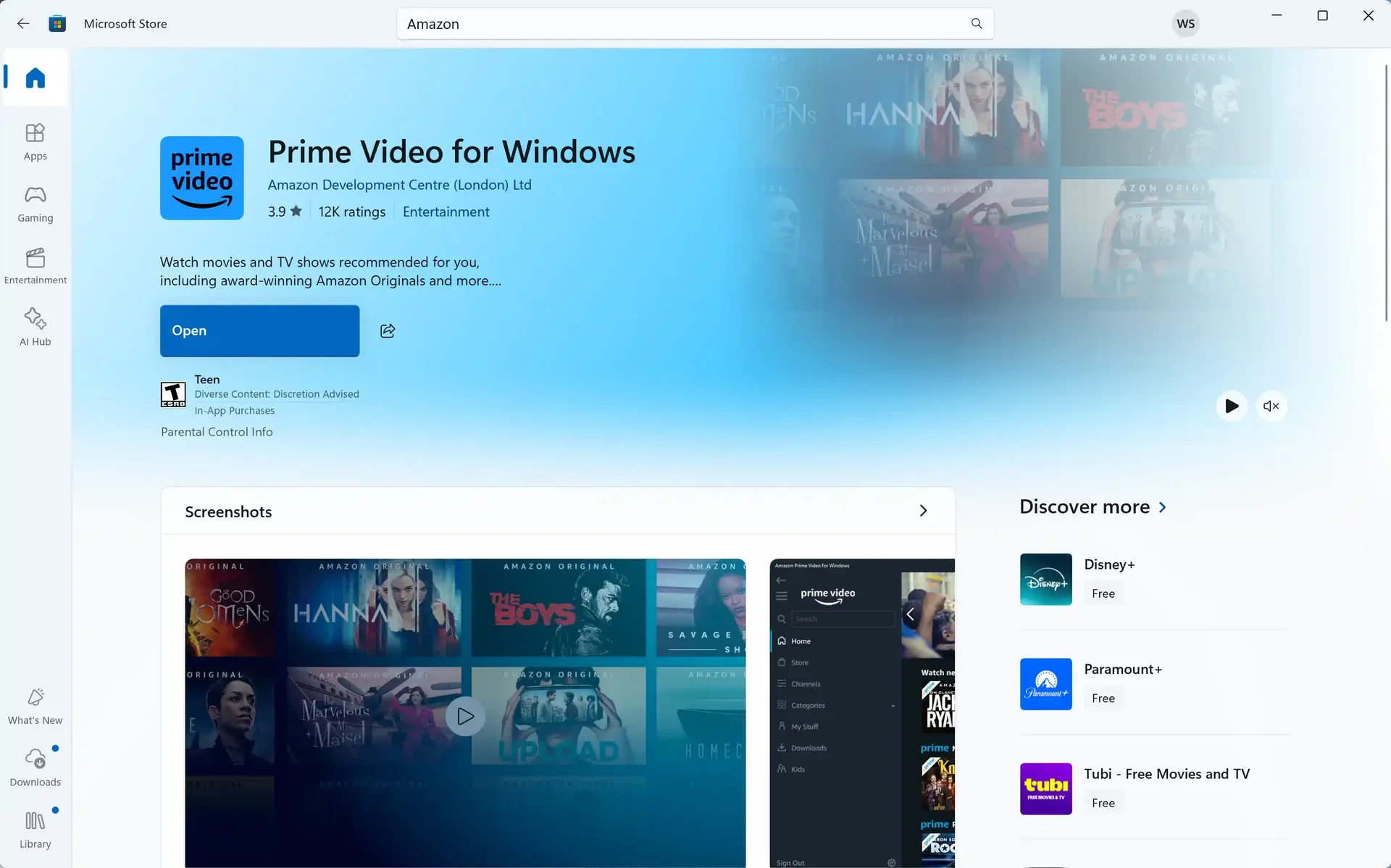
To watch Amazon Prime Video offline on PC, you must install the Prime Video desktop app specifically designed for your operating system:
- For Windows 11/10 users: The app is available directly through the Microsoft Store.
- For macOS users: You can find the official client in the Mac App Store; this Prime Video download guide for MacBook and iMac covers the Mac-specific flow.
Once installed, sign in with your Amazon account to sync your library, including your Prime subscriptions and Amazon video purchases.
2. Save Titles for Offline Viewing
The process of saving content within the app is simple: below is a simple guide teaching you how to download Amazon Prime Video to PC with Prime Video for Windows in case you haven't used it before. My test device is a Lenovo Thinkbook, Windows 11.
Launch Prime Video for Windows. Log in, then find your title: browse or go to "My Stuff" to see your purchased and rented titles.
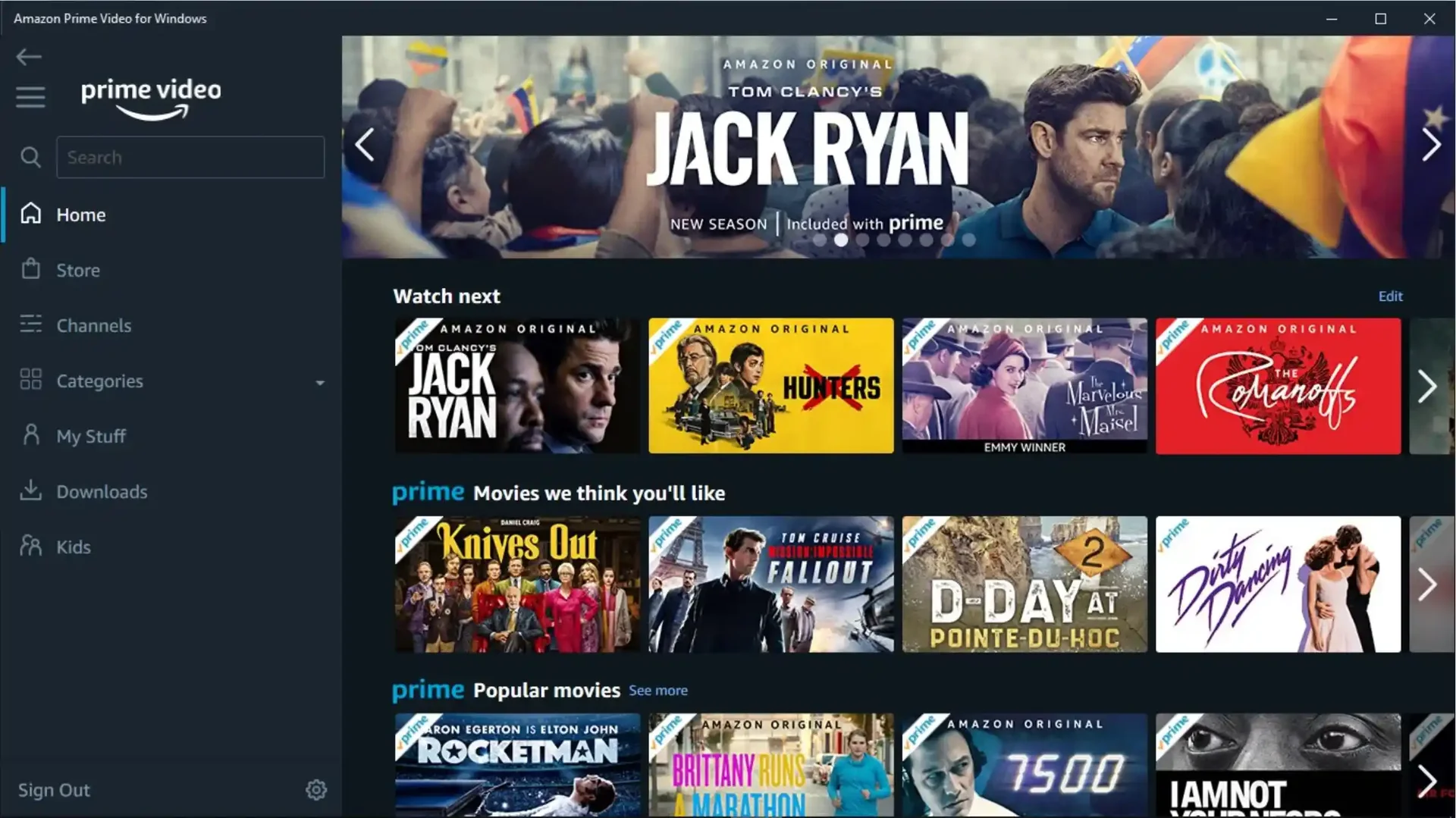
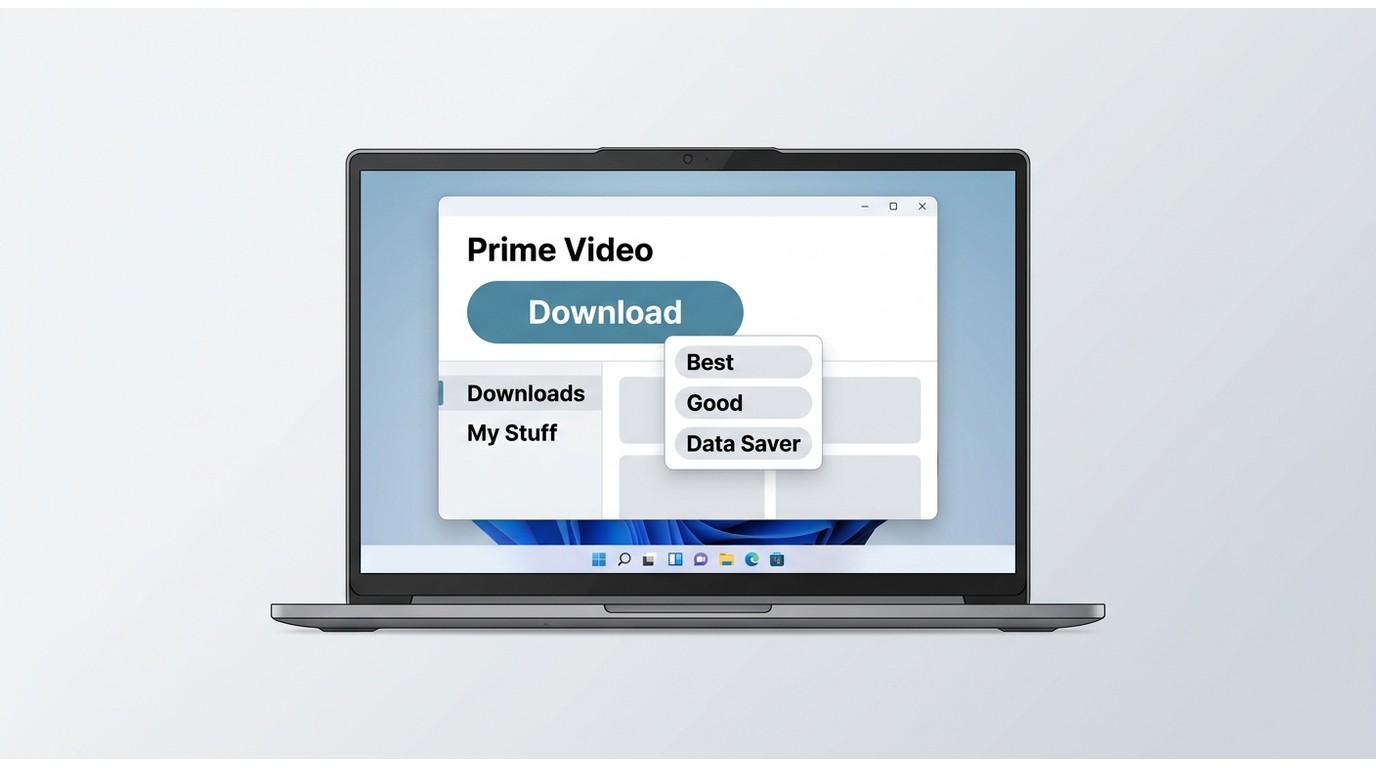
Select Quality: Click the download icon and choose between Good, Better, or Best. On most modern laptops, "Best" provides 720p resolution.
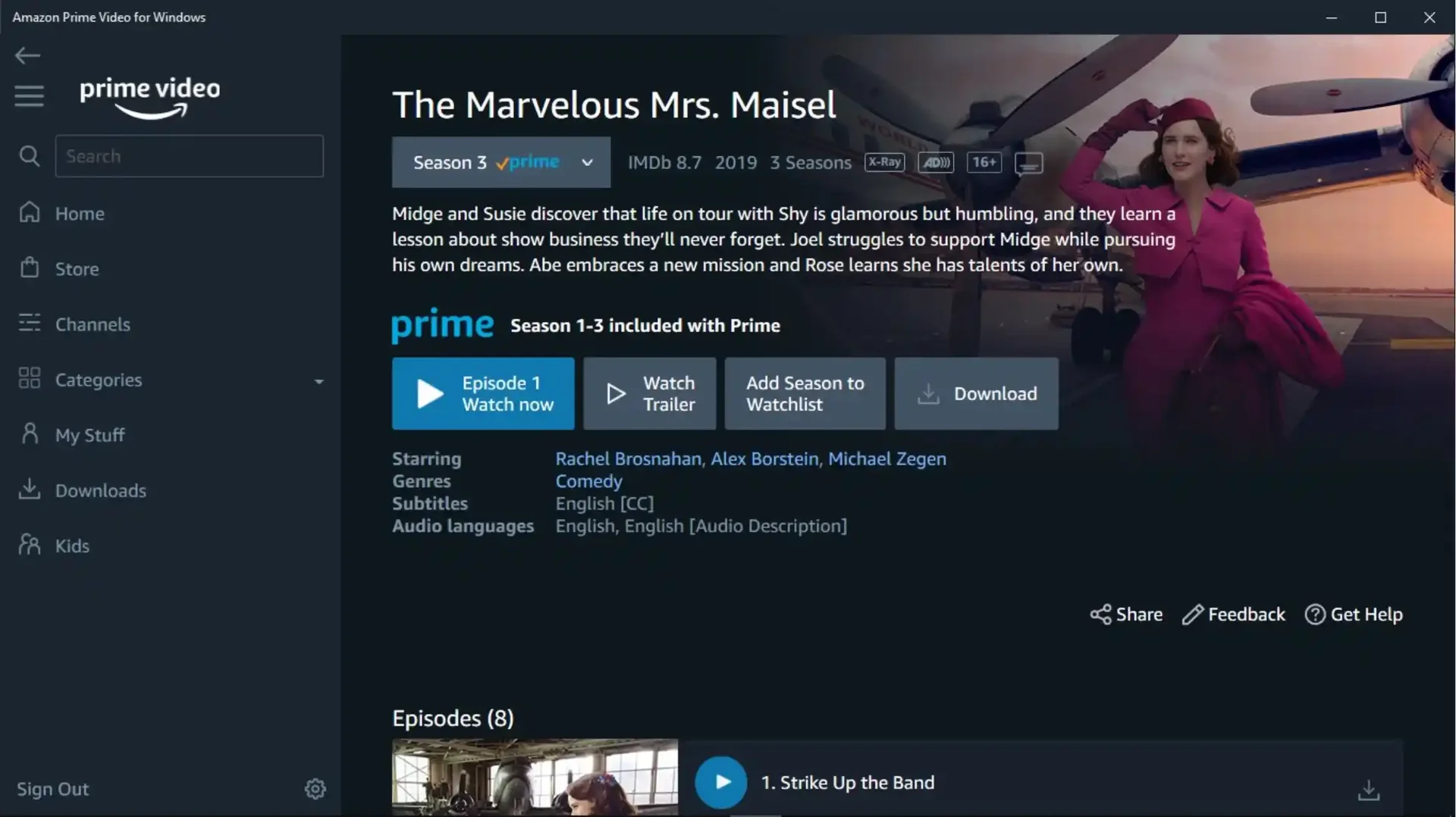
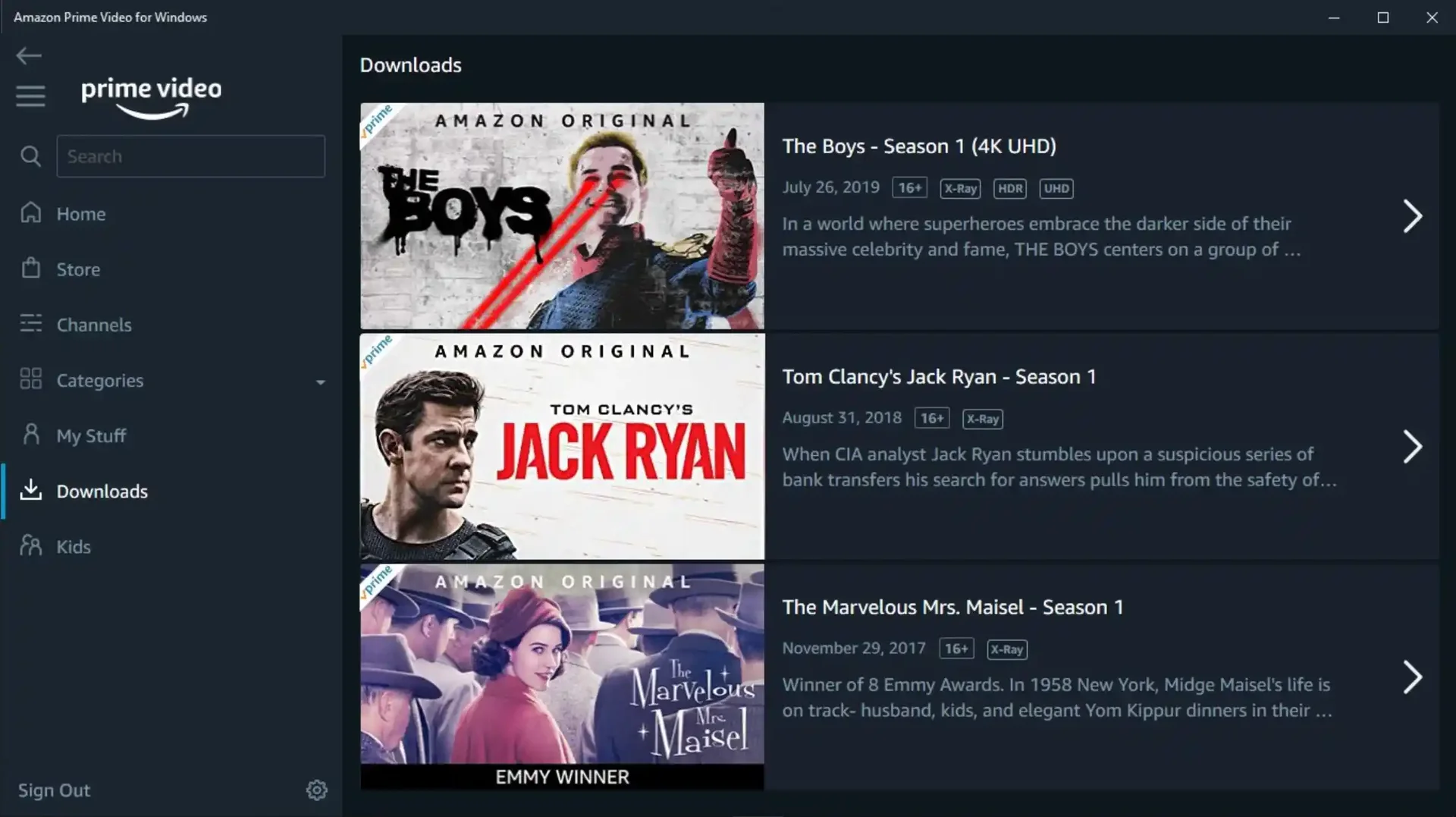
Access Offline: Once finished, navigate to the "Downloads" section in the app to start watching without an internet connection.
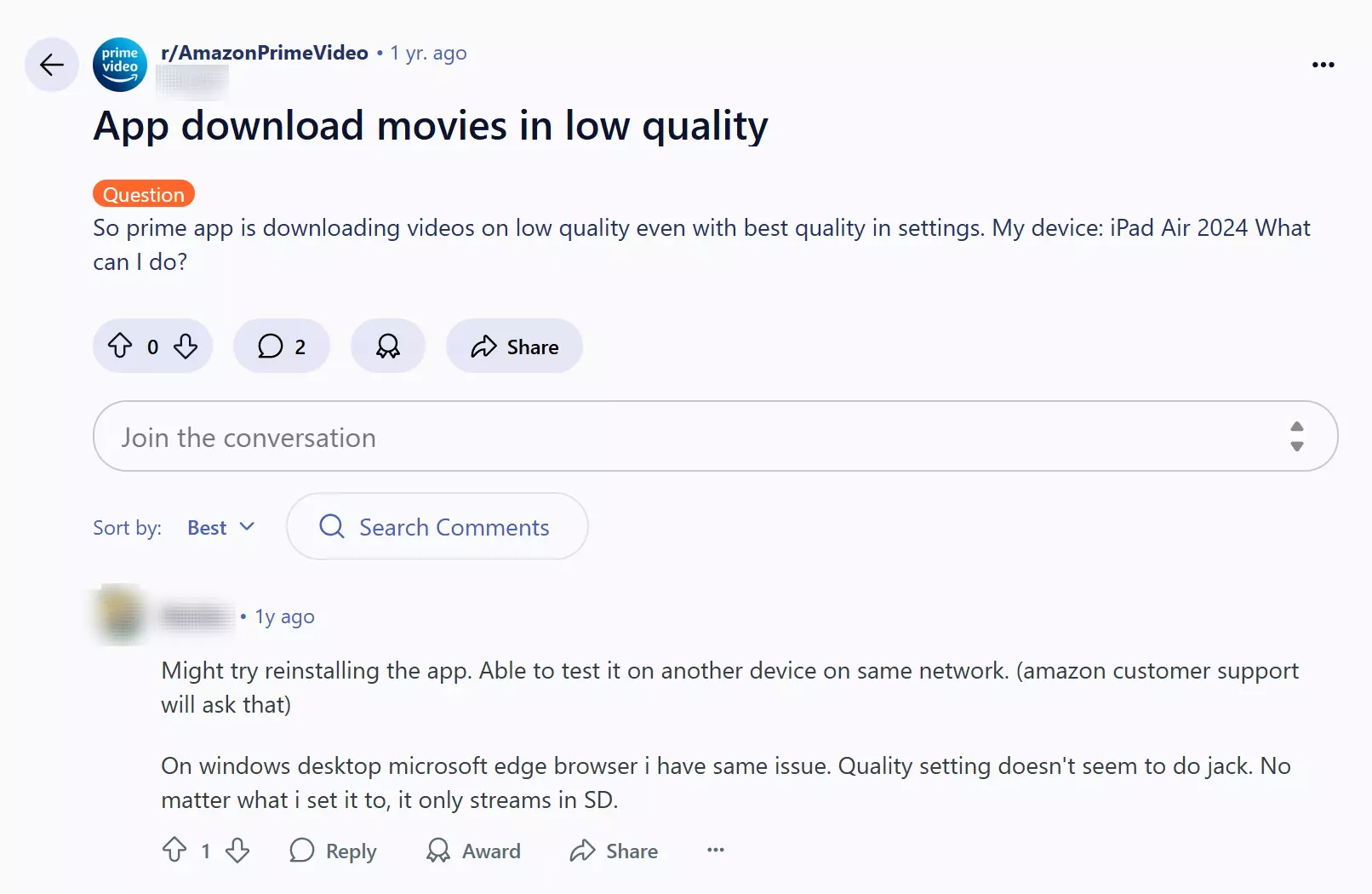
Note: Prime Video does not publish one universal PC download-resolution guarantee. Available quality can vary by title, device, app version, and service conditions.
Official Downloads Stay Inside the Prime Video App
1. Offline Ad Behavior Needs a Current Test
Prime Video has an ad-supported base experience in the United States as of July 2026, but that general policy does not establish how every downloaded title plays in the current PC app.
My view is that an unverified offline-ad claim is not a sound reason to choose one PC workflow over another. Compare the playback environment and file control you actually need instead.
2. Where Prime Video Downloads Are Stored
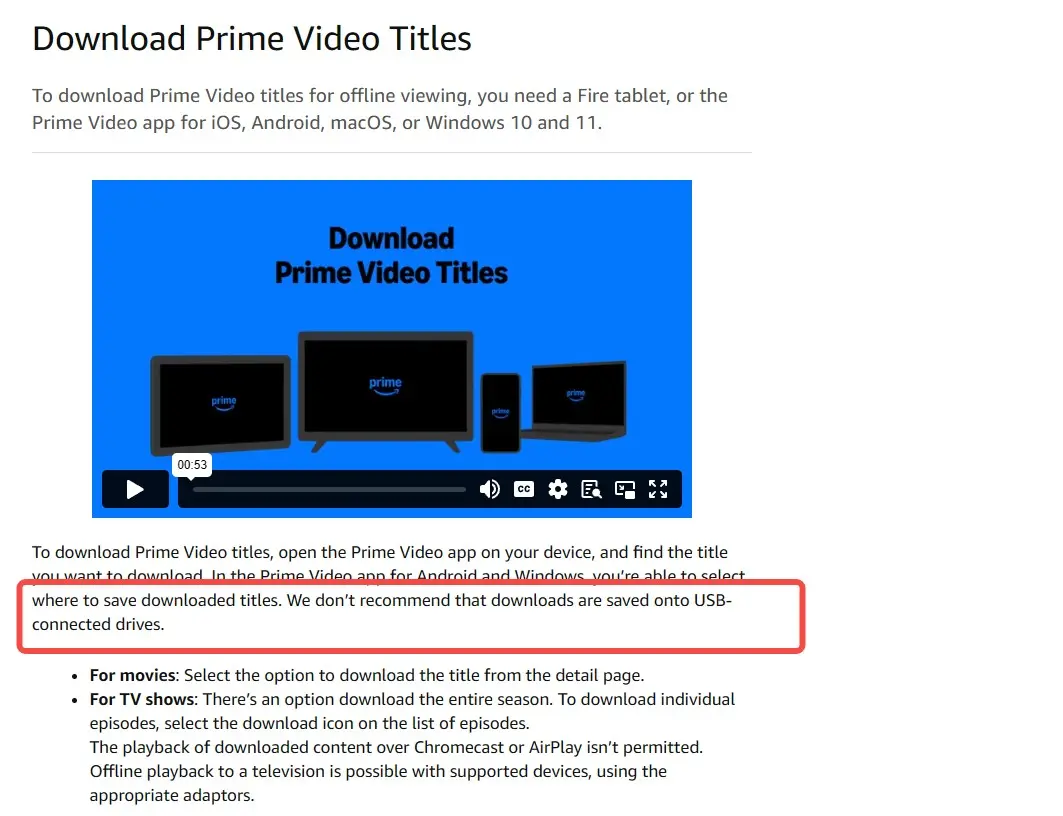
Another question I often hear from laptop users is, "Where exactly are my downloads saved?" Technically, they are tucked away in a protected system folder on your Windows 11/10 C drive. I actually learned this the hard way: once, because my PC's internal storage was nearly full, I tried to change the download path to a USB drive.
Official downloads are intended for playback through the supported Prime Video app, not as ordinary files for USB transfer or third-party media players. If your goal is to move a title between devices, the difference between app-managed downloads and transferring downloaded Amazon Prime movies to other devices matters before you choose a workflow.
Beyond the storage location, there are other "app-only" realities for PC users:
- App-Managed Files: Official downloads are stored for use by the Prime Video app, rather than delivered as standard MP4 files.
- App-Based Playback: These titles are intended to play through the Prime Video app and are not ordinary files for USB copying or VLC playback.
- Casting Limits: Downloaded-title playback remains controlled by supported Prime Video apps and devices; casting availability can vary.
3. Download Rules Vary by Title Type
Even if the download process is smooth, Amazon Prime download limits depend on the title, your entitlement, location, and the devices on your account. The practical rules to check are the following:
| Title type | What affects offline availability |
|---|---|
| Prime-included titles | Eligibility, account status, location, and device rules can affect whether a title can be downloaded and played offline. |
| Rentals | Offline use follows the rental terms displayed for that title. |
| Purchases | Availability remains tied to the purchase entitlement and the title’s current usage terms. |
| Mobile Edition titles | Plan-specific eligibility and supported-device rules apply. |
| Add-on channel titles | Channel licensing can set different offline-viewing availability from Prime-included titles. |
For a traveler, the key question is whether a specific title is eligible before departure. For a library-focused user, the more important distinction is whether app-managed playback provides enough control over the files.
In addition, if most of your watchlist lives inside extra add-ons like sports or movie packs, remember that those Prime Video add-on subscriptions follow their own download rules. Some channels don’t support offline viewing at all.
If app-managed playback, title eligibility, or device rules do not fit your needs, compare the official app with a local-file workflow before choosing another tool.
Save Prime Video as MP4 or MKV
The official app is enough for many viewers. A desktop local-file workflow is for Windows or Mac users who need MP4 or MKV files, language and subtitle control, or a more manageable offline library.
1. StreamFab Fit, Formats, and Library Features
A local-file workflow is different from choosing to record Amazon Prime Video on screen. StreamFab Amazon Downloader provides a desktop local-file workflow for personal offline viewing.
StreamFab Amazon Downloader runs on Windows and Mac and suits users who specifically need MP4 or MKV output, selectable audio and subtitle languages, SRT subtitle export, metadata retention, batch handling, or scheduled new-episode downloads. It is not necessary if short-term viewing inside the official app already meets your needs.

A desktop local-file workflow for authorized personal offline viewing when app-managed downloads do not provide the file control you need.
- Up to 1080p output, with EAC3 5.1 or AAC 2.0 available where supported
- MP4/MKV output for authorized personal offline viewing on compatible players
- H.264 and H.265 options to balance quality and file size
- Supports eligible Prime-included, purchased, rented, and pay-per-view titles during valid access
- Batch handling for 20+ episodes and scheduled downloads for new episodes
- Audio-description support, language selection, and SRT or embedded subtitles

- My practical view is simple: choose a local-file workflow for file control, not because of vague promises about unrestricted access. StreamFab offers a free trial with feature limits, so you can evaluate whether its interface, MP4/MKV formats, and audio or subtitle controls fit your offline-viewing needs.
Below is a step-by-step overview of how the trial typically gets started inside the product.
Here's a step-by-step guide to start the trial and evaluate the StreamFab workflow for downloading Amazon Prime Video on PC.
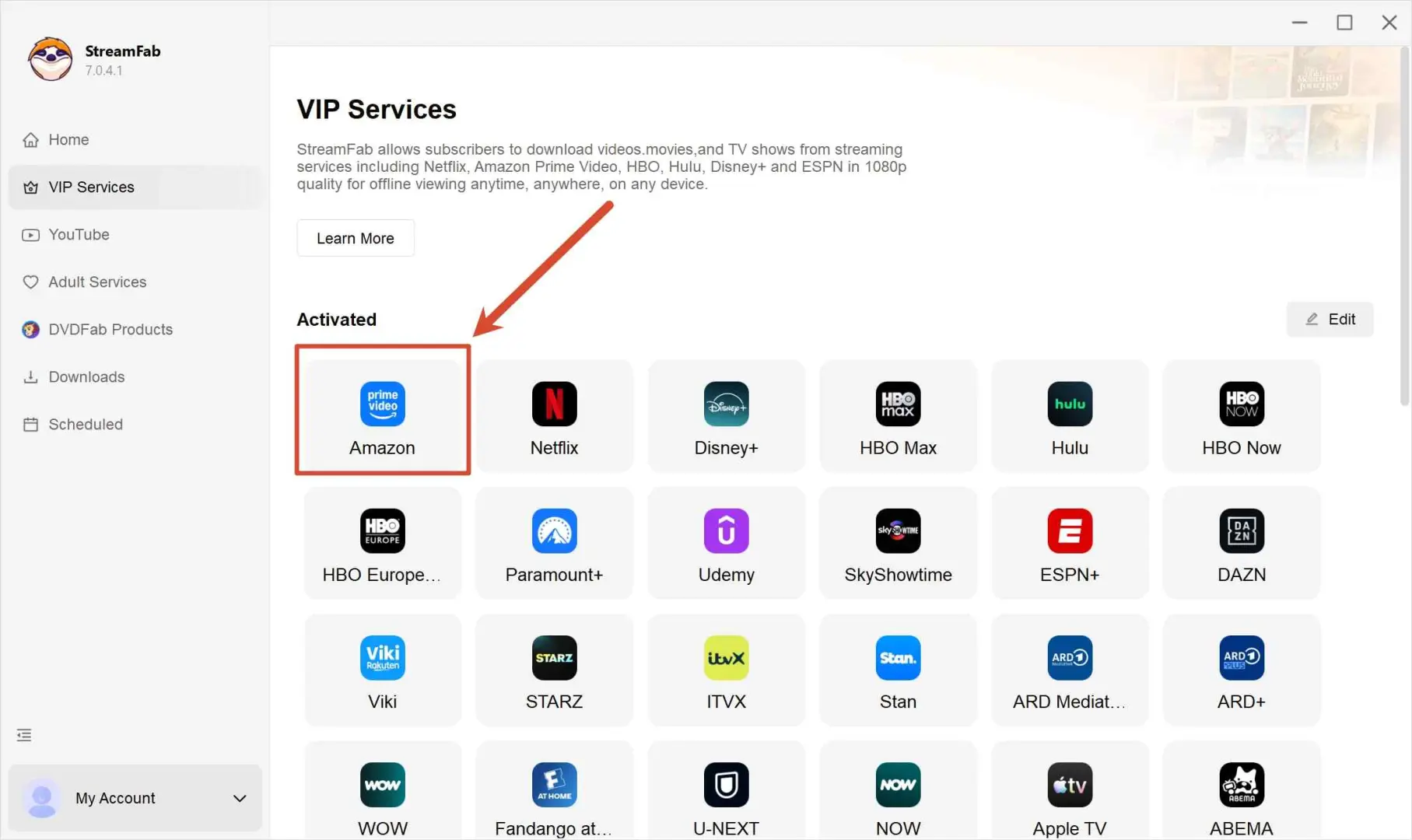
Log in to it. Then find the Amazon titles you want to save to your PC. Click it to open the info page.
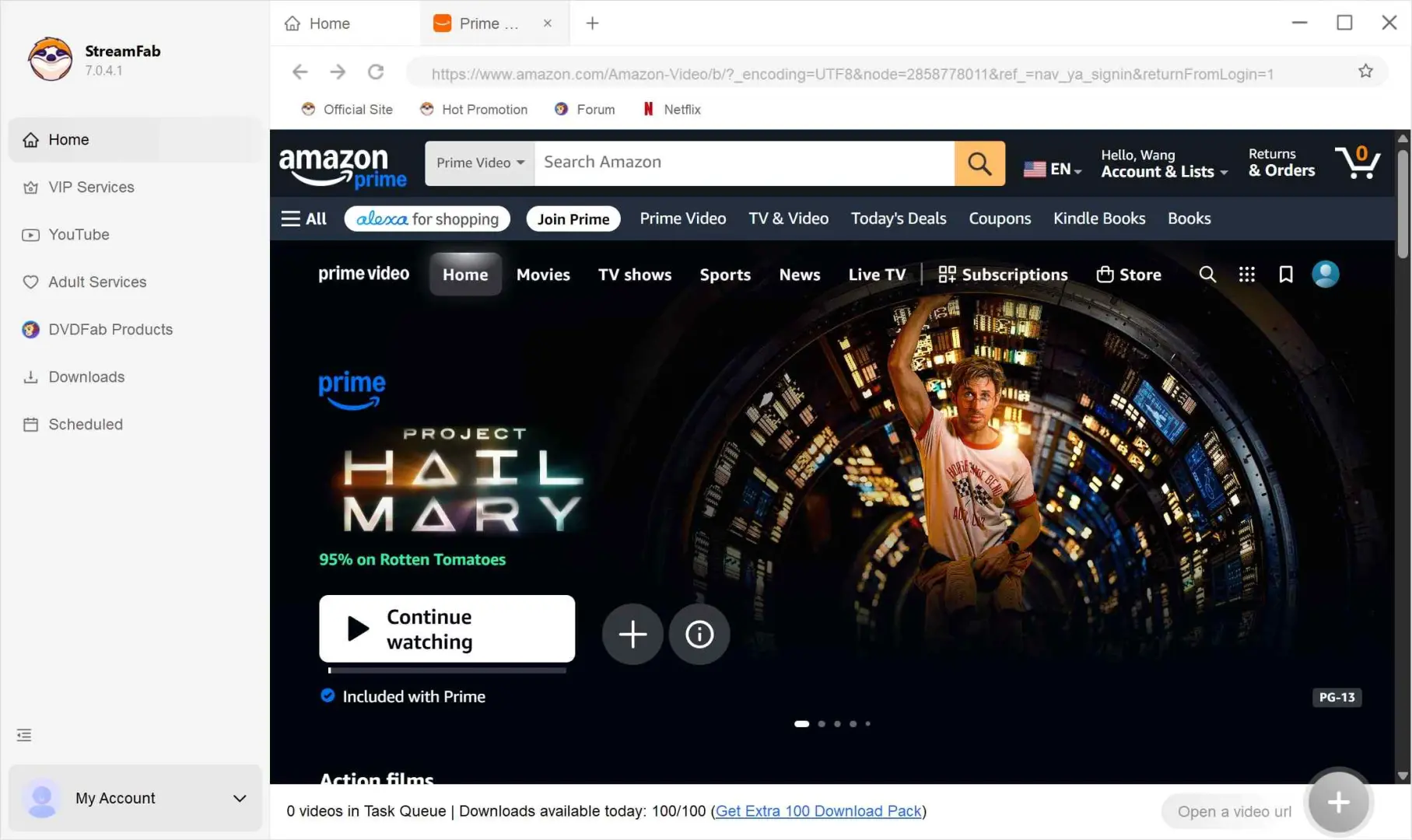
Now, StreamFab will analyze it and soon give you a menu to customize the specific video properties.
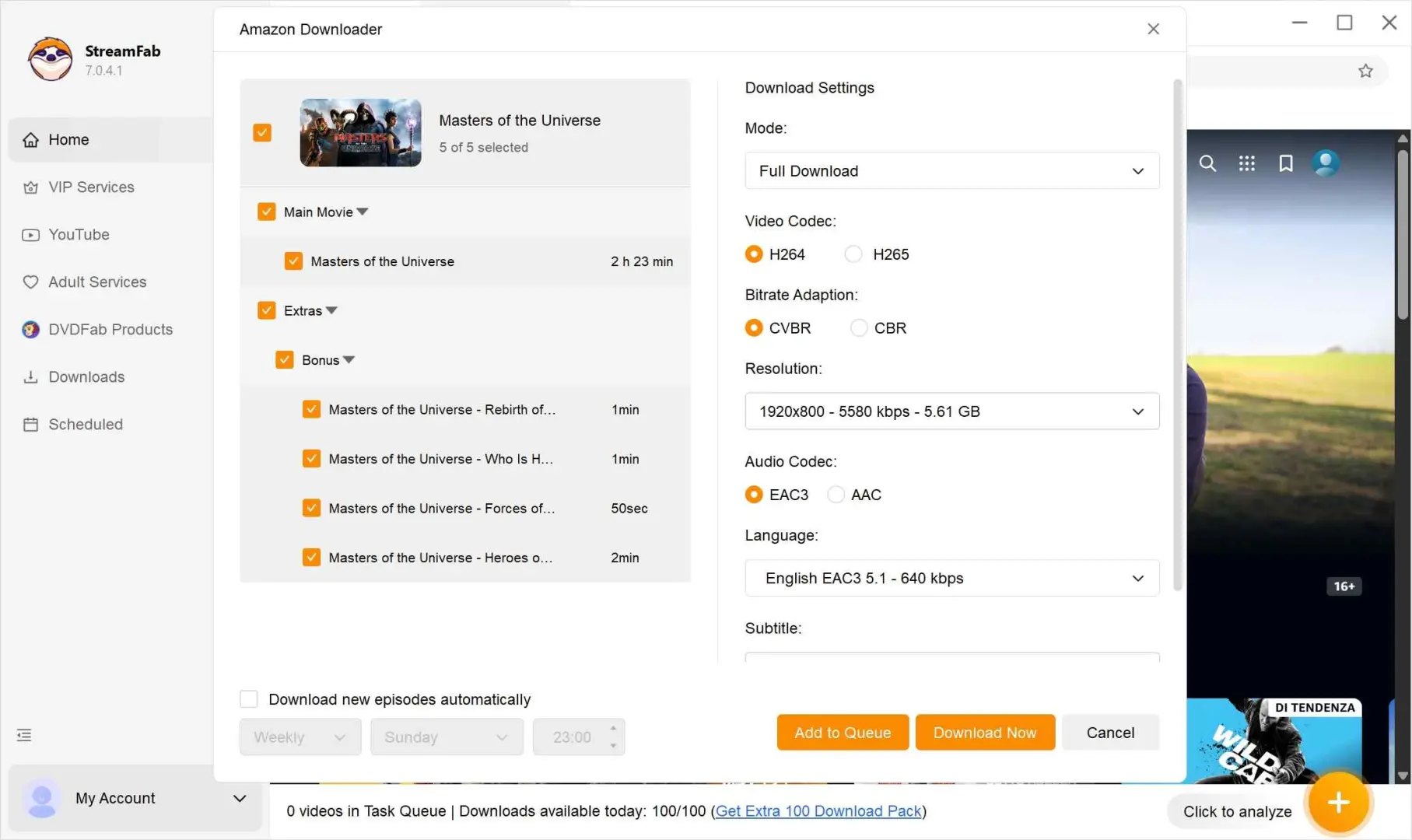
Are all options good? Now you can click on "Download Now" to start. Or you can click "Add to Queue" instead, in case you are about to AFK for a while.
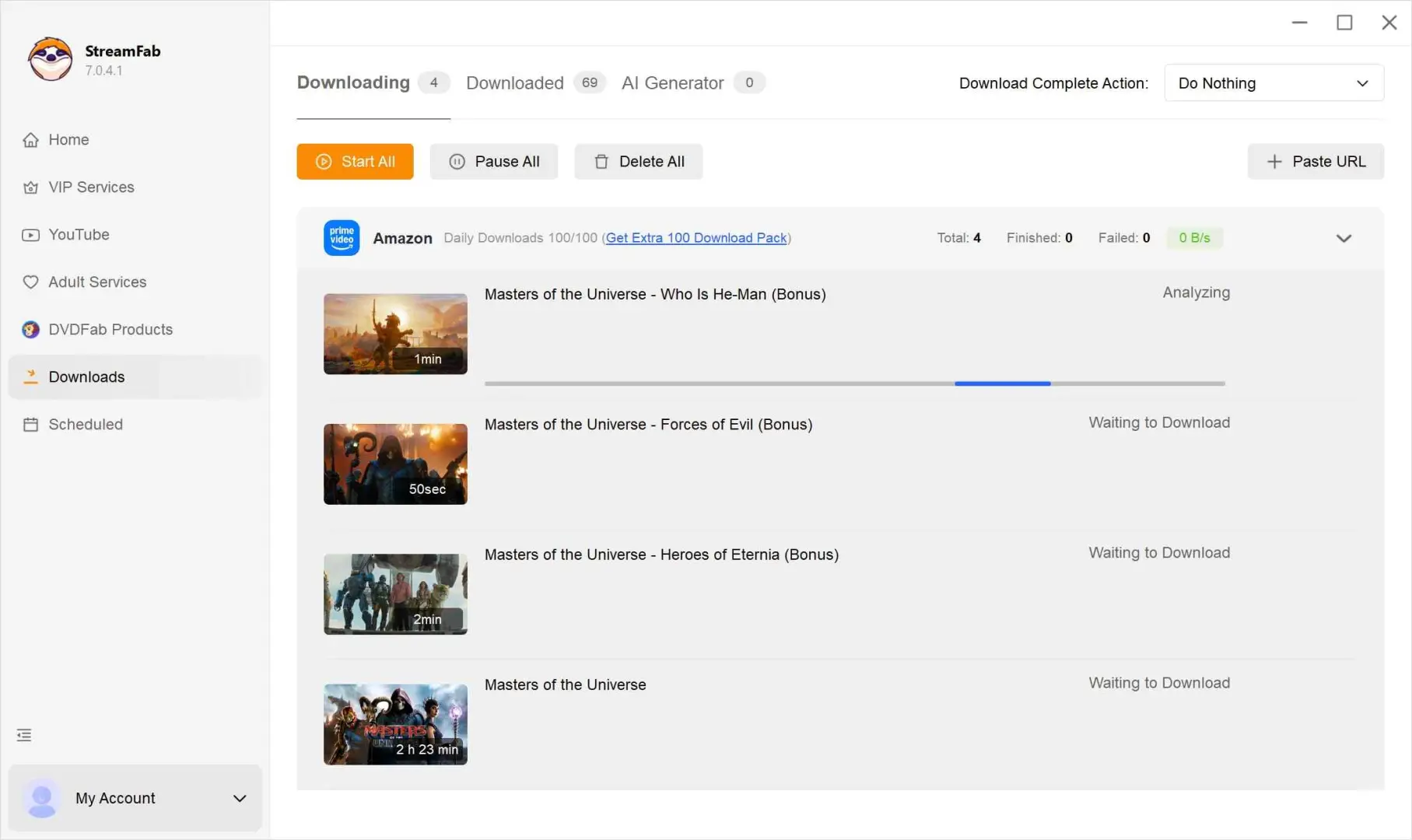
- One of the most practical uses for StreamFab is managing your Amazon Prime rental downloadsRental availability and offline-use conditions remain tied to the terms displayed for the specific title.
2. Personal-Use Boundaries and Software Safety
When using a local-file tool on your computer, keep the boundary practical: use it for personal offline viewing, and do not share, redistribute, or use files commercially.
- Valid Access Only: Choose titles available through your Prime account, including eligible subscribed, purchased, or rented titles.
- Private Viewing: These PC-based backups are intended strictly for your private, offline viewing. Never upload, share, or commercially distribute these files.
- Device Integrity: For your PC’s safety, always choose reputable tools that are known for being clean and secure. As a best practice for any Windows or Mac software, I recommend running installation files through a standard antivirus check to ensure your laptop remains protected
Streaming platforms like Amazon Prime Video frequently update their video delivery mechanisms and interface protocols to improve service. For many basic PC downloaders, these technical shifts can cause frequent "analyzing" errors.
This video explains how StreamFab approaches compatibility updates when platform delivery mechanisms change. Updates can help address changed conditions, but results may vary after a platform adjustment.
Official App vs Local-File Workflow
1. Feature Comparison by Viewing Need
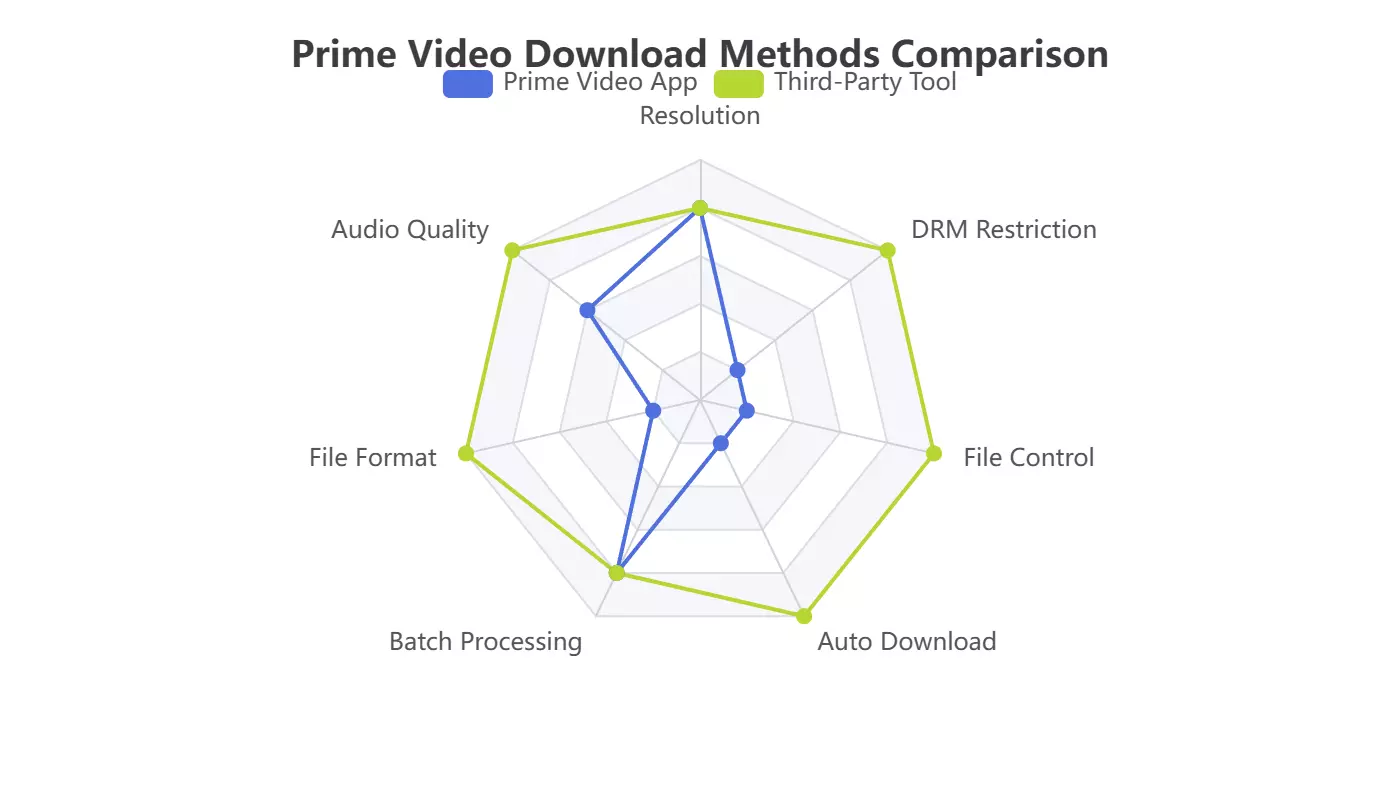
To help you choose, I’ve summarized the key differences between the Amazon app and a desktop local-file workflow. The table contrasts short-term in-app viewing with locally managed offline files during authorized access.
| Viewing need | Prime Video official app | StreamFab Amazon Downloader |
|---|---|---|
|
Best fit |
Short-term offline viewing in the app |
Authorized personal offline viewing with local-file control |
|
Playback environment |
Supported Prime Video app |
Compatible media players for MP4/MKV files |
|
Resolution evidence |
Varies by title, device, app version, and service conditions |
Up to 1080p |
|
File format and transfer |
App-managed download; not a normal portable video file |
MP4 or MKV local file |
|
Codec and media controls |
App-managed settings |
H.264/H.265, audio language, and subtitle options |
|
Batch and scheduling |
Depends on title and app behavior |
Batch handling and scheduled new-episode downloads |
|
Usage boundary |
Entitlement-specific official offline viewing |
Authorized personal offline viewing where permitted |
The table points to a straightforward choice. The official app fits a flight or short trip when in-app playback is acceptable. StreamFab fits authorized users who specifically need a desktop local-file workflow. If the official app already covers your needs, adding another tool is unnecessary.
2. Codec, Bitrate, and Storage Quality
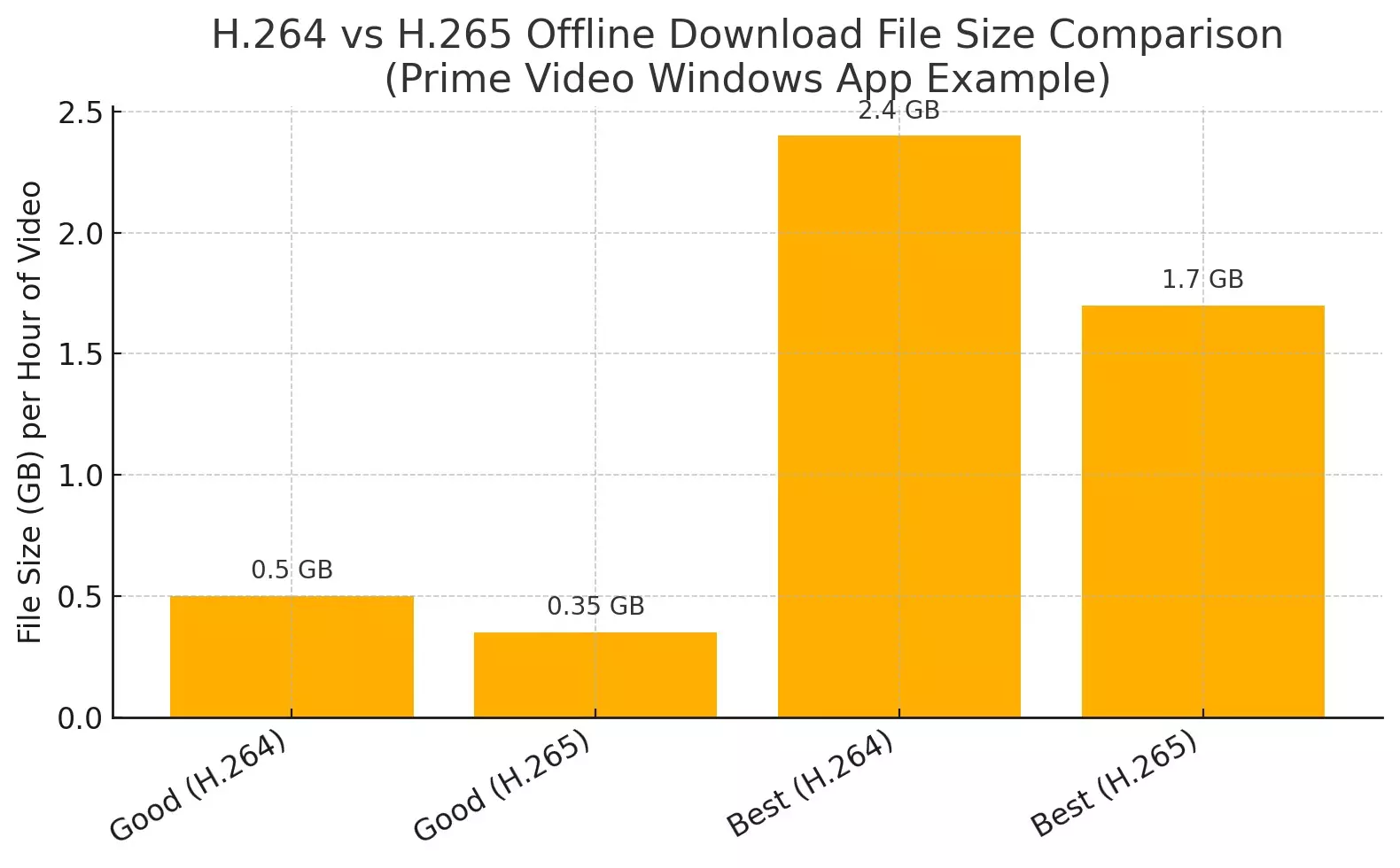
If you plan to build a large personal archive on your laptop, storage management becomes your next big challenge. The Amazon app doesn't let you choose how your video is encoded, but advanced tools do.
A codec is only one part of the storage equation. Compare files only when resolution, bitrate, frame rate, audio tracks, duration, and codec are controlled.
- H.264: A widely compatible codec that can require a higher bitrate for comparable visual quality.
- H.265: A more efficient codec that can deliver similar perceived quality at a lower bitrate, although the actual space savings vary by title and playback device.

Prime Video Download FAQs
Where Does Prime Video Save Downloads on Windows?
Prime Video manages official downloads inside its app data rather than providing a normal video folder for manual use. The exact location can vary by the current Windows app build, so avoid editing or moving those files directly. For official downloads, use the Prime Video app for playback. If you need a portable local file for authorized personal offline viewing, that is a separate workflow with different terms and device considerations.
Can Downloaded Prime Video Titles Be Cast From a Phone?
Downloaded-title playback remains controlled by supported Prime Video apps and devices. Casting or streaming is different from moving a portable video file, and availability can vary by the device and title.
How Many Devices Can Use Prime Video Downloads?
There is no single device or title-count rule that applies to every Prime Video download. Limits can vary by location, entitlement type, and title. See the entitlement table above for the categories that affect the answer. If you see a download-limit message, review your active devices, remove downloads you no longer need, and confirm that the title is eligible for offline viewing.
Where Can I Check the Terms for Downloaded Prime Video Titles?
Subscription-included titles, rentals, and purchases can have different usage terms. Official downloads remain tied to the applicable Amazon entitlement and account status, so do not treat an app-managed download as an independent video file. For a specific purchased or rented title, review the usage terms shown in your Amazon account and Prime Video app.
Why Is a Prime Video Download Failing on Windows?
- Confirm that you are signed in and that the title is eligible for offline viewing.
- Update the app, confirm available storage, and reconnect to the internet.
- Review active devices, and remove downloads you no longer need in a local-file workflow.
- Platform changes or multipart event streams can affect recognition. Update the desktop app and retry with an eligible title.
If the official app still fails after those checks, Amazon support is the appropriate next step.
Can I Watch Prime Video Downloads on a Plane Without Wi-Fi?
Yes, when you download an eligible title in advance through a supported app and it remains available for offline playback. Open the app and confirm the title before departure, because eligibility can vary by title and entitlement.
Will a Browser Extension Save Prime Video as an MP4?
Ordinary URL-paste tools and browser extensions generally do not produce a usable Prime Video MP4. Browser viewing, official app downloads, and a desktop local-file workflow are separate use cases with different playback and entitlement boundaries.
Conclusion: Choose the Right PC Download Method
Choose the official Prime Video app when you need a few titles for a flight or short-term in-app viewing and its limits are acceptable. Consider StreamFab Amazon Downloader when you need MP4/MKV files, language or subtitle control, metadata, or batch scheduling. If the official app already covers those needs, another tool is unnecessary.