
You can download Amazon Prime rentals, but only on phones, tablets, and Fire devices, not on PC or Mac. Rentals last 30 days to start, 48 hours after pressing play, and downloads expire along with them. If you need more flexibility, it’s often better to plan ahead on a supported device or consider purchasing the title instead of renting, so you stay fully within Amazon’s rules.
Not long ago, I rented a movie on Amazon Prime before a train ride. I thought downloading it meant I could watch whenever I wanted. Turns out, once I pressed play, a timer started ticking. By the time I picked it up again a couple of days later, the file had already expired.
Once I noted this out, I started paying closer attention to the fine print—like why the download button never shows up on my MacBook, or why a movie I saved for a flight still vanished after two days. And no, downloading doesn’t mean you get to keep it forever. Let’s break down the ground rules first: how long rentals last, which devices actually support downloads, and where the limits kick in.
Can You Download Rented Movies on Amazon?
Yes. You can actually download them, but it’s not as easy-breezy as you’d hope. Only phones, tablets, and those quirky Amazon Fire gadgets get the privilege (no Mac and PC due to Amazon Prime download limits). For rentals, You’ve got 30 days to press play after coughing up your cash. Basically, download if you must, but don’t expect to keep it forever.
- Where you can download: only on phones, tablets, and Fire devices through the Prime Video app; rentals are not downloadable on Mac or PC apps.
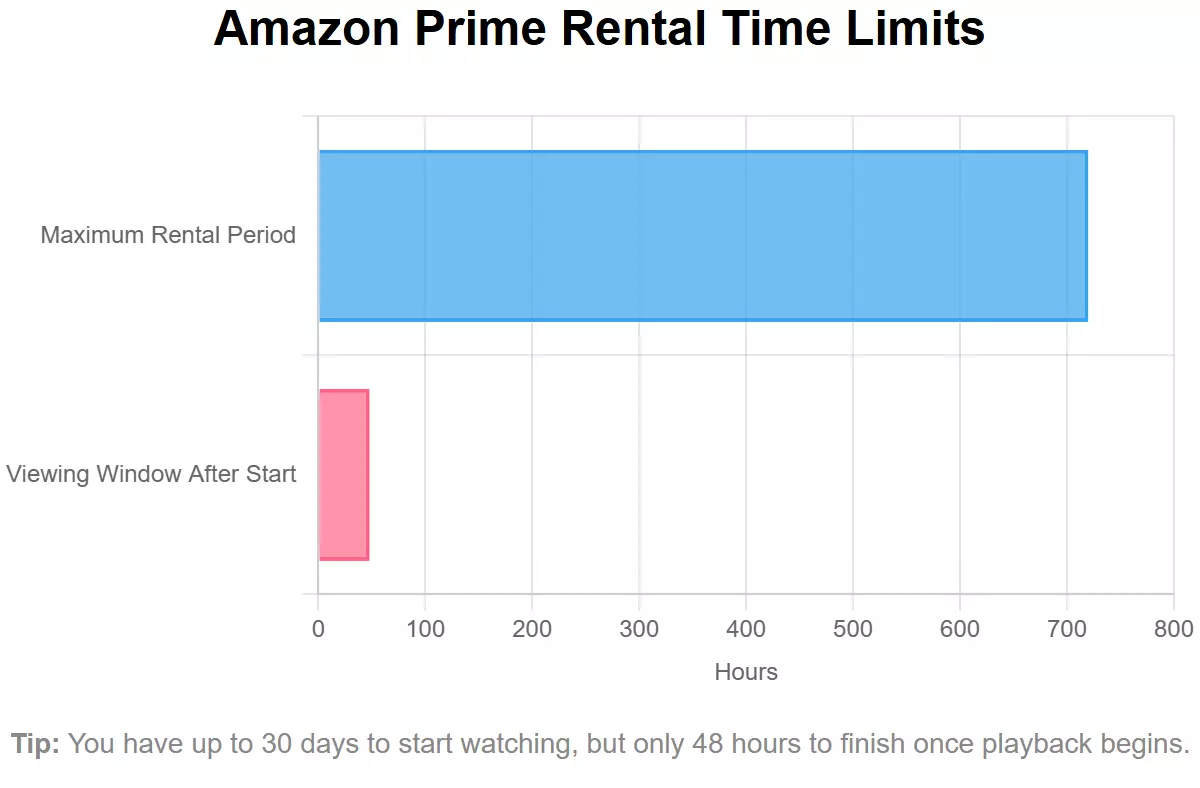
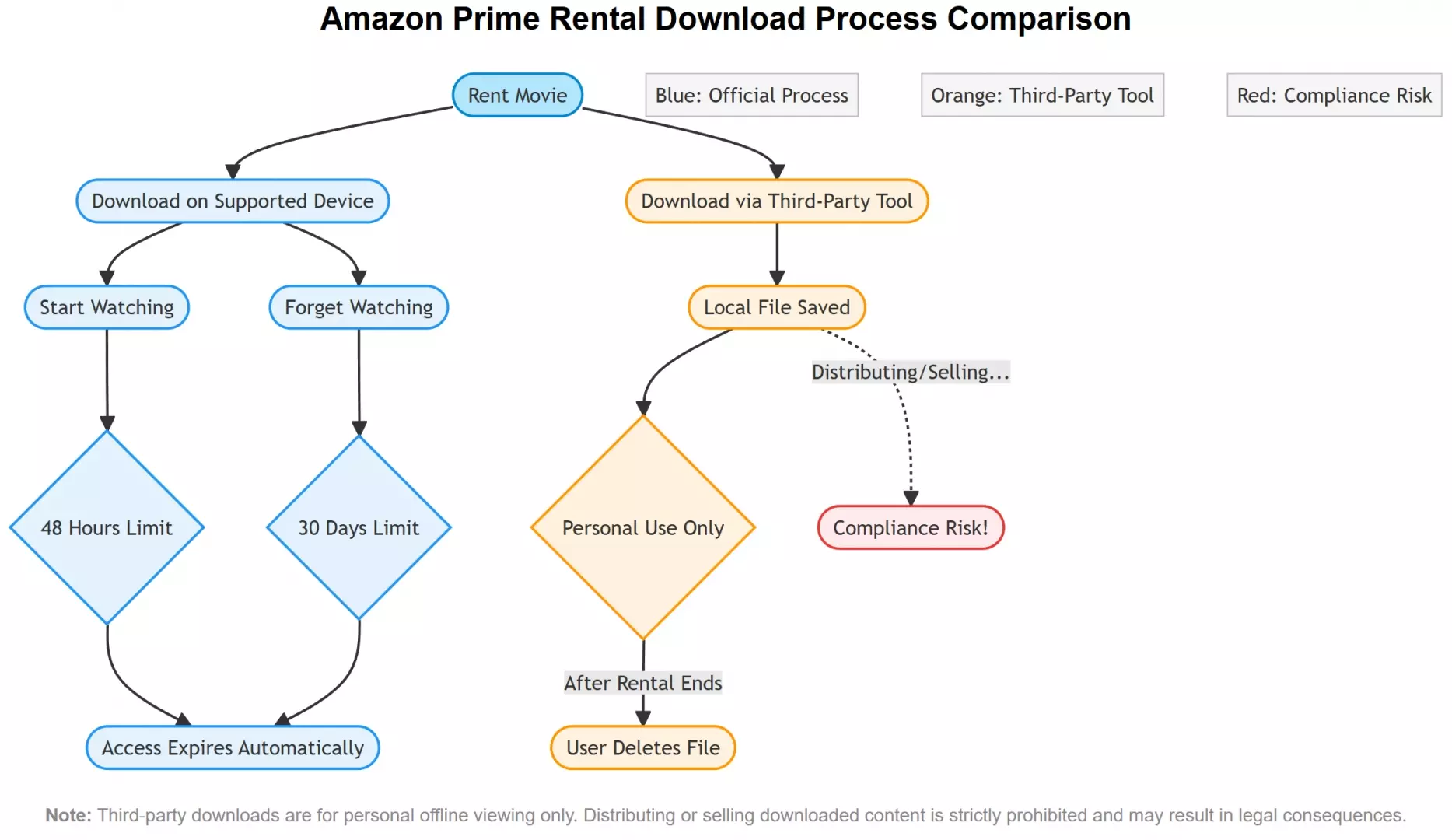
- Rental window: 30 days (or the time shown on the product page) to start watching after you pay for the rental.
- Viewing window: 48 hours to finish once you press play, even if there is still time left in the 30-day rental period.
- What expires: both the stream and any downloaded copy stop working as soon as the rental period ends.
- Third-party tools: some users discuss using third-party apps to create personal offline backups of content they’ve legitimately rented, but any such approach must still respect Amazon’s rental rules and local copyright laws. You should not try to continue accessing or playing the content after the rental expires.
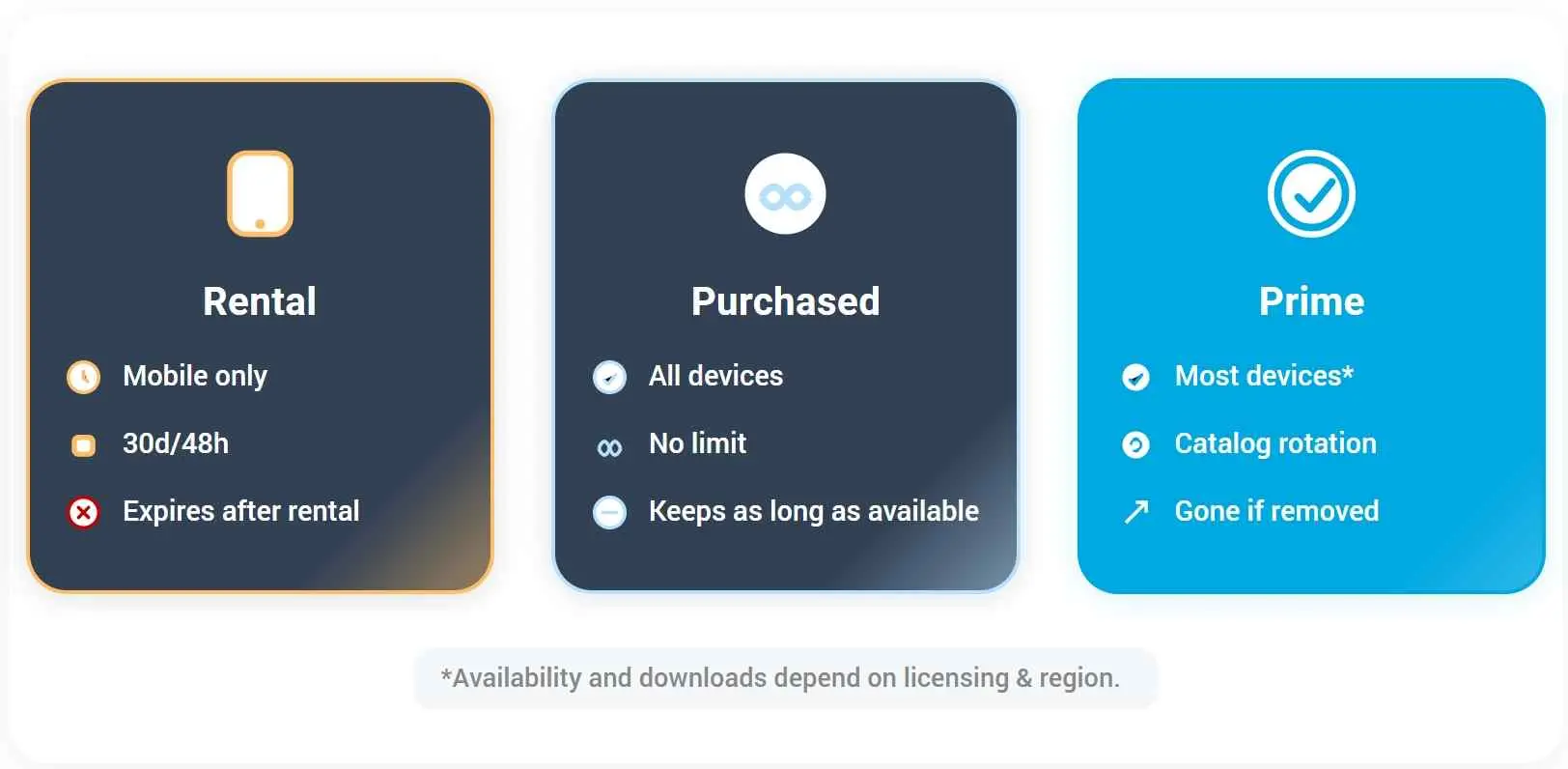
These ground rules, timing, supported devices, and the limits on PCs set the stage for everything else. Understanding them upfront saves you from the usual surprises, like planning a long train ride only to find your download won’t play halfway through. Some rentals also come through Prime Video Channels, where individual partners may follow slightly different availability and download rules, so it’s worth double-checking the notes on each title’s detail page.

Official Offline Download Process
1. Download on mobile devices
On phones or tablets, Amazon makes it easiest to watch rentals offline. Here is the basic flow I use on my iPhone:
- Open the Prime Video app and make sure you are signed in to the account that rented the movie.
- Go to Library > Rentals or the movie’s detail page and find the title you want to watch.
- Tap the Download button under the title and choose a quality level that fits your storage.
- When you are offline, open the app again and play the movie from the Downloads section.
This works well on both iOS and Android when you are underground on the subway or stuck on a flight with no Wi-Fi, and the quality settings are handy if you are traveling with a smaller-capacity phone.
2. Fire tablet and Windows applications
Amazon’s own Fire tablets are built for offline viewing, and the steps are almost identical to mobile:
- Open the Prime Video app on your Fire tablet and sign in with your Amazon account.
- Find your rental in the Library or on its detail page.
- Tap Download so the movie is stored locally before your trip.
- Play it from the Downloads tab whenever you are offline.
On Windows, things are stricter. The Prime Video app can download some eligible shows and movies, but for rentals, the download button is usually missing, so you can only stream them while you are online and still within the 30-day and 48-hour windows.
How to Make Amazon Prime Rentals Easier to Watch Offline?
I’ve lost count of how many times I’ve seen people ask online: “Isn’t there a way to keep a rental longer than 48 hours?” I asked the same thing myself after missing the ending of a film mid-trip. Officially, the answer is no — Amazon enforces those limits strictly, and there’s no supported way to extend them. Some users talk about third-party tools that help manage offline viewing, but whatever you use, it shouldn’t change the fact that once your rental expires, you’re no longer allowed to watch that title.
On Reddit, I came across a thread where someone asked whether StreamFab Amazon Downloader could download Amazon rentals. The reply was simple: “Yes, as long as you can play it on Amazon, StreamFab can save it.

Some comments even suggested that once a title appears in your library, a tool might help you keep watching it later. However, expecting a copy that remains playable after the rental expires goes beyond how Amazon’s system is meant to work and can conflict with its terms of use. Even if a third-party app appears to save something, you should stop accessing that content once your rental window ends.
Tool Required: StreamFab Amazon Downloader
StreamFab Amazon Downloader is one of the third-party tools in existence. It can save eligible Amazon Prime movies, shows, or other Prime Video titles you can already watch into common formats like MP4 or MKV on your PC, so it’s easier to watch Amazon Prime videos offline on compatible devices. The idea is to help you manage offline viewing more flexibly within your valid rental or subscription period, not to change how or when Amazon makes a title expire.
- Save rented Prime movies in MP4/MKV format to be watched on any device, anytime
- Download rented movies on Amazon in 1080p FHD plus EAC3 5.1 audio
- Save rented Prime movies in MP4/MKV format to be watched on your personal devices during your valid rental period
- Keep Amazon movies offline in H.264 or H.265 codecs, based on your needs
- Watch rented Amazon titles offline with subtitles and audio in the language you prefer
- Bulk download rented movies on Amazon to save a bunch of time
- Always rent the title legitimately on Amazon before you try to save a copy in any form.
- Use any downloader strictly for personal offline viewing, not for sharing, re-uploading, or redistribution.
- Don’t go tossing those rental files into public clouds where random folks can stumble over them.
- Once your official rental period ends, delete any saved copies to stay aligned with Amazon’s terms.
Some people prefer alternatives, screen recording software for Amazon Prime Video, for example, though that usually means lower quality and a lot of manual work. Others mention tools like KeepStreams or NoteBurner. The underlying idea in these discussions is to make offline viewing more convenient, but none of these options should be used to change what happens when a rental expires; doing so may violate Amazon’s terms or local copyright laws.
To put these options in context, here is how the main ways to watch rentals offline stack up side by side:
In my own tests, the general flow of using a third-party tool like StreamFab Amazon Downloader to download Amazon Prime Video to PC was straightforward, but the exact steps can vary between apps and may change over time.
Download & Install StreamFab
If you’re thinking about giving a third-party tool like StreamFab Amazon Downloader a whirl, make sure you grab it from the official site. And be sure to follow their step-by-step install instructions, whether you’re a Mac or Windows person.This article does not provide detailed installation steps, and you should make sure you understand the tool’s terms of use before proceeding.
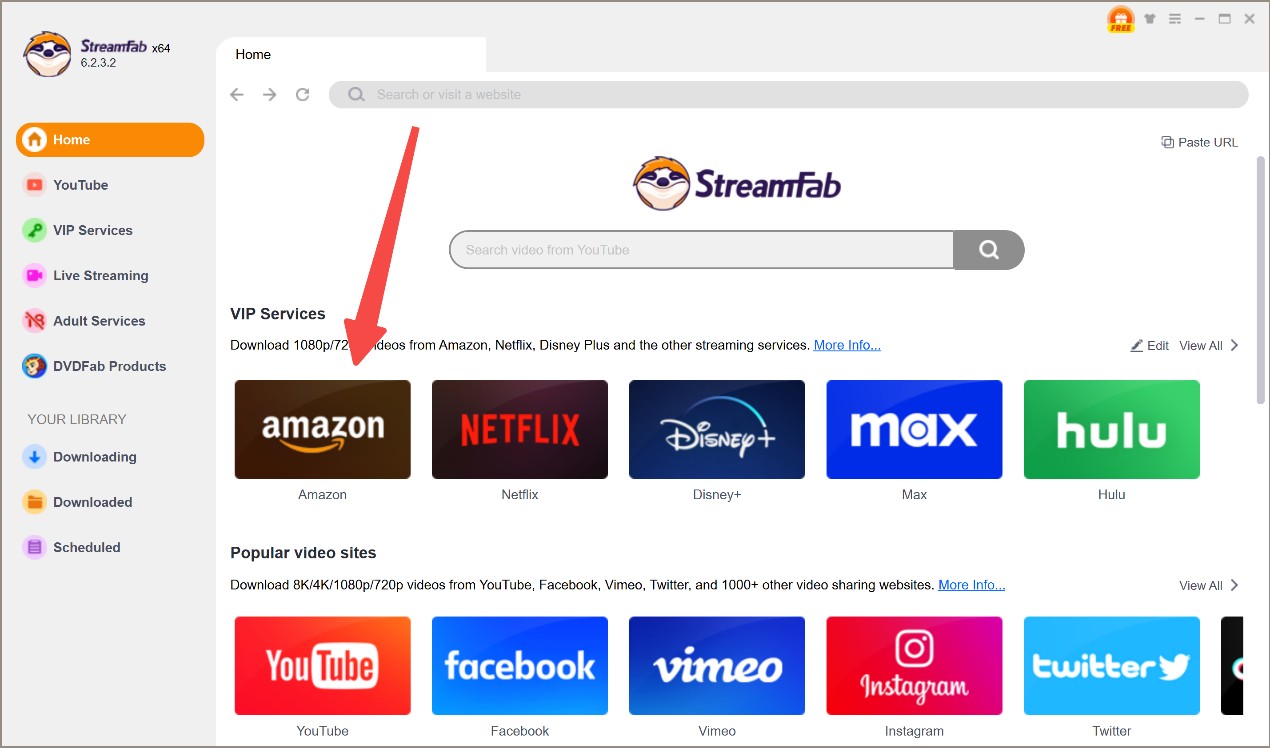
Log in to Amazon with Your Account
Many download-management tools include a built-in browser where you sign in with your Amazon account so the tool can detect which titles you’re allowed to watch. If you choose to use such a feature, make sure you only log in through secure, official interfaces and avoid sharing your credentials with untrusted software.
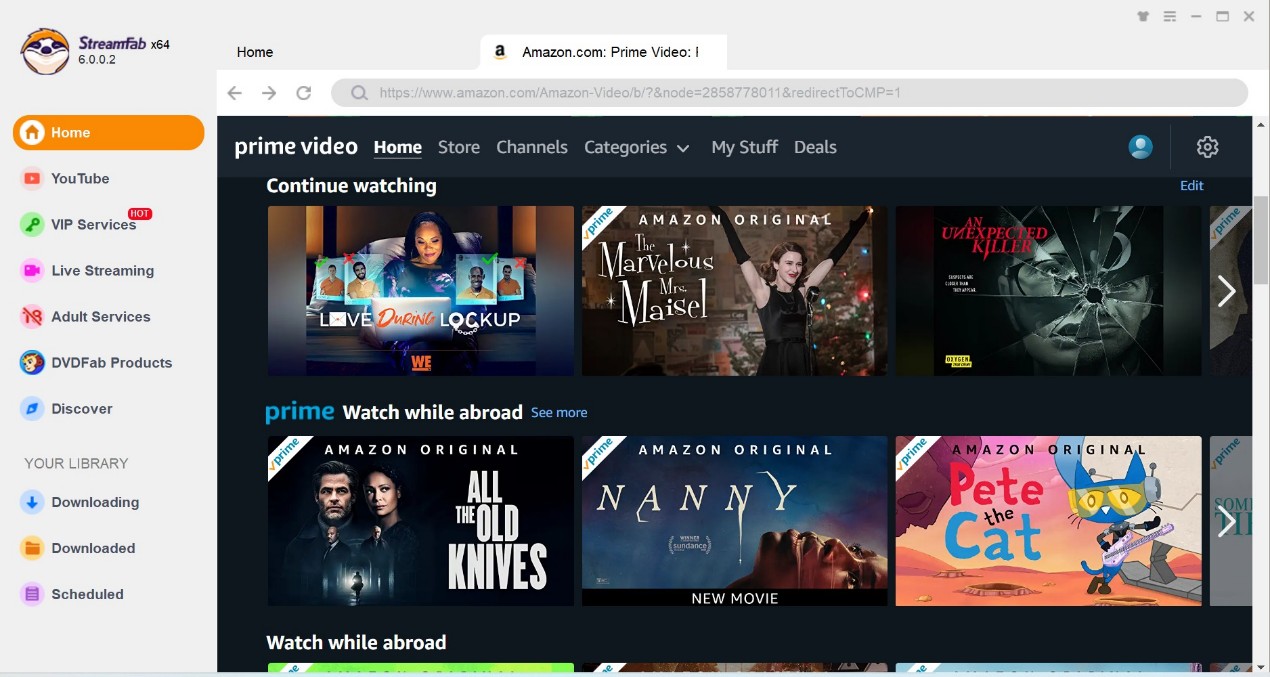
Find the Rented Movie on Amazon
Inside the tool’s interface, you usually locate the movie you’ve legitimately rented on Amazon Prime Video and open its detail page. Except every app likes to be special, so never assume one-size-fits-all. The official instructions should be your north star here, not some random step list like this one.
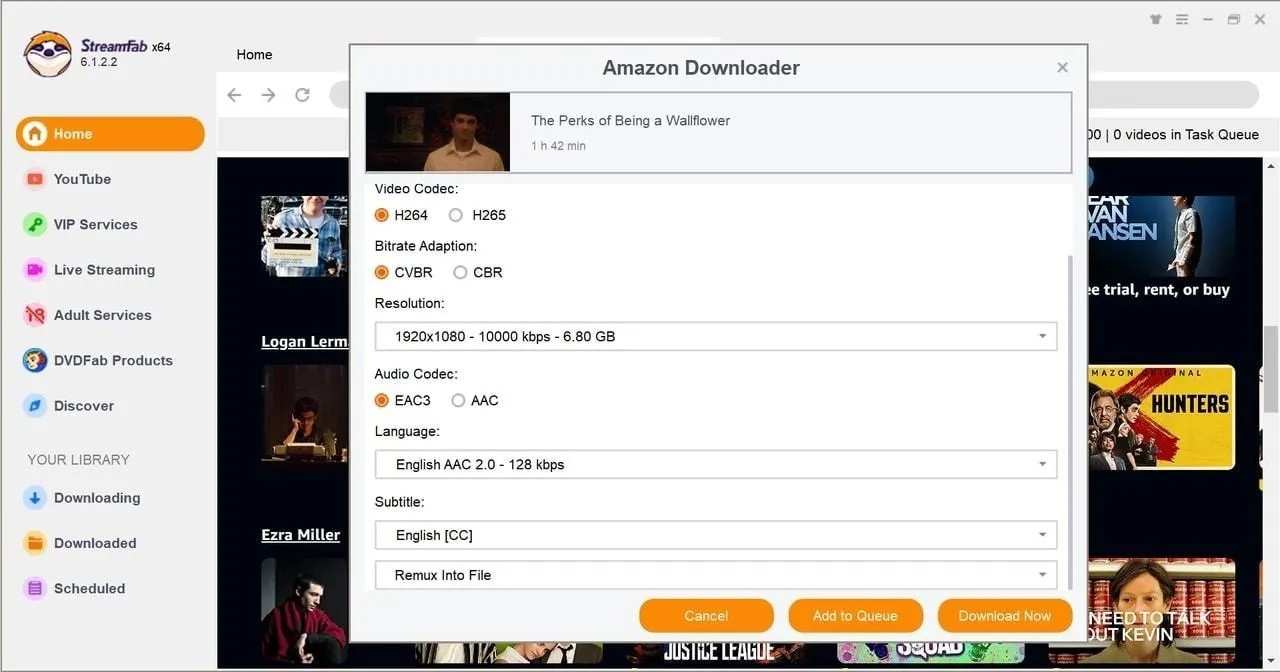
Start Downloading After Adjustments
Tweak the video quality, subtitles, whatever, so you don’t end up with a phone full of giant files you’ll never watch. Any saving or download feature should only be used for personal offline viewing during your valid rental period, and you should not keep or share copies once Amazon’s rental rules say the title has expired.
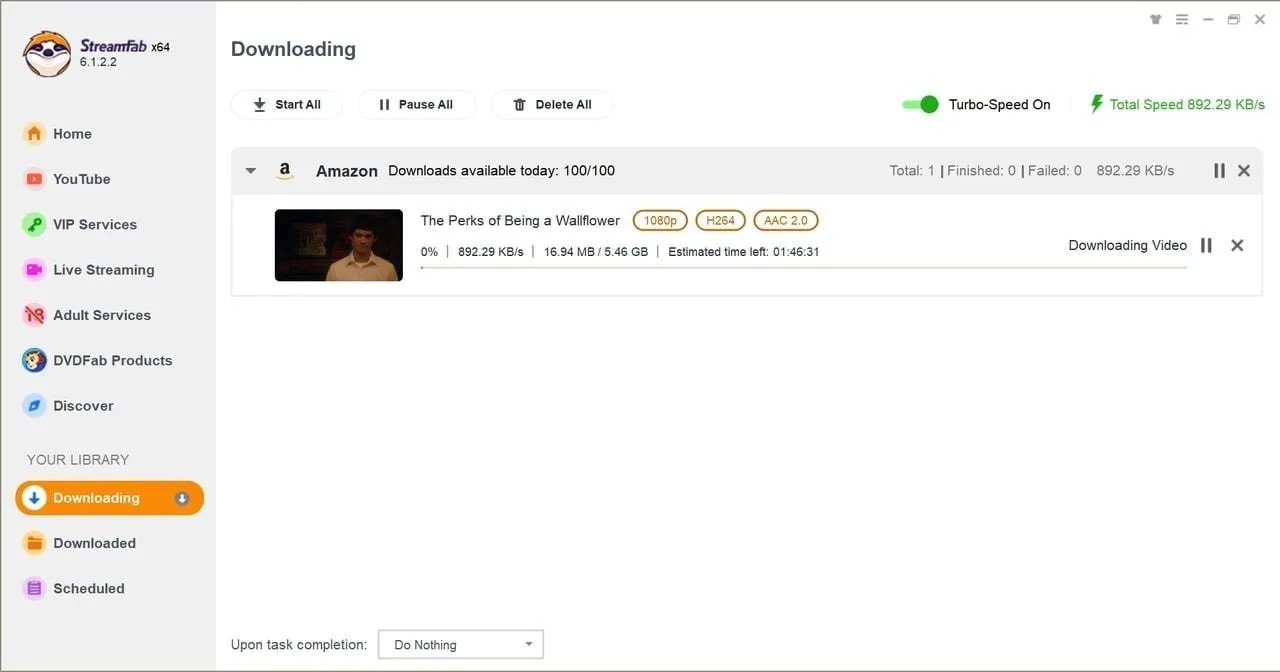
But, if what you're really after is to convert Amazon Prime Video to MP4 for a forever thing, well, that's not what rentals are meant for and probably not totally above board. I wouldn't recommend pushing your luck there, just saying.
FAQ
If you don't see a download icon, it usually means the title is not available for download on your current device or in your region, often because of licensing restrictions. In that case, there is no official way to store it offline on that device, you can try a supported phone, tablet, or Fire device instead, or check Amazon’s help center or customer support for clarification.
Many people search for phrases like “rip Amazon Prime Video” when they run into this situation, but using unapproved tools in that way can conflict with Amazon’s terms and local copyright laws, so it’s not recommended.
The 30-day (or specified) expiration window takes precedence. Even if you start watching within that window, the 48-hour rule is still in effect, but you must finish before the 30 days are up.
No, at least not in the same official way you can on phones, tablets, or Fire devices. The Prime Video apps on Windows and macOS may let you download some included or purchased titles, but rental movies usually do not show a download button at all. That is why many people either stick to mobile devices, or look into third-party tools for personal offline viewing.
Amazon’s rentals apply two clocks at the same time. You get up to 30 days (or the period listed on the detail page) to start watching, but once you hit play, a separate 48-hour timer begins. If either window runs out, the rental and any downloaded copy stop working. That is why a movie can disappear even if the full 30 days have not passed.
Sure thing! If you grabbed that rental on a supported device before you took off (hopefully you didn’t wait ’til the cab ride to the airport, it’s nerve-wracking), and you’re still inside those somewhat pesky 30-day and 48-hour time limits, you’re golden. Once it’s sitting on your phone or tablet, it usually works just fine in airplane mode or even stripped of any Wi-Fi. Only catch is that if your rental window runs out during your trip, it’ll refuse to play, even though the file’s awkwardly hanging out on your device like an uninvited guest.
Amazon limits how many devices can download and watch the same title at once, and those limits are stricter for rentals than for regular Prime content. The exact numbers can change by region and license, but generally you should expect to keep downloads to a small number of personal devices within your household instead of spreading them across lots of accounts.
Conclusion
Looking back, I wish I’d known all these quirks earlier. Renting on Amazon is simple enough, but the rules can trip you up if you’re not ready. If you find yourself needing more flexibility, tools like StreamFab or other download-management apps can help you organize legitimate offline viewing during your rental period, as long as you follow Amazon’s rules and local copyright laws and don’t try to interfere with any technical protection. In some cases, it may actually be simpler to share your Amazon Prime benefits with family members so everyone can watch on their own devices instead of chasing workarounds.
I’ve used these approaches myself during trips when I knew the 48-hour window would run out too soon. But I also remind myself: these copies are for personal viewing, not for building a permanent library. Out of respect for Amazon’s rental terms, the safe practice is to stop watching and delete any saved files once the official rental period ends.
StreamFab and similar tools are intended only to help you manage offline viewing of content you’ve lawfully purchased or subscribed to. Do not use them for commercial purposes, sharing, re-uploading, or any form of unauthorized distribution, and never attempt to alter how Amazon or other services enforce their rental or subscription rules.
